
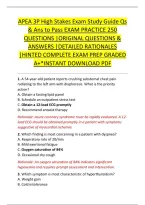
APEA 3P High Stakes Exam Study Guide Qs
& Ans to Pass EXAM PRACTICE 250
QUESTIONS |ORIGINAL QUESTIONS &
ANSWERS |DETAILED RATIONALES
|HINTED COMPLETE EXAM PREP GRADED
A+*INSTANT DOWNLOAD PDF
1. A 54-year-old patient reports crushing substernal chest pain
radiating to the left arm with diaphoresis. What is the priority
action?
A. Obtain a fasting lipid panel
B. Schedule an outpatient stress test
C. Obtain a 12-lead ECG promptly
D. Recommend antacid therapy
Rationale: Acute coronary syndrome must be rapidly evaluated. A 12-
lead ECG should be obtained promptly in a patient with symptoms
suggestive of myocardial ischemia.
2. Which finding is most concerning in a patient with dyspnea?
A. Respiratory rate of 20/min
B. Mild exertional fatigue
C. Oxygen saturation of 84%
D. Occasional dry cough
Rationale: An oxygen saturation of 84% indicates significant
hypoxemia and requires prompt assessment and intervention.
3. Which symptom is most characteristic of hyperthyroidism?
A. Weight gain
B. Cold intolerance
,C. Bradycardia
D. Heat intolerance
Rationale: Hyperthyroidism commonly causes heat intolerance,
weight loss, tremor, tachycardia, anxiety, and increased sweating.
4. A patient with suspected bacterial meningitis should be assessed
urgently for which finding?
A. Constipation
B. Nuchal rigidity
C. Peripheral edema
D. Painless hematuria
Rationale: Nuchal rigidity is a classic finding associated with
meningeal irritation.
5. Which finding is most consistent with left-sided heart failure?
A. Ascites
B. Hepatomegaly
C. Pulmonary crackles
D. Dependent edema only
Rationale: Left ventricular failure causes pulmonary congestion,
which may produce crackles, dyspnea, and orthopnea.
6. A patient has unilateral calf swelling, warmth, and tenderness.
What diagnosis should be considered?
A. Cellulitis only
B. Osteoarthritis
C. Deep vein thrombosis
D. Peripheral neuropathy
Rationale: Unilateral swelling, warmth, and tenderness are
concerning for DVT and warrant prompt evaluation.
7. Which cranial nerve is responsible for vision?
A. II
B. II
,C. V
D. VIII
Rationale: Cranial nerve II, the optic nerve, transmits visual
information from the retina to the brain.
8. Which finding is typical of Parkinson disease?
A. Flaccid paralysis
B. Resting tremor
C. Hyperactive speech
D. Sudden bilateral blindness
Rationale: Parkinson disease classically produces resting tremor,
bradykinesia, rigidity, and postural instability.
9. Which finding is most concerning for acute appendicitis?
A. Left upper quadrant pain
B. Right lower quadrant tenderness
C. Painless jaundice
D. Bilateral flank edema
Rationale: Appendicitis commonly produces progressive abdominal
pain that localizes to the right lower quadrant.
10. Which symptom is commonly associated with iron-deficiency
anemia?
A. Flushed skin
B. Fatigue
C. Hyperactivity
D. Hypertension
Rationale: Reduced hemoglobin decreases oxygen delivery and
commonly causes fatigue, weakness, pallor, and exertional dyspnea.
11. A patient has a new unilateral facial droop and arm weakness.
What is the priority?
A. Reassure the patient
B. Schedule a routine visit
, C. Activate emergency stroke evaluation
D. Recommend increased fluid intake
Rationale: Sudden focal neurologic deficits may indicate an acute
stroke. Rapid evaluation is essential because time-sensitive
treatments may be available.
12. Which finding is characteristic of peripheral arterial disease?
A. Warm swollen legs
B. Diminished peripheral pulses
C. Bounding pulses
D. Bilateral jugular venous distention
Rationale: Arterial insufficiency commonly causes diminished pulses,
cool skin, claudication, and delayed capillary refill.
13. Which symptom is classically associated with gastroesophageal
reflux disease?
A. Hemoptysis
B. Heartburn after meals
C. Sudden unilateral weakness
D. Severe flank pain
Rationale: GERD commonly produces retrosternal burning,
particularly after meals or when lying down.
14. A patient reports severe headache described as "the worst
headache of my life." What is the priority concern?
A. Tension headache
B. Seasonal allergies
C. Subarachnoid hemorrhage
D. Mild dehydration
Rationale: Sudden, severe "thunderclap" headache is a red flag for
subarachnoid hemorrhage.
15. Which finding is most suggestive of Cushing syndrome?
A. Weight loss
& Ans to Pass EXAM PRACTICE 250
QUESTIONS |ORIGINAL QUESTIONS &
ANSWERS |DETAILED RATIONALES
|HINTED COMPLETE EXAM PREP GRADED
A+*INSTANT DOWNLOAD PDF
1. A 54-year-old patient reports crushing substernal chest pain
radiating to the left arm with diaphoresis. What is the priority
action?
A. Obtain a fasting lipid panel
B. Schedule an outpatient stress test
C. Obtain a 12-lead ECG promptly
D. Recommend antacid therapy
Rationale: Acute coronary syndrome must be rapidly evaluated. A 12-
lead ECG should be obtained promptly in a patient with symptoms
suggestive of myocardial ischemia.
2. Which finding is most concerning in a patient with dyspnea?
A. Respiratory rate of 20/min
B. Mild exertional fatigue
C. Oxygen saturation of 84%
D. Occasional dry cough
Rationale: An oxygen saturation of 84% indicates significant
hypoxemia and requires prompt assessment and intervention.
3. Which symptom is most characteristic of hyperthyroidism?
A. Weight gain
B. Cold intolerance
,C. Bradycardia
D. Heat intolerance
Rationale: Hyperthyroidism commonly causes heat intolerance,
weight loss, tremor, tachycardia, anxiety, and increased sweating.
4. A patient with suspected bacterial meningitis should be assessed
urgently for which finding?
A. Constipation
B. Nuchal rigidity
C. Peripheral edema
D. Painless hematuria
Rationale: Nuchal rigidity is a classic finding associated with
meningeal irritation.
5. Which finding is most consistent with left-sided heart failure?
A. Ascites
B. Hepatomegaly
C. Pulmonary crackles
D. Dependent edema only
Rationale: Left ventricular failure causes pulmonary congestion,
which may produce crackles, dyspnea, and orthopnea.
6. A patient has unilateral calf swelling, warmth, and tenderness.
What diagnosis should be considered?
A. Cellulitis only
B. Osteoarthritis
C. Deep vein thrombosis
D. Peripheral neuropathy
Rationale: Unilateral swelling, warmth, and tenderness are
concerning for DVT and warrant prompt evaluation.
7. Which cranial nerve is responsible for vision?
A. II
B. II
,C. V
D. VIII
Rationale: Cranial nerve II, the optic nerve, transmits visual
information from the retina to the brain.
8. Which finding is typical of Parkinson disease?
A. Flaccid paralysis
B. Resting tremor
C. Hyperactive speech
D. Sudden bilateral blindness
Rationale: Parkinson disease classically produces resting tremor,
bradykinesia, rigidity, and postural instability.
9. Which finding is most concerning for acute appendicitis?
A. Left upper quadrant pain
B. Right lower quadrant tenderness
C. Painless jaundice
D. Bilateral flank edema
Rationale: Appendicitis commonly produces progressive abdominal
pain that localizes to the right lower quadrant.
10. Which symptom is commonly associated with iron-deficiency
anemia?
A. Flushed skin
B. Fatigue
C. Hyperactivity
D. Hypertension
Rationale: Reduced hemoglobin decreases oxygen delivery and
commonly causes fatigue, weakness, pallor, and exertional dyspnea.
11. A patient has a new unilateral facial droop and arm weakness.
What is the priority?
A. Reassure the patient
B. Schedule a routine visit
, C. Activate emergency stroke evaluation
D. Recommend increased fluid intake
Rationale: Sudden focal neurologic deficits may indicate an acute
stroke. Rapid evaluation is essential because time-sensitive
treatments may be available.
12. Which finding is characteristic of peripheral arterial disease?
A. Warm swollen legs
B. Diminished peripheral pulses
C. Bounding pulses
D. Bilateral jugular venous distention
Rationale: Arterial insufficiency commonly causes diminished pulses,
cool skin, claudication, and delayed capillary refill.
13. Which symptom is classically associated with gastroesophageal
reflux disease?
A. Hemoptysis
B. Heartburn after meals
C. Sudden unilateral weakness
D. Severe flank pain
Rationale: GERD commonly produces retrosternal burning,
particularly after meals or when lying down.
14. A patient reports severe headache described as "the worst
headache of my life." What is the priority concern?
A. Tension headache
B. Seasonal allergies
C. Subarachnoid hemorrhage
D. Mild dehydration
Rationale: Sudden, severe "thunderclap" headache is a red flag for
subarachnoid hemorrhage.
15. Which finding is most suggestive of Cushing syndrome?
A. Weight loss


