
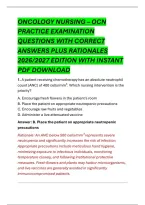
ONCOLOGY NURSING – OCN
PRACTICE EXAMINATION
QUESTIONS WITH CORRECT
ANSWERS PLUS RATIONALES
2026/2027 EDITION WITH INSTANT
PDF DOWNLOAD
1. A patient receiving chemotherapy has an absolute neutrophil
count (ANC) of 400 cells/mm³. Which nursing intervention is the
priority?
A. Encourage fresh flowers in the patient's room
B. Place the patient on appropriate neutropenic precautions
C. Encourage raw fruits and vegetables
D. Administer a live attenuated vaccine
Answer: B. Place the patient on appropriate neutropenic
precautions
Rationale: An ANC below 500 cells/mm³ represents severe
neutropenia and significantly increases the risk of infection.
Appropriate precautions include meticulous hand hygiene,
minimizing exposure to infectious individuals, monitoring
temperature closely, and following institutional protective
measures. Fresh flowers and plants may harbor microorganisms,
and live vaccines are generally avoided in significantly
immunocompromised patients.
,2. Which laboratory finding is most concerning in a patient
receiving myelosuppressive chemotherapy?
A. Hemoglobin of 11.2 g/dL
B. Platelet count of 42,000/mm³
C. WBC count of 5,500/mm³
D. Sodium level of 138 mEq/L
Answer: B. Platelet count of 42,000/mm³
Rationale: A platelet count of 42,000/mm³ indicates significant
thrombocytopenia and places the patient at increased risk for
bleeding. Nursing care should include bleeding precautions,
avoidance of unnecessary invasive procedures, and close
monitoring for petechiae, bruising, hematuria, gastrointestinal
bleeding, and other signs of hemorrhage.
3. A patient receiving vesicant chemotherapy reports burning and
pain at the IV site. What should the nurse do first?
A. Increase the infusion rate
B. Apply pressure and remove the IV catheter immediately
C. Stop the infusion while leaving the catheter in place
D. Flush the catheter rapidly with normal saline
Answer: C. Stop the infusion while leaving the catheter in
place
Rationale: Burning or pain during administration of a vesicant may
indicate extravasation. The infusion should be stopped
immediately, but the catheter is generally left in place initially so
that residual medication can be aspirated and, when indicated,
an antidote can be administered. The nurse should follow the
,specific institutional extravasation protocol for the medication
involved.
4. Which finding is most characteristic of superior vena cava
syndrome in a patient with thoracic malignancy?
A. Bilateral lower-extremity edema only
B. Facial and upper-extremity swelling with venous distention
C. Severe right lower-quadrant abdominal pain
D. Isolated unilateral ankle edema
Answer: B. Facial and upper-extremity swelling with venous
distention
Rationale: Superior vena cava syndrome occurs when the
superior vena cava is compressed or obstructed, commonly by a
thoracic tumor or enlarged lymph nodes. Impaired venous
drainage produces facial, neck, and upper-extremity edema,
distended neck or chest veins, cough, dyspnea, and sometimes
headache.
5. A patient undergoing chemotherapy has a temperature of
38.4°C (101.1°F). What is the nurse's priority action?
A. Encourage oral fluids and reassess in 4 hours
B. Administer acetaminophen and discharge the patient
C. Notify the oncology team promptly and initiate evaluation for
infection
D. Place the patient in a warm environment
Answer: C. Notify the oncology team promptly and initiate
evaluation for infection
, Rationale: Fever in a patient receiving myelosuppressive
chemotherapy may represent a life-threatening infection,
particularly when neutropenia is present. Prompt assessment,
cultures as ordered, laboratory evaluation, and timely
antimicrobial therapy are essential. Antipyretics should not delay
evaluation for a potentially serious infection.
6. Which intervention is most appropriate for a patient
experiencing chemotherapy-induced oral mucositis?
A. Use an alcohol-based mouthwash frequently
B. Encourage vigorous brushing with a hard-bristled toothbrush
C. Provide gentle oral care with a soft toothbrush and bland rinses
D. Encourage spicy foods to stimulate saliva production
Answer: C. Provide gentle oral care with a soft toothbrush and
bland rinses
Rationale: Gentle oral hygiene helps reduce microbial burden and
prevents complications while minimizing trauma to fragile
mucosal tissue. Bland saline or sodium bicarbonate rinses are
commonly used. Alcohol-containing mouthwashes, hard-bristled
toothbrushes, and irritating foods can worsen mucosal injury and
discomfort.
7. Which symptom is most suggestive of chemotherapy-induced
peripheral neuropathy?
A. Sudden unilateral blindness
B. Numbness and tingling in the hands and feet
C. Productive cough with green sputum
D. Increased urinary frequency
PRACTICE EXAMINATION
QUESTIONS WITH CORRECT
ANSWERS PLUS RATIONALES
2026/2027 EDITION WITH INSTANT
PDF DOWNLOAD
1. A patient receiving chemotherapy has an absolute neutrophil
count (ANC) of 400 cells/mm³. Which nursing intervention is the
priority?
A. Encourage fresh flowers in the patient's room
B. Place the patient on appropriate neutropenic precautions
C. Encourage raw fruits and vegetables
D. Administer a live attenuated vaccine
Answer: B. Place the patient on appropriate neutropenic
precautions
Rationale: An ANC below 500 cells/mm³ represents severe
neutropenia and significantly increases the risk of infection.
Appropriate precautions include meticulous hand hygiene,
minimizing exposure to infectious individuals, monitoring
temperature closely, and following institutional protective
measures. Fresh flowers and plants may harbor microorganisms,
and live vaccines are generally avoided in significantly
immunocompromised patients.
,2. Which laboratory finding is most concerning in a patient
receiving myelosuppressive chemotherapy?
A. Hemoglobin of 11.2 g/dL
B. Platelet count of 42,000/mm³
C. WBC count of 5,500/mm³
D. Sodium level of 138 mEq/L
Answer: B. Platelet count of 42,000/mm³
Rationale: A platelet count of 42,000/mm³ indicates significant
thrombocytopenia and places the patient at increased risk for
bleeding. Nursing care should include bleeding precautions,
avoidance of unnecessary invasive procedures, and close
monitoring for petechiae, bruising, hematuria, gastrointestinal
bleeding, and other signs of hemorrhage.
3. A patient receiving vesicant chemotherapy reports burning and
pain at the IV site. What should the nurse do first?
A. Increase the infusion rate
B. Apply pressure and remove the IV catheter immediately
C. Stop the infusion while leaving the catheter in place
D. Flush the catheter rapidly with normal saline
Answer: C. Stop the infusion while leaving the catheter in
place
Rationale: Burning or pain during administration of a vesicant may
indicate extravasation. The infusion should be stopped
immediately, but the catheter is generally left in place initially so
that residual medication can be aspirated and, when indicated,
an antidote can be administered. The nurse should follow the
,specific institutional extravasation protocol for the medication
involved.
4. Which finding is most characteristic of superior vena cava
syndrome in a patient with thoracic malignancy?
A. Bilateral lower-extremity edema only
B. Facial and upper-extremity swelling with venous distention
C. Severe right lower-quadrant abdominal pain
D. Isolated unilateral ankle edema
Answer: B. Facial and upper-extremity swelling with venous
distention
Rationale: Superior vena cava syndrome occurs when the
superior vena cava is compressed or obstructed, commonly by a
thoracic tumor or enlarged lymph nodes. Impaired venous
drainage produces facial, neck, and upper-extremity edema,
distended neck or chest veins, cough, dyspnea, and sometimes
headache.
5. A patient undergoing chemotherapy has a temperature of
38.4°C (101.1°F). What is the nurse's priority action?
A. Encourage oral fluids and reassess in 4 hours
B. Administer acetaminophen and discharge the patient
C. Notify the oncology team promptly and initiate evaluation for
infection
D. Place the patient in a warm environment
Answer: C. Notify the oncology team promptly and initiate
evaluation for infection
, Rationale: Fever in a patient receiving myelosuppressive
chemotherapy may represent a life-threatening infection,
particularly when neutropenia is present. Prompt assessment,
cultures as ordered, laboratory evaluation, and timely
antimicrobial therapy are essential. Antipyretics should not delay
evaluation for a potentially serious infection.
6. Which intervention is most appropriate for a patient
experiencing chemotherapy-induced oral mucositis?
A. Use an alcohol-based mouthwash frequently
B. Encourage vigorous brushing with a hard-bristled toothbrush
C. Provide gentle oral care with a soft toothbrush and bland rinses
D. Encourage spicy foods to stimulate saliva production
Answer: C. Provide gentle oral care with a soft toothbrush and
bland rinses
Rationale: Gentle oral hygiene helps reduce microbial burden and
prevents complications while minimizing trauma to fragile
mucosal tissue. Bland saline or sodium bicarbonate rinses are
commonly used. Alcohol-containing mouthwashes, hard-bristled
toothbrushes, and irritating foods can worsen mucosal injury and
discomfort.
7. Which symptom is most suggestive of chemotherapy-induced
peripheral neuropathy?
A. Sudden unilateral blindness
B. Numbness and tingling in the hands and feet
C. Productive cough with green sputum
D. Increased urinary frequency


