
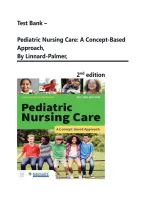
Test Bank –
Pediatric Nursing Care: A Concept-Based
Approach,
By Linnard-Palmer,
2nd edition
,TABLE OF CONTENTS
Unit I Overview of Pediatric Nursing Care
Chapter 1 Introduction to Children's Health Care
Chapter 2 Care Across Clinical Settings
Unit II Safety in Caring for Children and Families
Chapter 3 Essential Safety Models
Unit III Models of Care
Chapter 4 Cultural and Religious Influences to Care
Chapter 5 Working and Communicating with an Interdisciplinary Team
Unit IV Developmentally Focused Care and Developmental Milestones
Chapter 6 Caring for Neonates and Infants
Chapter 7 Caring for Toddlers
Chapter 8 Caring for Preschoolers
Chapter 9 Caring for School-Age Children
Chapter 10 Caring for Adolescents
Chapter 11 Symptom Management Across Childhood
Unit V Caring for Families in Need
Chapter 12 Caring for Families Under Stress
Chapter 13 Caring for an Abused Child
Unit VI Concept-Based Care in Pediatrics
Chapter 14 Gastrointestinal Elimination
Chapter 15 Metabolism
Chapter 16 Gas Exchange and Oxygenation
Chapter 17 Skin Integrity
Chapter 18 Cellular Regulation
Chapter 19 Cardiovascular: Perfusion
,Chapter 20 Sensory Perceptions: Impairments and Disorders
Chapter 21 Intracranial Regulation
Chapter 22 Genitourinary Elimination
Chapter 23 Mobility
Chapter 24 Cognition and Mental Health
Chapter 25 Immune System Disorders
Chapter 26 Infection and Communicable Diseases in Childhood
Unit VII Implementing Principles of Safe Care
Chapter 27 Essential Skills for Pediatric Nursing
Chapter 28 Safe and Legal Aspects of Care
Chapter 29 Care of the Acutely Ill or Critically Ill Child
Chapter 30 The Dying Child
, UNIT I: OVERVIEW OF PEDIATRIC NURSING CARE
Chapter 1: Introduction to Children's Health Care
1. Which principle is foundational to the concept of family-centered care in pediatrics?
A. The health care team makes all decisions for the family.
B. The family is recognized as the constant in the child's life.
C. Children should be separated from parents during procedures.
D. Visiting hours should be strictly limited to promote rest.
Answer: B
Rationale: Family-centered care recognizes the family as the constant in the child's life. The
health care team collaborates with the family, and parents are encouraged to participate in
care and decision-making.
2. A nurse is reviewing trends in pediatric mortality. Which is the leading cause of death in
children ages 1–19 in the United States?
A. Cancer
B. Congenital anomalies
C. Unintentional injuries
D. Homicide
Answer: C
Rationale: Unintentional injuries (accidents) are the leading cause of death in children ages 1–
19. This includes motor vehicle accidents, drowning, burns, and falls.
3. Which historical figure is credited with founding the first pediatric hospital in the United
States?
A. Florence Nightingale
B. Lillian Wald
C. Abraham Jacobi
D. Clara Barton
Answer: C
Rationale: Abraham Jacobi is known as the "Father of American Pediatrics" and was
instrumental in establishing the first pediatric clinics and advancing pediatric care in the United
States.
Pediatric Nursing Care: A Concept-Based
Approach,
By Linnard-Palmer,
2nd edition
,TABLE OF CONTENTS
Unit I Overview of Pediatric Nursing Care
Chapter 1 Introduction to Children's Health Care
Chapter 2 Care Across Clinical Settings
Unit II Safety in Caring for Children and Families
Chapter 3 Essential Safety Models
Unit III Models of Care
Chapter 4 Cultural and Religious Influences to Care
Chapter 5 Working and Communicating with an Interdisciplinary Team
Unit IV Developmentally Focused Care and Developmental Milestones
Chapter 6 Caring for Neonates and Infants
Chapter 7 Caring for Toddlers
Chapter 8 Caring for Preschoolers
Chapter 9 Caring for School-Age Children
Chapter 10 Caring for Adolescents
Chapter 11 Symptom Management Across Childhood
Unit V Caring for Families in Need
Chapter 12 Caring for Families Under Stress
Chapter 13 Caring for an Abused Child
Unit VI Concept-Based Care in Pediatrics
Chapter 14 Gastrointestinal Elimination
Chapter 15 Metabolism
Chapter 16 Gas Exchange and Oxygenation
Chapter 17 Skin Integrity
Chapter 18 Cellular Regulation
Chapter 19 Cardiovascular: Perfusion
,Chapter 20 Sensory Perceptions: Impairments and Disorders
Chapter 21 Intracranial Regulation
Chapter 22 Genitourinary Elimination
Chapter 23 Mobility
Chapter 24 Cognition and Mental Health
Chapter 25 Immune System Disorders
Chapter 26 Infection and Communicable Diseases in Childhood
Unit VII Implementing Principles of Safe Care
Chapter 27 Essential Skills for Pediatric Nursing
Chapter 28 Safe and Legal Aspects of Care
Chapter 29 Care of the Acutely Ill or Critically Ill Child
Chapter 30 The Dying Child
, UNIT I: OVERVIEW OF PEDIATRIC NURSING CARE
Chapter 1: Introduction to Children's Health Care
1. Which principle is foundational to the concept of family-centered care in pediatrics?
A. The health care team makes all decisions for the family.
B. The family is recognized as the constant in the child's life.
C. Children should be separated from parents during procedures.
D. Visiting hours should be strictly limited to promote rest.
Answer: B
Rationale: Family-centered care recognizes the family as the constant in the child's life. The
health care team collaborates with the family, and parents are encouraged to participate in
care and decision-making.
2. A nurse is reviewing trends in pediatric mortality. Which is the leading cause of death in
children ages 1–19 in the United States?
A. Cancer
B. Congenital anomalies
C. Unintentional injuries
D. Homicide
Answer: C
Rationale: Unintentional injuries (accidents) are the leading cause of death in children ages 1–
19. This includes motor vehicle accidents, drowning, burns, and falls.
3. Which historical figure is credited with founding the first pediatric hospital in the United
States?
A. Florence Nightingale
B. Lillian Wald
C. Abraham Jacobi
D. Clara Barton
Answer: C
Rationale: Abraham Jacobi is known as the "Father of American Pediatrics" and was
instrumental in establishing the first pediatric clinics and advancing pediatric care in the United
States.


