
1|Page
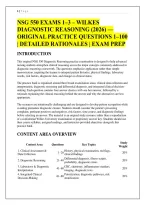
NSG 550 EXAMS 1–3 – WILKES
DIAGNOSTIC REASONING (2026) —
ORIGINAL PRACTICE QUESTIONS 1–100
| DETAILED RATIONALES | EXAM PREP
INTRODUCTION
This original NSG 550 Diagnostic Reasoning practice examination is designed to help advanced
nursing students strengthen clinical reasoning across the major concepts commonly addressed in
diagnostic-reasoning coursework. The questions emphasize application rather than simple
memorization, requiring the learner to interpret patient histories, physical findings, laboratory
results, risk factors, diagnostic data, and changes in clinical status.
The practice bank is organized around three broad examination areas: clinical data collection and
interpretation, diagnostic reasoning and differential diagnosis, and integrated clinical decision-
making. Each question contains four answer choices with one best answer, followed by a
rationale explaining the clinical reasoning behind the answer and why the alternatives are less
appropriate.
The scenarios are intentionally challenging and are designed to develop pattern recognition while
avoiding premature diagnostic closure. Students should consider the patient's presenting
complaint, pertinent positives and negatives, risk factors, time course, and diagnostic findings
before selecting an answer. The material is an original study resource rather than a reproduction
of a confidential Wilkes University examination or proprietary answer key. Students should use
their course syllabus, assigned readings, and instructor-provided objectives alongside this
practice bank.
CONTENT AREA OVERVIEW
Study
Content Area Questions Key Topics
Weight
1. Clinical Assessment & History, physical examination, red flags,
1–20 20%
Data Collection clinical findings
Differential diagnosis, illness scripts,
2. Diagnostic Reasoning 21–40 20%
probability, diagnostic errors
3. Laboratory & Diagnostic CBC, chemistry, inflammatory markers,
41–60 20%
Interpretation imaging, diagnostic tests
4. Integrated Clinical Prioritization, diagnostic pathways, risk
61–80 20%
Decision-Making stratification
,2|Page
Study
Content Area Questions Key Topics
Weight
5. Advanced Case-Based Complex presentations, competing
81–100 20%
Reasoning diagnoses, clinical synthesis
The percentages are a study-oriented allocation for this original practice bank, not an official
Wilkes University examination blueprint.
QUESTIONS 1-100
SECTION 1 — CLINICAL ASSESSMENT & DATA
COLLECTION
Q1:
A 58-year-old patient presents with new fatigue and exertional dyspnea that developed gradually
over three months. The patient denies chest pain but reports darker stools occurring
intermittently. Vital signs are stable. Which additional history is most important initially?
A) History of seasonal allergies
B) Recent change in sleep schedule
C) Use of NSAIDs, aspirin, and symptoms suggesting gastrointestinal blood loss
D) Childhood history of recurrent otitis media
Rationale: The correct answer is C because the combination of fatigue, exertional dyspnea, and
dark stools raises concern for chronic gastrointestinal blood loss and iron-deficiency anemia.
NSAID and aspirin exposure can increase gastrointestinal bleeding risk. Seasonal allergies and
sleep changes do not adequately explain the concerning symptom cluster, while childhood otitis
is unlikely to be relevant.
Q2:
A 67-year-old patient reports dizziness when standing. Supine blood pressure is 138/78 mmHg
with a pulse of 72/min. After standing, blood pressure is 108/64 mmHg and pulse is 94/min.
Which finding is most clinically significant?
A) Increase in heart rate by 22 beats/min
B) Supine systolic pressure of 138 mmHg
C) The substantial fall in blood pressure after standing
D) Diastolic pressure of 64 mmHg while standing
Rationale: C is correct because the marked postural decrease in blood pressure is consistent
with orthostatic hypotension in the appropriate clinical context. The pulse increase may
,3|Page
represent compensatory response. The isolated supine values do not explain the patient's
positional symptoms.
Q3:
A patient presents with acute unilateral calf swelling, warmth, and tenderness. Which additional
finding would most strongly increase concern for a potentially life-threatening complication?
A) Mild ankle stiffness
B) Bilateral foot calluses
C) New pleuritic chest pain and unexplained tachycardia
D) Chronic varicose veins without symptoms
Rationale: C is correct because the combination of unilateral leg findings and new pleuritic
chest pain with tachycardia raises concern for pulmonary embolism. The other findings do not
suggest an acute embolic complication.
Q4:
A 42-year-old patient reports episodic palpitations. Which history element would most directly
help distinguish an arrhythmia from anxiety-related symptoms?
A) Favorite recreational activity
B) Family history of seasonal allergies
C) Abrupt onset and termination of episodes with documented heart-rate pattern
D) Number of hours spent watching television
Rationale: C is correct because abrupt onset and termination can suggest paroxysmal
arrhythmia, and documented rhythm characteristics provide objective information. The other
factors are less directly useful for distinguishing rhythm disorders.
Q5:
A patient with chronic cough reports a recent change in cough character accompanied by
unintentional weight loss and intermittent hemoptysis. Which assessment priority is most
appropriate?
A) Reassure the patient that chronic cough is common
B) Treat empirically for allergic rhinitis only
C) Investigate for serious pulmonary pathology, including malignancy or infection
D) Delay evaluation until symptoms persist for another year
Rationale: C is correct because a change in chronic cough accompanied by weight loss and
hemoptysis represents a red-flag presentation requiring further evaluation. Reassurance without
investigation could delay diagnosis.
, 4|Page
Q6:
A 74-year-old patient reports new confusion. Which initial assessment approach is most
appropriate?
A) Assume dementia because of age
B) Evaluate only the patient's psychiatric history
C) Determine onset and course while assessing reversible acute causes such as infection,
medications, metabolic abnormalities, and hypoxia
D) Schedule routine cognitive testing several months later
Rationale: C is correct because acute or subacute confusion can represent delirium, metabolic
disturbance, infection, medication effects, hypoxia, or other urgent conditions. Age alone does
not establish dementia.
Q7:
A patient presents with abdominal pain localized to the right lower quadrant. Which history
feature would most strongly increase concern for an acute inflammatory process?
A) Pain that has remained identical for ten years
B) Migration of pain followed by anorexia, nausea, and fever
C) Pain occurring exclusively after prolonged sitting
D) Improvement after drinking carbonated beverages
Rationale: B is correct because a migratory pain pattern followed by anorexia, nausea, and
fever is concerning for acute appendiceal inflammation in the appropriate clinical context. The
alternatives are less characteristic of an acute inflammatory abdominal process.
Q8:
A patient with diabetes reports burning pain in both feet. Which additional assessment finding
would support peripheral neuropathy?
A) Unilateral facial weakness
B) Reduced distal vibration and pinprick sensation in a symmetric stocking distribution
C) Increased bowel sounds after meals
D) Tenderness isolated to the cervical spine
Rationale: B is correct because distal symmetric sensory loss is characteristic of diabetic
peripheral polyneuropathy. The other findings point toward unrelated neurologic or
gastrointestinal processes.
Q9:
NSG 550 EXAMS 1–3 – WILKES
DIAGNOSTIC REASONING (2026) —
ORIGINAL PRACTICE QUESTIONS 1–100
| DETAILED RATIONALES | EXAM PREP
INTRODUCTION
This original NSG 550 Diagnostic Reasoning practice examination is designed to help advanced
nursing students strengthen clinical reasoning across the major concepts commonly addressed in
diagnostic-reasoning coursework. The questions emphasize application rather than simple
memorization, requiring the learner to interpret patient histories, physical findings, laboratory
results, risk factors, diagnostic data, and changes in clinical status.
The practice bank is organized around three broad examination areas: clinical data collection and
interpretation, diagnostic reasoning and differential diagnosis, and integrated clinical decision-
making. Each question contains four answer choices with one best answer, followed by a
rationale explaining the clinical reasoning behind the answer and why the alternatives are less
appropriate.
The scenarios are intentionally challenging and are designed to develop pattern recognition while
avoiding premature diagnostic closure. Students should consider the patient's presenting
complaint, pertinent positives and negatives, risk factors, time course, and diagnostic findings
before selecting an answer. The material is an original study resource rather than a reproduction
of a confidential Wilkes University examination or proprietary answer key. Students should use
their course syllabus, assigned readings, and instructor-provided objectives alongside this
practice bank.
CONTENT AREA OVERVIEW
Study
Content Area Questions Key Topics
Weight
1. Clinical Assessment & History, physical examination, red flags,
1–20 20%
Data Collection clinical findings
Differential diagnosis, illness scripts,
2. Diagnostic Reasoning 21–40 20%
probability, diagnostic errors
3. Laboratory & Diagnostic CBC, chemistry, inflammatory markers,
41–60 20%
Interpretation imaging, diagnostic tests
4. Integrated Clinical Prioritization, diagnostic pathways, risk
61–80 20%
Decision-Making stratification
,2|Page
Study
Content Area Questions Key Topics
Weight
5. Advanced Case-Based Complex presentations, competing
81–100 20%
Reasoning diagnoses, clinical synthesis
The percentages are a study-oriented allocation for this original practice bank, not an official
Wilkes University examination blueprint.
QUESTIONS 1-100
SECTION 1 — CLINICAL ASSESSMENT & DATA
COLLECTION
Q1:
A 58-year-old patient presents with new fatigue and exertional dyspnea that developed gradually
over three months. The patient denies chest pain but reports darker stools occurring
intermittently. Vital signs are stable. Which additional history is most important initially?
A) History of seasonal allergies
B) Recent change in sleep schedule
C) Use of NSAIDs, aspirin, and symptoms suggesting gastrointestinal blood loss
D) Childhood history of recurrent otitis media
Rationale: The correct answer is C because the combination of fatigue, exertional dyspnea, and
dark stools raises concern for chronic gastrointestinal blood loss and iron-deficiency anemia.
NSAID and aspirin exposure can increase gastrointestinal bleeding risk. Seasonal allergies and
sleep changes do not adequately explain the concerning symptom cluster, while childhood otitis
is unlikely to be relevant.
Q2:
A 67-year-old patient reports dizziness when standing. Supine blood pressure is 138/78 mmHg
with a pulse of 72/min. After standing, blood pressure is 108/64 mmHg and pulse is 94/min.
Which finding is most clinically significant?
A) Increase in heart rate by 22 beats/min
B) Supine systolic pressure of 138 mmHg
C) The substantial fall in blood pressure after standing
D) Diastolic pressure of 64 mmHg while standing
Rationale: C is correct because the marked postural decrease in blood pressure is consistent
with orthostatic hypotension in the appropriate clinical context. The pulse increase may
,3|Page
represent compensatory response. The isolated supine values do not explain the patient's
positional symptoms.
Q3:
A patient presents with acute unilateral calf swelling, warmth, and tenderness. Which additional
finding would most strongly increase concern for a potentially life-threatening complication?
A) Mild ankle stiffness
B) Bilateral foot calluses
C) New pleuritic chest pain and unexplained tachycardia
D) Chronic varicose veins without symptoms
Rationale: C is correct because the combination of unilateral leg findings and new pleuritic
chest pain with tachycardia raises concern for pulmonary embolism. The other findings do not
suggest an acute embolic complication.
Q4:
A 42-year-old patient reports episodic palpitations. Which history element would most directly
help distinguish an arrhythmia from anxiety-related symptoms?
A) Favorite recreational activity
B) Family history of seasonal allergies
C) Abrupt onset and termination of episodes with documented heart-rate pattern
D) Number of hours spent watching television
Rationale: C is correct because abrupt onset and termination can suggest paroxysmal
arrhythmia, and documented rhythm characteristics provide objective information. The other
factors are less directly useful for distinguishing rhythm disorders.
Q5:
A patient with chronic cough reports a recent change in cough character accompanied by
unintentional weight loss and intermittent hemoptysis. Which assessment priority is most
appropriate?
A) Reassure the patient that chronic cough is common
B) Treat empirically for allergic rhinitis only
C) Investigate for serious pulmonary pathology, including malignancy or infection
D) Delay evaluation until symptoms persist for another year
Rationale: C is correct because a change in chronic cough accompanied by weight loss and
hemoptysis represents a red-flag presentation requiring further evaluation. Reassurance without
investigation could delay diagnosis.
, 4|Page
Q6:
A 74-year-old patient reports new confusion. Which initial assessment approach is most
appropriate?
A) Assume dementia because of age
B) Evaluate only the patient's psychiatric history
C) Determine onset and course while assessing reversible acute causes such as infection,
medications, metabolic abnormalities, and hypoxia
D) Schedule routine cognitive testing several months later
Rationale: C is correct because acute or subacute confusion can represent delirium, metabolic
disturbance, infection, medication effects, hypoxia, or other urgent conditions. Age alone does
not establish dementia.
Q7:
A patient presents with abdominal pain localized to the right lower quadrant. Which history
feature would most strongly increase concern for an acute inflammatory process?
A) Pain that has remained identical for ten years
B) Migration of pain followed by anorexia, nausea, and fever
C) Pain occurring exclusively after prolonged sitting
D) Improvement after drinking carbonated beverages
Rationale: B is correct because a migratory pain pattern followed by anorexia, nausea, and
fever is concerning for acute appendiceal inflammation in the appropriate clinical context. The
alternatives are less characteristic of an acute inflammatory abdominal process.
Q8:
A patient with diabetes reports burning pain in both feet. Which additional assessment finding
would support peripheral neuropathy?
A) Unilateral facial weakness
B) Reduced distal vibration and pinprick sensation in a symmetric stocking distribution
C) Increased bowel sounds after meals
D) Tenderness isolated to the cervical spine
Rationale: B is correct because distal symmetric sensory loss is characteristic of diabetic
peripheral polyneuropathy. The other findings point toward unrelated neurologic or
gastrointestinal processes.
Q9:


