
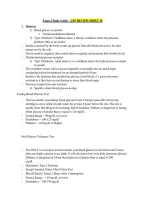
Exam 2 Study Guide – USE REVIEW SHEET 38
1. Diabetes
1) Blood glucose cut points
Normal/prediabetes/diabetes
2) Type I Diabetes: Childhood onset, a chronic condition where the pancreas
produces little or no insulin
- Insulin is needed by the body to take up glucose from the blood and store it for later
energy use by the cells
- Person needs to regularly take insulin shots to regulate and maintain their insulin levels
- Dysfunctional pancreas receptors
3) Type II Diabetes: Adult onset, it is a condition where the body becomes resistant
to insulin
- This condition occurs when a person (typically overweight) has too much sugar
circulating in their bloodstream for an extended period of time
- Insulin is the hormone that metabolizes glucose in the blood, if a person becomes
resistant to it they have no mechanism to lower their blood sugar
- Pancreas receptors become resistant
4) Specifics about blood glucose testing
Fasting Blood Glucose Test
- This test checks your fasting blood glucose levels. Fasting means after not having
anything to eat or drink (except water) for at least 8 hours before the test. This test is
usually done first thing in the morning, before breakfast. Diabetes is diagnosed at fasting
blood glucose of greater than or equal to 126 mg/dl.
- Normal Range = 99mg/dL or Lower
- Prediabetes = 100-125 mg/dL
- Diabetes = 126mg/dL or Higher
Oral Glucose Tolerance Test
- The OGTT is a two-hour test that checks your blood glucose levels before and 2 hours
after you drink a special sweet drink. It tells the doctor how your body processes glucose.
Diabetes is diagnosed at 2-hour blood glucose of greater than or equal to 200
mg/dl
- Determines Type 2 Diabetes
- Syrupy Solution Taken After 8 Hour Fast
- Blood Glucose Tested 2 Hours After Consumption
- Normal Range = 139 mg/dL or lower
- Prediabetes = 140-199 mg/dL
1. Diabetes
1) Blood glucose cut points
Normal/prediabetes/diabetes
2) Type I Diabetes: Childhood onset, a chronic condition where the pancreas
produces little or no insulin
- Insulin is needed by the body to take up glucose from the blood and store it for later
energy use by the cells
- Person needs to regularly take insulin shots to regulate and maintain their insulin levels
- Dysfunctional pancreas receptors
3) Type II Diabetes: Adult onset, it is a condition where the body becomes resistant
to insulin
- This condition occurs when a person (typically overweight) has too much sugar
circulating in their bloodstream for an extended period of time
- Insulin is the hormone that metabolizes glucose in the blood, if a person becomes
resistant to it they have no mechanism to lower their blood sugar
- Pancreas receptors become resistant
4) Specifics about blood glucose testing
Fasting Blood Glucose Test
- This test checks your fasting blood glucose levels. Fasting means after not having
anything to eat or drink (except water) for at least 8 hours before the test. This test is
usually done first thing in the morning, before breakfast. Diabetes is diagnosed at fasting
blood glucose of greater than or equal to 126 mg/dl.
- Normal Range = 99mg/dL or Lower
- Prediabetes = 100-125 mg/dL
- Diabetes = 126mg/dL or Higher
Oral Glucose Tolerance Test
- The OGTT is a two-hour test that checks your blood glucose levels before and 2 hours
after you drink a special sweet drink. It tells the doctor how your body processes glucose.
Diabetes is diagnosed at 2-hour blood glucose of greater than or equal to 200
mg/dl
- Determines Type 2 Diabetes
- Syrupy Solution Taken After 8 Hour Fast
- Blood Glucose Tested 2 Hours After Consumption
- Normal Range = 139 mg/dL or lower
- Prediabetes = 140-199 mg/dL


