
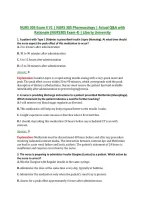
NURS 305 Exam 4 V1 | NURS 305 Pharmacology | Actual Q&A with
Rationale (NURS305 Exam 4) | Liberty University
1. A patient with Type 1 Diabetes is prescribed Insulin Lispro (Humalog). At what time should
the nurse expect the peak effect of this medication to occur?
A. 2 to 4 hours after administration
B. 30 to 90 minutes after administration
C. 4 to 12 hours after administration
D. 15 to 30 minutes after administration
Answer: B
Explanation: Insulin Lispro is a rapid-acting insulin analog with a very quick onset and
peak. The peak effect occurs within 30 to 90 minutes, which corresponds with the peak
absorption of dietary carbohydrates. Nurses must ensure the patient has food available
immediately after administration to prevent hypoglycemia.
2. A nurse is providing discharge instructions to a patient prescribed Metformin (Glucophage).
Which statement by the patient indicates a need for further teaching?
A. I will monitor my blood sugar regularly as directed.
B. This medication will help my body respond better to the insulin I make.
C. I might experience some nausea or diarrhea when I first start this.
D. I should stop taking this medication 24 hours before any scheduled CT scan with
contrast.
Answer: D
Explanation: Metformin must be discontinued 48 hours before and after any procedure
involving iodinated contrast media. The interaction between contrast dye and Metformin
can lead to acute renal failure and lactic acidosis. The patient’s statement of 24 hours is
insufficient and requires correction by the nurse.
3. The nurse is preparing to administer Insulin Glargine (Lantus) to a patient. Which action by
the nurse is correct?
A. Mix the Glargine with Regular insulin in the same syringe.
B. Administer the dose at the same time every day, typically at bedtime.
C. Administer the medication only when the patient’s meal tray is present.
D. Assess for a peak effect approximately 6 hours after administration.
,Answer: B
Explanation: Insulin Glargine is a long-acting basal insulin that does not have a defined
peak and provides a steady level of insulin for 24 hours. Because of its low pH, it cannot be
mixed with any other insulin in the same syringe. It is typically administered once daily at
the same time to maintain consistent glycemic control.
4. A patient is prescribed Levothyroxine (Synthroid) for hypothyroidism. Which assessment
finding would indicate the dose is too high?
A. Tachycardia and insomnia
B. Weight gain and bradycardia
C. Cold intolerance and dry skin
D. Drowsiness and constipation
Answer: A
Explanation: Symptoms of excessive thyroid hormone replacement mimic
hyperthyroidism, including tachycardia, palpitations, tremors, and insomnia. If these
symptoms occur, the nurse should notify the provider as the dosage may need to be
reduced. Patients should be taught to monitor their heart rate and report significant
increases.
5. A patient is receiving Propylthiouracil (PTU) for the treatment of Graves’ disease. Which
laboratory result is the most important for the nurse to monitor?
A. White blood cell (WBC) count
B. Serum glucose levels
C. Serum creatinine and BUN
D. Platelet count
Answer: A
Explanation: A rare but serious adverse effect of Propylthiouracil is agranulocytosis,
which is a significant drop in white blood cell counts. Patients should be instructed to
report a sore throat or fever immediately, as these are early signs of infection. Regular
monitoring of the CBC is essential for patient safety during therapy.
6. A patient is diagnosed with Diabetes Insipidus and is prescribed Desmopressin (DDAVP).
Which finding indicates the medication is effective?
A. Decreased urine output and increased urine specific gravity
B. Increased serum sodium levels
C. Decreased blood pressure and increased heart rate
, D. Increased urine output and clear urine
Answer: A
Explanation: Desmopressin is a synthetic form of antidiuretic hormone (ADH) used to
treat Diabetes Insipidus by increasing water reabsorption in the kidneys. Success is
measured by a reduction in polyuria and an increase in the concentration (specific gravity)
of the urine. The nurse should also monitor for signs of water intoxication, such as
headache or confusion.
7. The nurse is teaching a patient about a new prescription for Prednisone. Which instruction
is vital for the nurse to include to prevent an adrenal crisis?
A. Do not stop taking this medication abruptly; it must be tapered.
B. Take the medication on an empty stomach to improve absorption.
C. Avoid all sources of potassium while taking this drug.
D. Increase your sodium intake to maintain blood pressure.
Answer: A
Explanation: Exogenous glucocorticoid administration suppresses the hypothalamic-
pituitary-adrenal (HPA) axis, leading to decreased natural cortisol production. Abrupt
withdrawal can result in an acute adrenal crisis, which is life-threatening. Gradual tapering
allows the adrenal glands to resume normal function safely.
8. A patient with asthma is prescribed Albuterol (Proventil) and Fluticasone (Flovent)
inhalers. Which sequence of administration should the nurse teach?
A. Administer the Fluticasone first, then the Albuterol.
B. Wait 30 minutes between the two different inhalers.
C. Mix the two medications in a nebulizer for faster action.
D. Administer the Albuterol first, wait 5 minutes, then administer the Fluticasone.
Answer: D
Explanation: The bronchodilator (Albuterol) should be administered first to open the
airways, followed by the corticosteroid (Fluticasone) five minutes later. This sequence
ensures that the steroid can reach deeper into the lung tissue for better efficacy. Patients
should always be taught to rinse their mouth after using the steroid inhaler to prevent oral
candidiasis.
9. Which of the following is a potential adverse effect of the H2-receptor antagonist
Famotidine (Pepcid) in elderly patients?
A. Increased gastric motility
B. Severe hypertension
Rationale (NURS305 Exam 4) | Liberty University
1. A patient with Type 1 Diabetes is prescribed Insulin Lispro (Humalog). At what time should
the nurse expect the peak effect of this medication to occur?
A. 2 to 4 hours after administration
B. 30 to 90 minutes after administration
C. 4 to 12 hours after administration
D. 15 to 30 minutes after administration
Answer: B
Explanation: Insulin Lispro is a rapid-acting insulin analog with a very quick onset and
peak. The peak effect occurs within 30 to 90 minutes, which corresponds with the peak
absorption of dietary carbohydrates. Nurses must ensure the patient has food available
immediately after administration to prevent hypoglycemia.
2. A nurse is providing discharge instructions to a patient prescribed Metformin (Glucophage).
Which statement by the patient indicates a need for further teaching?
A. I will monitor my blood sugar regularly as directed.
B. This medication will help my body respond better to the insulin I make.
C. I might experience some nausea or diarrhea when I first start this.
D. I should stop taking this medication 24 hours before any scheduled CT scan with
contrast.
Answer: D
Explanation: Metformin must be discontinued 48 hours before and after any procedure
involving iodinated contrast media. The interaction between contrast dye and Metformin
can lead to acute renal failure and lactic acidosis. The patient’s statement of 24 hours is
insufficient and requires correction by the nurse.
3. The nurse is preparing to administer Insulin Glargine (Lantus) to a patient. Which action by
the nurse is correct?
A. Mix the Glargine with Regular insulin in the same syringe.
B. Administer the dose at the same time every day, typically at bedtime.
C. Administer the medication only when the patient’s meal tray is present.
D. Assess for a peak effect approximately 6 hours after administration.
,Answer: B
Explanation: Insulin Glargine is a long-acting basal insulin that does not have a defined
peak and provides a steady level of insulin for 24 hours. Because of its low pH, it cannot be
mixed with any other insulin in the same syringe. It is typically administered once daily at
the same time to maintain consistent glycemic control.
4. A patient is prescribed Levothyroxine (Synthroid) for hypothyroidism. Which assessment
finding would indicate the dose is too high?
A. Tachycardia and insomnia
B. Weight gain and bradycardia
C. Cold intolerance and dry skin
D. Drowsiness and constipation
Answer: A
Explanation: Symptoms of excessive thyroid hormone replacement mimic
hyperthyroidism, including tachycardia, palpitations, tremors, and insomnia. If these
symptoms occur, the nurse should notify the provider as the dosage may need to be
reduced. Patients should be taught to monitor their heart rate and report significant
increases.
5. A patient is receiving Propylthiouracil (PTU) for the treatment of Graves’ disease. Which
laboratory result is the most important for the nurse to monitor?
A. White blood cell (WBC) count
B. Serum glucose levels
C. Serum creatinine and BUN
D. Platelet count
Answer: A
Explanation: A rare but serious adverse effect of Propylthiouracil is agranulocytosis,
which is a significant drop in white blood cell counts. Patients should be instructed to
report a sore throat or fever immediately, as these are early signs of infection. Regular
monitoring of the CBC is essential for patient safety during therapy.
6. A patient is diagnosed with Diabetes Insipidus and is prescribed Desmopressin (DDAVP).
Which finding indicates the medication is effective?
A. Decreased urine output and increased urine specific gravity
B. Increased serum sodium levels
C. Decreased blood pressure and increased heart rate
, D. Increased urine output and clear urine
Answer: A
Explanation: Desmopressin is a synthetic form of antidiuretic hormone (ADH) used to
treat Diabetes Insipidus by increasing water reabsorption in the kidneys. Success is
measured by a reduction in polyuria and an increase in the concentration (specific gravity)
of the urine. The nurse should also monitor for signs of water intoxication, such as
headache or confusion.
7. The nurse is teaching a patient about a new prescription for Prednisone. Which instruction
is vital for the nurse to include to prevent an adrenal crisis?
A. Do not stop taking this medication abruptly; it must be tapered.
B. Take the medication on an empty stomach to improve absorption.
C. Avoid all sources of potassium while taking this drug.
D. Increase your sodium intake to maintain blood pressure.
Answer: A
Explanation: Exogenous glucocorticoid administration suppresses the hypothalamic-
pituitary-adrenal (HPA) axis, leading to decreased natural cortisol production. Abrupt
withdrawal can result in an acute adrenal crisis, which is life-threatening. Gradual tapering
allows the adrenal glands to resume normal function safely.
8. A patient with asthma is prescribed Albuterol (Proventil) and Fluticasone (Flovent)
inhalers. Which sequence of administration should the nurse teach?
A. Administer the Fluticasone first, then the Albuterol.
B. Wait 30 minutes between the two different inhalers.
C. Mix the two medications in a nebulizer for faster action.
D. Administer the Albuterol first, wait 5 minutes, then administer the Fluticasone.
Answer: D
Explanation: The bronchodilator (Albuterol) should be administered first to open the
airways, followed by the corticosteroid (Fluticasone) five minutes later. This sequence
ensures that the steroid can reach deeper into the lung tissue for better efficacy. Patients
should always be taught to rinse their mouth after using the steroid inhaler to prevent oral
candidiasis.
9. Which of the following is a potential adverse effect of the H2-receptor antagonist
Famotidine (Pepcid) in elderly patients?
A. Increased gastric motility
B. Severe hypertension


