
Psychiatric-Mental Health Nursing Exam Study Set
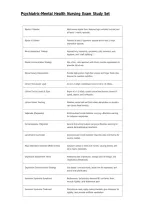
Bipolar I Disorder Most severe bipolar form; features high mortality (suicide) and
at least 1 manic episode.
Bipolar II Disorder Features at least 1 hypomanic episode and at least 1 major
depressive episode.
Mania Assessment Findings Hyperactivity, impulsivity, grandiosity, risky behaviors, poor
hygiene, and "staff splitting."
Mania Communication Strategy Use a firm, calm approach with short, concise explanations to
provide structure.
Mania Dietary Interventions Provide high-protein, high-fiber snacks and finger foods (like
Ensure) to maintain nutrition.
Lithium Therapeutic Level 0.8 to 1.2 mEq/L (maintenance level is 0.6 to 1.0 mEq/L).
Lithium Toxicity Levels & Signs Begins at >1.5 mEq/L; causes coarse hand tremors, severe GI
upset, ataxia, and confusion.
Lithium Patient Teaching Maintain normal salt and fluid intake; dehydration or diuretics
can cause fatal toxicity.
Valproate (Depakote) Anticonvulsant mood stabilizer carrying a Blackbox warning
for adverse responses.
Carbamazepine (Tegretol) Second-line anticonvulsant carrying a Blackbox warning for
severe dermatological reactions.
Lamotrigine (Lamictal) Anticonvulsant mood stabilizer requiring close monitoring for
severe rashes.
Major Depressive Disorder (MDD) Criteria Symptoms persist 2 weeks to 6 months, causing distress, with
zero manic episodes.
Depression Assessment Terms Anhedonia (loss of pleasure), anergia (lack of energy), and
vegetative withdrawal.
Depression Communication Strategy Use simple, concrete words, allow time for responses, and
avoid trite platitudes.
Serotonin Syndrome Symptoms Restlessness, tachycardia, elevated BP, confusion, fever,
muscle rigidity, and abdominal pain.
Serotonin Syndrome Treatment Discontinue meds, apply cooling blankets, give diazepam for
rigidity, and provide artificial ventilation.
Bipolar I Disorder Most severe bipolar form; features high mortality (suicide) and
at least 1 manic episode.
Bipolar II Disorder Features at least 1 hypomanic episode and at least 1 major
depressive episode.
Mania Assessment Findings Hyperactivity, impulsivity, grandiosity, risky behaviors, poor
hygiene, and "staff splitting."
Mania Communication Strategy Use a firm, calm approach with short, concise explanations to
provide structure.
Mania Dietary Interventions Provide high-protein, high-fiber snacks and finger foods (like
Ensure) to maintain nutrition.
Lithium Therapeutic Level 0.8 to 1.2 mEq/L (maintenance level is 0.6 to 1.0 mEq/L).
Lithium Toxicity Levels & Signs Begins at >1.5 mEq/L; causes coarse hand tremors, severe GI
upset, ataxia, and confusion.
Lithium Patient Teaching Maintain normal salt and fluid intake; dehydration or diuretics
can cause fatal toxicity.
Valproate (Depakote) Anticonvulsant mood stabilizer carrying a Blackbox warning
for adverse responses.
Carbamazepine (Tegretol) Second-line anticonvulsant carrying a Blackbox warning for
severe dermatological reactions.
Lamotrigine (Lamictal) Anticonvulsant mood stabilizer requiring close monitoring for
severe rashes.
Major Depressive Disorder (MDD) Criteria Symptoms persist 2 weeks to 6 months, causing distress, with
zero manic episodes.
Depression Assessment Terms Anhedonia (loss of pleasure), anergia (lack of energy), and
vegetative withdrawal.
Depression Communication Strategy Use simple, concrete words, allow time for responses, and
avoid trite platitudes.
Serotonin Syndrome Symptoms Restlessness, tachycardia, elevated BP, confusion, fever,
muscle rigidity, and abdominal pain.
Serotonin Syndrome Treatment Discontinue meds, apply cooling blankets, give diazepam for
rigidity, and provide artificial ventilation.


