
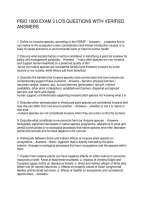
PBIO 1000 EXAM 3 LO'S QUESTIONS WITH VERIFIED
ANSWERS
1. Define an invasive species, according to the NISMP. - Answers - - a species that is
non-native to the ecosystem under consideration and whose introduction causes or is
likely to cause economic or environmental harm or harm to human health
2. Discuss what societal factors must be considered in identifying a plant as invasive for
policy and management purposes. - Answers - -"many alien species are non-invasive
and support human livelihood or a preferred quality of life"
-some non-native species are considered harmful and therefore invasive by some
sectors or our society, while others call them beneficial
3. Describe the barriers that invasive species have surmounted and how humans can
unintentionally support these invasions - Answers - barriers: physical barriers (
mountain ranges, oceans, etc), survival barriers (germination, soil pH, nutrient
availability, other plant competition), establishment barriers, dispersal and spread
barriers, and harm and impact
human support: unintentionally supporting invasive plant species not knowing what it is
4. Describe when domesticated or introduced plant species are considered invasive and
how this can differ from one area to another. - Answers - -whether or not it is native to
that area
-invasive species are not considered invasive when they are under-control by humans
5. Describe what constitutes environmental harm by invasive species. - Answers - -
biologically significant decreases in native species populations, alterations to plant and
animal communities or to ecological processes that native species and other desirable
plants and animals and humans depend on for survival
6. Distinguish between direct and indirect effects of invasive plant species on
ecosystems. - Answers - direct- organism that is directly harmed by the plant
indirect- changes in ecological processes that harm ecosystems and the species within
them
7. Explain how invasive plants can have negative effects on either natural or economic
resources or both. Know at least these examples: a. impacts of chestnut blight and
European gypsy moths on deciduous forests. b. direct and indirect effects of white pine
blister rust on natural resources. c. effects on property values of Asian Longhorned
beetles and Emerald ash borer. d. effects of hydrilla on ecosystems and recreational
opportunities. - Answers -
, 1. Describe the goals of the Endangered Species Act (ESA). Describe the role of the
U.S. Fish and Wildlife Service (FWS) in achieving these goals. - Answers - -purpose of
the ESA: protect and recover, imperiled species and the ecosystems upon which they
depend
-FWS helps administer the ESA and is primarily responsible for terrestrial and
freshwater organisms
2. Distinguish between endangered and threatened species - Answers - -endangered: a
species is in danger of extinction throughout all or a significant portion of its range
-threatened: a species is likely to become endangered within the foreseeable future
3. Name the five factors that are considered before a species is listed. - Answers - 1.
damage to or destruction of a species habitat
2. over-utilization of the species for commercial, recreational, scientific, or educational
population
3. disease or predation
4. inadequacy of existing protection
5. other natural or manmade factors that affect the continued existence of the species
4. Explain how habitats of endangered species are protected and why they are
sometimes exempted from protection. - Answers - -they prohibit the "take" of listed plant
or animal, which also means you cant "harm" wildlife, meaning significant habitat
modification or degradation
-Habitat Conservation Plans (HCP's) : landowners can receive a permit to take such
species, provided they have a HCP. HCPs include assessments of impacts from the
proposed action
5. Describe the types of ecosystem services that are lost with losses of entire
ecosystems and the biodiversity they contain. - Answers - provisioning- timber, food
medicine
regulating -climate regulation, freshwater
supporting - soil protection, carbon sequestration
cultural - tourism,
6. Name the percentage that reflects net annual loss of global forests annually. -
Answers - - 0.18% annual net loss of global forests/ 7 million ha per year
7. Explain how land currently in agricultural production could feed the projected global
population. - Answers - -enough food could be produced on currently cultivated land for
the projected global population of 9 billion, provided that adequate investment was
made in sustainable management and further land conversion could be avoided
8. Describe the current rates of species extinctions. Name the causes now and
projected for future losses. - Answers - -22% of the worlds mammal and 32% of
amphibian species are known to be threatened or extinct
-including both plants and animals, 3,481/30,700 species are endangered (estimated)
ANSWERS
1. Define an invasive species, according to the NISMP. - Answers - - a species that is
non-native to the ecosystem under consideration and whose introduction causes or is
likely to cause economic or environmental harm or harm to human health
2. Discuss what societal factors must be considered in identifying a plant as invasive for
policy and management purposes. - Answers - -"many alien species are non-invasive
and support human livelihood or a preferred quality of life"
-some non-native species are considered harmful and therefore invasive by some
sectors or our society, while others call them beneficial
3. Describe the barriers that invasive species have surmounted and how humans can
unintentionally support these invasions - Answers - barriers: physical barriers (
mountain ranges, oceans, etc), survival barriers (germination, soil pH, nutrient
availability, other plant competition), establishment barriers, dispersal and spread
barriers, and harm and impact
human support: unintentionally supporting invasive plant species not knowing what it is
4. Describe when domesticated or introduced plant species are considered invasive and
how this can differ from one area to another. - Answers - -whether or not it is native to
that area
-invasive species are not considered invasive when they are under-control by humans
5. Describe what constitutes environmental harm by invasive species. - Answers - -
biologically significant decreases in native species populations, alterations to plant and
animal communities or to ecological processes that native species and other desirable
plants and animals and humans depend on for survival
6. Distinguish between direct and indirect effects of invasive plant species on
ecosystems. - Answers - direct- organism that is directly harmed by the plant
indirect- changes in ecological processes that harm ecosystems and the species within
them
7. Explain how invasive plants can have negative effects on either natural or economic
resources or both. Know at least these examples: a. impacts of chestnut blight and
European gypsy moths on deciduous forests. b. direct and indirect effects of white pine
blister rust on natural resources. c. effects on property values of Asian Longhorned
beetles and Emerald ash borer. d. effects of hydrilla on ecosystems and recreational
opportunities. - Answers -
, 1. Describe the goals of the Endangered Species Act (ESA). Describe the role of the
U.S. Fish and Wildlife Service (FWS) in achieving these goals. - Answers - -purpose of
the ESA: protect and recover, imperiled species and the ecosystems upon which they
depend
-FWS helps administer the ESA and is primarily responsible for terrestrial and
freshwater organisms
2. Distinguish between endangered and threatened species - Answers - -endangered: a
species is in danger of extinction throughout all or a significant portion of its range
-threatened: a species is likely to become endangered within the foreseeable future
3. Name the five factors that are considered before a species is listed. - Answers - 1.
damage to or destruction of a species habitat
2. over-utilization of the species for commercial, recreational, scientific, or educational
population
3. disease or predation
4. inadequacy of existing protection
5. other natural or manmade factors that affect the continued existence of the species
4. Explain how habitats of endangered species are protected and why they are
sometimes exempted from protection. - Answers - -they prohibit the "take" of listed plant
or animal, which also means you cant "harm" wildlife, meaning significant habitat
modification or degradation
-Habitat Conservation Plans (HCP's) : landowners can receive a permit to take such
species, provided they have a HCP. HCPs include assessments of impacts from the
proposed action
5. Describe the types of ecosystem services that are lost with losses of entire
ecosystems and the biodiversity they contain. - Answers - provisioning- timber, food
medicine
regulating -climate regulation, freshwater
supporting - soil protection, carbon sequestration
cultural - tourism,
6. Name the percentage that reflects net annual loss of global forests annually. -
Answers - - 0.18% annual net loss of global forests/ 7 million ha per year
7. Explain how land currently in agricultural production could feed the projected global
population. - Answers - -enough food could be produced on currently cultivated land for
the projected global population of 9 billion, provided that adequate investment was
made in sustainable management and further land conversion could be avoided
8. Describe the current rates of species extinctions. Name the causes now and
projected for future losses. - Answers - -22% of the worlds mammal and 32% of
amphibian species are known to be threatened or extinct
-including both plants and animals, 3,481/30,700 species are endangered (estimated)


