
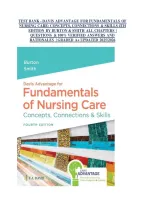
TEST BANK - DAVIS ADVANTAGE FOR FUNDAMENTALS OF
NURSING CARE: CONCEPTS, CONNECTIONS & SKILLS 4TH
EDITION BY BURTON & SMITH ALL CHAPTERS |
QUESTIONS & 100% VERIFIED ANSWERS AND
RATIONALES | GRADED A+ UPDATED 2025/2026
,Table of Contents
• Chapter 1 – The Vista of Nursing
• Chapter 2 – Health-Care Delivery, Settings, and Economics
• Chapter 3 – Ethics, Law, and Delegation in Nursing
• Chapter 4 – The Nursing Process: Critical Thinking and Decision Making
• Chapter 5 – Documentation
• Chapter 6 – Communication and Relationships
• Chapter 7 – Promoting Health and Wellness
• Chapter 8 – Ethnic, Cultural, and Spiritual Aspects of Care
• Chapter 9 – Growth and Development Throughout the Life Span
• Chapter 10 – Loss, Grief, and Dying
• Chapter 11 – Complementary and Alternative Medicine
• Chapter 12 – Patient Teaching
• Chapter 13 – Safety
• Chapter 14 – Medical Asepsis and Infection Control
• Chapter 15 – Personal Care
• Chapter 16 – Moving and Positioning Patients
• Chapter 17 – Vital Signs
• Chapter 18 – Applying Heat and Cold Therapies
• Chapter 19 – Pain Management, Rest, and Restorative Sleep
• Chapter 20 – Admission, Transfer, and Discharge
• Chapter 21 – Physical Assessment
• Chapter 22 – Surgical Asepsis
• Chapter 23 – Nutrition
• Chapter 24 – Nutritional Care and Support
• Chapter 25 – Diagnostic Tests
• Chapter 26 – Wound Care
• Chapter 27 – Musculoskeletal Care
• Chapter 28 – Respiratory Care
• Chapter 29 – Fluids, Electrolytes, and Introduction to Acid-Base Balance
• Chapter 30 – Bowel Elimination and Care
• Chapter 31 – Urinary Elimination and Care
• Chapter 32 – Care of Elderly Patients
• Chapter 33 – Care of the Surgical Patient
• Chapter 34 – Phlebotomy and Blood Specimens
• Chapter 35 – Researching and Preparing Medications
• Chapter 36 – Administering Oral, Topical, and Mucosal Medications
• Chapter 37 – Administering Intradermal, Subcutaneous, and Intramuscular Injections
• Chapter 38 – Intravenous Therapy
,Chapter 1 — Introduction to Nursing & Patient-Centered Care
Q1
Which action best reflects patient-centered care?
A. Telling the patient the care plan without input
B. Asking the patient about their values and preferences when planning care
C. Following the unit routine regardless of patient wishes
D. Limiting family involvement to visiting hours only
Answer: B
Rationale: Patient-centered care prioritizes the patient’s values, needs, and
preferences; asking about their values ensures the plan respects autonomy.
Q2
The nursing process sequence is:
A. Planning → Assessment → Implementation → Evaluation → Diagnosis
B. Assessment → Diagnosis → Planning → Implementation → Evaluation
C. Diagnosis → Assessment → Planning → Implementation → Evaluation
D. Implementation → Evaluation → Assessment → Diagnosis → Planning
Answer: B
Rationale: The accepted sequence begins with assessment, leads to nursing
diagnoses, then planning, implementation, and evaluation.
Q3
A patient expresses fear about a new diagnosis. Which ethical principle guides the
nurse to honor the patient’s choices after full disclosure?
A. Beneficence
B. Justice
C. Autonomy
D. Nonmaleficence
Answer: C
Rationale: Autonomy respects an individual’s right to make informed decisions
about their care after receiving information.
Q4
When documenting care, the nurse should:
A. Wait until the end of the shift to chart everything from memory
B. Use subjective phrases like “patient is difficult”
C. Chart objectively, immediately, and use approved abbreviations
D. Leave out medication times to shorten the note
Answer: C
, Rationale: Accurate, timely, objective documentation using approved
abbreviations is essential for legal, ethical, and clinical reasons.
Q5
A culturally competent nurse will first:
A. Ignore cultural differences to promote equality
B. Assume what a patient prefers based on group stereotypes
C. Ask open-ended questions about the patient’s beliefs and health practices
D. Require patients to follow hospital cultural norms only
Answer: C
Rationale: Cultural competence begins with assessment through open-ended
questions rather than assumptions.
Q6
A nurse who advocates for a change in a patient’s care plan is practicing which
role?
A. Caregiver only
B. Advocate
C. Delegator only
D. Entrepreneur
Answer: B
Rationale: Advocacy involves representing and supporting a patient’s needs and
wishes within the healthcare system.
Q7
Health literacy affects a patient’s ability to:
A. Only read medication labels
B. Make informed decisions, follow instructions, and navigate the health system
C. Operate medical equipment only
D. Pay for healthcare
Answer: B
Rationale: Health literacy includes comprehension of information, ability to
follow instructions, and navigate services; it’s broader than basic reading.
Q8
When a nurse discovers a medication error that did not harm the patient, the nurse
must:
A. Keep it private if patient is fine
B. Report the incident through institutional channels and document facts
C. Punish the colleague silently
NURSING CARE: CONCEPTS, CONNECTIONS & SKILLS 4TH
EDITION BY BURTON & SMITH ALL CHAPTERS |
QUESTIONS & 100% VERIFIED ANSWERS AND
RATIONALES | GRADED A+ UPDATED 2025/2026
,Table of Contents
• Chapter 1 – The Vista of Nursing
• Chapter 2 – Health-Care Delivery, Settings, and Economics
• Chapter 3 – Ethics, Law, and Delegation in Nursing
• Chapter 4 – The Nursing Process: Critical Thinking and Decision Making
• Chapter 5 – Documentation
• Chapter 6 – Communication and Relationships
• Chapter 7 – Promoting Health and Wellness
• Chapter 8 – Ethnic, Cultural, and Spiritual Aspects of Care
• Chapter 9 – Growth and Development Throughout the Life Span
• Chapter 10 – Loss, Grief, and Dying
• Chapter 11 – Complementary and Alternative Medicine
• Chapter 12 – Patient Teaching
• Chapter 13 – Safety
• Chapter 14 – Medical Asepsis and Infection Control
• Chapter 15 – Personal Care
• Chapter 16 – Moving and Positioning Patients
• Chapter 17 – Vital Signs
• Chapter 18 – Applying Heat and Cold Therapies
• Chapter 19 – Pain Management, Rest, and Restorative Sleep
• Chapter 20 – Admission, Transfer, and Discharge
• Chapter 21 – Physical Assessment
• Chapter 22 – Surgical Asepsis
• Chapter 23 – Nutrition
• Chapter 24 – Nutritional Care and Support
• Chapter 25 – Diagnostic Tests
• Chapter 26 – Wound Care
• Chapter 27 – Musculoskeletal Care
• Chapter 28 – Respiratory Care
• Chapter 29 – Fluids, Electrolytes, and Introduction to Acid-Base Balance
• Chapter 30 – Bowel Elimination and Care
• Chapter 31 – Urinary Elimination and Care
• Chapter 32 – Care of Elderly Patients
• Chapter 33 – Care of the Surgical Patient
• Chapter 34 – Phlebotomy and Blood Specimens
• Chapter 35 – Researching and Preparing Medications
• Chapter 36 – Administering Oral, Topical, and Mucosal Medications
• Chapter 37 – Administering Intradermal, Subcutaneous, and Intramuscular Injections
• Chapter 38 – Intravenous Therapy
,Chapter 1 — Introduction to Nursing & Patient-Centered Care
Q1
Which action best reflects patient-centered care?
A. Telling the patient the care plan without input
B. Asking the patient about their values and preferences when planning care
C. Following the unit routine regardless of patient wishes
D. Limiting family involvement to visiting hours only
Answer: B
Rationale: Patient-centered care prioritizes the patient’s values, needs, and
preferences; asking about their values ensures the plan respects autonomy.
Q2
The nursing process sequence is:
A. Planning → Assessment → Implementation → Evaluation → Diagnosis
B. Assessment → Diagnosis → Planning → Implementation → Evaluation
C. Diagnosis → Assessment → Planning → Implementation → Evaluation
D. Implementation → Evaluation → Assessment → Diagnosis → Planning
Answer: B
Rationale: The accepted sequence begins with assessment, leads to nursing
diagnoses, then planning, implementation, and evaluation.
Q3
A patient expresses fear about a new diagnosis. Which ethical principle guides the
nurse to honor the patient’s choices after full disclosure?
A. Beneficence
B. Justice
C. Autonomy
D. Nonmaleficence
Answer: C
Rationale: Autonomy respects an individual’s right to make informed decisions
about their care after receiving information.
Q4
When documenting care, the nurse should:
A. Wait until the end of the shift to chart everything from memory
B. Use subjective phrases like “patient is difficult”
C. Chart objectively, immediately, and use approved abbreviations
D. Leave out medication times to shorten the note
Answer: C
, Rationale: Accurate, timely, objective documentation using approved
abbreviations is essential for legal, ethical, and clinical reasons.
Q5
A culturally competent nurse will first:
A. Ignore cultural differences to promote equality
B. Assume what a patient prefers based on group stereotypes
C. Ask open-ended questions about the patient’s beliefs and health practices
D. Require patients to follow hospital cultural norms only
Answer: C
Rationale: Cultural competence begins with assessment through open-ended
questions rather than assumptions.
Q6
A nurse who advocates for a change in a patient’s care plan is practicing which
role?
A. Caregiver only
B. Advocate
C. Delegator only
D. Entrepreneur
Answer: B
Rationale: Advocacy involves representing and supporting a patient’s needs and
wishes within the healthcare system.
Q7
Health literacy affects a patient’s ability to:
A. Only read medication labels
B. Make informed decisions, follow instructions, and navigate the health system
C. Operate medical equipment only
D. Pay for healthcare
Answer: B
Rationale: Health literacy includes comprehension of information, ability to
follow instructions, and navigate services; it’s broader than basic reading.
Q8
When a nurse discovers a medication error that did not harm the patient, the nurse
must:
A. Keep it private if patient is fine
B. Report the incident through institutional channels and document facts
C. Punish the colleague silently


