
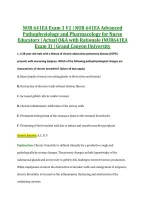
NUR 641EA Exam 3 V1 | NUR 641EA Advanced
Pathophysiology and Pharmacology for Nurse
Educators | Actual Q&A with Rationale (NUR641EA
Exam 3) | Grand Canyon University
1. A 58-year-old male with a history of chronic obstructive pulmonary disease (COPD)
presents with worsening dyspnea. Which of the following pathophysiological changes are
characteristic of chronic bronchitis? (Select all that apply)
A. Hypertrophy of mucus-secreting glands in the trachea and bronchi
B. Destruction of alveolar walls without obvious fibrosis
C. Increased goblet cells in smaller airways
D. Chronic inflammatory infiltration of the airway walls
E. Permanent enlargement of the airspaces distal to the terminal bronchioles
F. Thickening of the bronchial wall due to edema and smooth muscle hyperplasia
Correct Answer: A, C, D, F
Explanation: Chronic bronchitis is defined clinically by a productive cough and
pathologically by airway changes. The primary changes include hypertrophy of the
submucosal glands and an increase in goblet cells, leading to excessive mucus production.
While emphysema involves the destruction of alveolar walls and enlargement of airspaces,
chronic bronchitis is focused on the inflammatory thickening and obstruction of the
conducting airways.
,2. When managing a patient with stage C Heart Failure with Reduced Ejection Fraction
(HFrEF), which medication class is primarily indicated to inhibit the deleterious effects of the
sympathetic nervous system?
A. Beta-Blockers
B. Loop Diuretics
C. Calcium Channel Blockers
D. Cardiac Glycosides
Correct Answer: A
Explanation: Beta-blockers are essential in HFrEF management because they counteract
the chronic activation of the sympathetic nervous system, which causes cardiac remodeling
and tachyarrhythmias. Clinical trials have demonstrated that medications like Carvedilol
and Metoprolol Succinate significantly reduce morbidity and mortality. Conversely, non-
dihydropyridine calcium channel blockers are often avoided in HFrEF due to their negative
inotropic effects.
3. A patient is diagnosed with Primary Hyperaldosteronism (Conn Syndrome). Which of the
following laboratory findings would the nurse educator expect to see?
A. Hyperkalemia and Hypertension
B. Hypokalemia and Metabolic Alkalosis
C. Hypokalemia and Hypertension
D. Hyponatremia and Metabolic Acidosis
,Correct Answer: C
Explanation: Primary hyperaldosteronism involves excessive secretion of aldosterone
from the adrenal cortex, which leads to increased sodium reabsorption and potassium
excretion in the distal tubules. This mechanism results in systemic hypertension due to
fluid retention and hypokalemia due to renal potassium wasting. Metabolic alkalosis may
also occur, but the hallmark combination is hypertension with low serum potassium levels.
4. Which pharmacological agent is considered the first-line treatment for an acute
exacerbation of asthma due to its rapid onset of action on bronchial smooth muscle?
A. Albuterol
B. Ipratropium bromide
C. Salmeterol
D. Fluticasone
Correct Answer: A
Explanation: Albuterol is a Short-Acting Beta-Agonist (SABA) that provides rapid relief of
bronchoconstriction by stimulating beta-2 adrenergic receptors. It is the gold standard for
acute relief because its effects begin within minutes of inhalation. Long-acting agonists like
Salmeterol and inhaled corticosteroids like Fluticasone are intended for long-term control
and are not appropriate for emergent symptoms.
, 5. A patient with Type 2 Diabetes Mellitus is prescribed a SGLT2 inhibitor (e.g., Empagliflozin).
What is the primary mechanism of action for this drug class?
A. Increasing insulin sensitivity in peripheral tissues
B. Inhibiting the reabsorption of glucose in the proximal convoluted tubule of the kidney
C. Stimulating the release of insulin from pancreatic beta cells
D. Delaying the absorption of carbohydrates in the small intestine
Correct Answer: B
Explanation: Sodium-Glucose Cotransporter 2 (SGLT2) inhibitors work independently of
insulin by preventing the kidneys from reabsorbing glucose back into the bloodstream.
This leads to increased glucosuria, which lowers blood glucose levels and can also provide
cardiovascular and renal benefits. This mechanism is distinct from sulfonylureas, which
stimulate insulin secretion, or biguanides, which improve insulin sensitivity.
6. A 65-year-old female presents with clinical manifestations of Cushing Syndrome. Which
findings are consistent with excessive glucocorticoid levels? (Select all that apply)
A. Truncal obesity and ‘buffalo hump’
B. Thin, friable skin and purple striae
C. Hypotension and weight loss
D. Hyperglycemia and insulin resistance
E. Hirsutism and acne
Pathophysiology and Pharmacology for Nurse
Educators | Actual Q&A with Rationale (NUR641EA
Exam 3) | Grand Canyon University
1. A 58-year-old male with a history of chronic obstructive pulmonary disease (COPD)
presents with worsening dyspnea. Which of the following pathophysiological changes are
characteristic of chronic bronchitis? (Select all that apply)
A. Hypertrophy of mucus-secreting glands in the trachea and bronchi
B. Destruction of alveolar walls without obvious fibrosis
C. Increased goblet cells in smaller airways
D. Chronic inflammatory infiltration of the airway walls
E. Permanent enlargement of the airspaces distal to the terminal bronchioles
F. Thickening of the bronchial wall due to edema and smooth muscle hyperplasia
Correct Answer: A, C, D, F
Explanation: Chronic bronchitis is defined clinically by a productive cough and
pathologically by airway changes. The primary changes include hypertrophy of the
submucosal glands and an increase in goblet cells, leading to excessive mucus production.
While emphysema involves the destruction of alveolar walls and enlargement of airspaces,
chronic bronchitis is focused on the inflammatory thickening and obstruction of the
conducting airways.
,2. When managing a patient with stage C Heart Failure with Reduced Ejection Fraction
(HFrEF), which medication class is primarily indicated to inhibit the deleterious effects of the
sympathetic nervous system?
A. Beta-Blockers
B. Loop Diuretics
C. Calcium Channel Blockers
D. Cardiac Glycosides
Correct Answer: A
Explanation: Beta-blockers are essential in HFrEF management because they counteract
the chronic activation of the sympathetic nervous system, which causes cardiac remodeling
and tachyarrhythmias. Clinical trials have demonstrated that medications like Carvedilol
and Metoprolol Succinate significantly reduce morbidity and mortality. Conversely, non-
dihydropyridine calcium channel blockers are often avoided in HFrEF due to their negative
inotropic effects.
3. A patient is diagnosed with Primary Hyperaldosteronism (Conn Syndrome). Which of the
following laboratory findings would the nurse educator expect to see?
A. Hyperkalemia and Hypertension
B. Hypokalemia and Metabolic Alkalosis
C. Hypokalemia and Hypertension
D. Hyponatremia and Metabolic Acidosis
,Correct Answer: C
Explanation: Primary hyperaldosteronism involves excessive secretion of aldosterone
from the adrenal cortex, which leads to increased sodium reabsorption and potassium
excretion in the distal tubules. This mechanism results in systemic hypertension due to
fluid retention and hypokalemia due to renal potassium wasting. Metabolic alkalosis may
also occur, but the hallmark combination is hypertension with low serum potassium levels.
4. Which pharmacological agent is considered the first-line treatment for an acute
exacerbation of asthma due to its rapid onset of action on bronchial smooth muscle?
A. Albuterol
B. Ipratropium bromide
C. Salmeterol
D. Fluticasone
Correct Answer: A
Explanation: Albuterol is a Short-Acting Beta-Agonist (SABA) that provides rapid relief of
bronchoconstriction by stimulating beta-2 adrenergic receptors. It is the gold standard for
acute relief because its effects begin within minutes of inhalation. Long-acting agonists like
Salmeterol and inhaled corticosteroids like Fluticasone are intended for long-term control
and are not appropriate for emergent symptoms.
, 5. A patient with Type 2 Diabetes Mellitus is prescribed a SGLT2 inhibitor (e.g., Empagliflozin).
What is the primary mechanism of action for this drug class?
A. Increasing insulin sensitivity in peripheral tissues
B. Inhibiting the reabsorption of glucose in the proximal convoluted tubule of the kidney
C. Stimulating the release of insulin from pancreatic beta cells
D. Delaying the absorption of carbohydrates in the small intestine
Correct Answer: B
Explanation: Sodium-Glucose Cotransporter 2 (SGLT2) inhibitors work independently of
insulin by preventing the kidneys from reabsorbing glucose back into the bloodstream.
This leads to increased glucosuria, which lowers blood glucose levels and can also provide
cardiovascular and renal benefits. This mechanism is distinct from sulfonylureas, which
stimulate insulin secretion, or biguanides, which improve insulin sensitivity.
6. A 65-year-old female presents with clinical manifestations of Cushing Syndrome. Which
findings are consistent with excessive glucocorticoid levels? (Select all that apply)
A. Truncal obesity and ‘buffalo hump’
B. Thin, friable skin and purple striae
C. Hypotension and weight loss
D. Hyperglycemia and insulin resistance
E. Hirsutism and acne


