
1|P a g e
LDR 320T – WEEK 3, PRACTICE
CHAPTER 13: SKILLS FOR
DEVELOPING OTHERS
Introduction
This practice question bank is designed for students studying LDR 320T, with emphasis on
Week 3 and Chapter 13 concepts related to developing others. The material focuses on the
practical leadership skills required to identify developmental needs, provide effective feedback,
coach individuals, delegate appropriately, create learning opportunities, and support continuous
improvement. Rather than concentrating on simple definitions, the questions use realistic
leadership situations that require students to analyze circumstances, select appropriate
developmental strategies, and apply leadership princip les.
The practice set is intended to help students prepare for assessments by strengthening
application- level reasoning and distinguishing between closely related leadership approaches.
Questions cover common developmental challenges such as performance gaps, employee
readiness, feedback, coaching, mentoring, delegation, motivation, and individualized
development. Students should use the rationales not merely to identify the correct answer but to
understand why alternative approaches may be less appropriate in a particular situation.
This is an original study resource, not a reproduction of an actual examination.
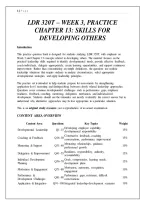
CONTENT AREA OVERVIEW
Content Area Questions Key Topics Weight
Developing employee capability,
Developmental Leadership Q1–15 15%
developmental responsibility
Constructive feedback, coaching
Coaching & Feedback Q16–30 15%
conversations, performance improvement
Mentoring relationships, guidance,
Mentoring & Support Q31–40 10%
professional growth
Readiness, responsibility, authority,
Delegation & Empowerment Q41–55 15%
accountability
Individual Development Goals, competencies, learning needs,
Q56–70 15%
Planning development plans
Motivation, autonomy, recognition,
Motivation & Engagement Q71–80 10%
engagement
Performance & Performance gaps, resistance, difficult
Q81–90 10%
Development Challenges conversations
Application & Integration Q91–100 Integrated leadership-development scenarios 10%
,2|P a g e
QUESTIONS 1–100
Q1:
A department supervisor notices that a highly capable employee consistently completes assigned
tasks but rarely takes initiative when unfamiliar problems arise. The employee has expressed
interest in advancement. Which developmental intervention would MOST directly address the
underlying issue?
A) Assigning only tasks the employee has already mastered
B) Providing progressively challenging assignments with coaching and reflection
C) Increasing the employee's workload without additional guidance
D) Moving the employee immediately into a managerial position
Rationale: B is correct because progressively challenging assignments allow the employee to
build judgment, confidence, and problem-solving capability while receiving appropriate support.
A is incorrect because limiting the employee to familiar tasks reinforces the existing behavior
rather than developing adaptability. C is incorrect because increased workload alone does not
necessarily create meaningful development and may produce frustration. D is incorrect because
promotion without preparation can expose developmental gaps rather than address them.
Q2:
A manager gives an employee detailed instructions for every step of a project even though the
employee has successfully completed similar projects independently. The manager argues that
close supervision ensures quality. What is the MOST significant developmental concern?
A) The employee may receive too much recognition
B) The manager is limiting autonomy and opportunities to strengthen independent
judgment
C) The project will necessarily require additional resources
D) The employee will automatically become resistant to feedback
Rationale: B is correct because excessive direction can prevent capable employees from
practicing decision-making and ownership. A is incorrect because recognition is not the central
issue. C is unsupported because supervision does not inherently determine resource
requirements. D is incorrect because resistance to feedback does not automatically result from
close supervision.
Q3:
During a developmental conversation, an employee becomes defensive after receiving feedback
about communication problems. Which response by the leader is MOST appropriate?
,3|P a g e
A) End the conversation immediately to avoid conflict
B) Repeat the criticism more forcefully
C) Ask exploratory questions and connect the feedback to observable behaviors and
outcomes
D) Remove communication responsibilities from the employee
Rationale: C is correct because specific observations and exploratory questions can reduce
defensiveness and shift the discussion toward improvement. A avoids rather than addresses the
developmental issue. B may intensify defensiveness. D removes the opportunity to develop the
employee's communication skills.
Q4:
A new employee demonstrates strong technical ability but struggles to prioritize competing
responsibilities. Which developmental approach is MOST appropriate?
A) Give the employee more technical training
B) Coach the employee through prioritization using realistic work scenarios
C) Reduce all responsibilities until the employee gains confidence
D) Evaluate the employee only on technical performance
Rationale: B is correct because the identified developmental gap involves prioritization rather
than technical knowledge. A addresses the wrong competency. C may prevent the employee from
practicing prioritization. D ignores an important performance requirement.
Q5:
A leader wants employees to take greater ownership of their professional development. Which
practice BEST supports that objective?
A) Designing identical development plans for everyone
B) Requiring employees to complete development activities selected entirely by management
C) Involving employees in identifying development goals, strategies, and measures of
progress
D) Providing development opportunities only after performance problems occur
Rationale: C is correct because employee participation promotes ownership and makes
development more relevant to individual needs. A ignores differences between employees. B
limits autonomy. D treats development as a corrective action rather than an ongoing leadership
responsibility.
Q6:
An experienced employee is mentoring a newer colleague. The newer colleague repeatedly asks
the mentor to solve problems rather than attempting solutions independently. What should the
mentor do?
, 4|P a g e
A) Continue solving the problems to demonstrate expertise
B) Stop providing assistance completely
C) Use questions that encourage the employee to analyze alternatives and reach conclusions
D) Report the employee's dependence immediately to senior management
Rationale: C is correct because effective mentoring develops the learner's ability to think
independently rather than creating dependence. A reinforces dependency. B removes useful
support prematurely. D escalates a developmental issue that can normally be addressed through
mentoring.
Q7:
A manager delegates a complex assignment to an employee who has moderate experience but
has never handled the full responsibility independently. Which approach BEST balances
development and risk management?
A) Complete the assignment for the employee
B) Delegate the task and provide no further involvement
C) Clarify the expected outcome, establish checkpoints, and allow the employee discretion
in execution
D) Give the employee responsibility only for administrative portions of the assignment
Rationale: C is correct because clear outcomes and checkpoints provide appropriate
accountability while preserving the employee's opportunity to develop. A eliminates the
developmental opportunity. B provides insufficient support for a developing employee. D may
unnecessarily restrict the employee's learning.
Q8:
An employee performs well when given explicit instructions but struggles when required to
make ambiguous decisions. Which developmental experience would MOST effectively address
this weakness?
A) Additional instruction manuals
B) Repeating familiar tasks
C) Assigning controlled ambiguous situations followed by structured reflection
D) Removing the employee from decision- making activities
Rationale: C is correct because controlled exposure to ambiguity allows the employee to
practice judgment while reflection reinforces learning. A may increase knowledge but does not
necessarily develop judgment. B does not challenge the relevant weakness. D prevents
development of the required capability.
Q9:
LDR 320T – WEEK 3, PRACTICE
CHAPTER 13: SKILLS FOR
DEVELOPING OTHERS
Introduction
This practice question bank is designed for students studying LDR 320T, with emphasis on
Week 3 and Chapter 13 concepts related to developing others. The material focuses on the
practical leadership skills required to identify developmental needs, provide effective feedback,
coach individuals, delegate appropriately, create learning opportunities, and support continuous
improvement. Rather than concentrating on simple definitions, the questions use realistic
leadership situations that require students to analyze circumstances, select appropriate
developmental strategies, and apply leadership princip les.
The practice set is intended to help students prepare for assessments by strengthening
application- level reasoning and distinguishing between closely related leadership approaches.
Questions cover common developmental challenges such as performance gaps, employee
readiness, feedback, coaching, mentoring, delegation, motivation, and individualized
development. Students should use the rationales not merely to identify the correct answer but to
understand why alternative approaches may be less appropriate in a particular situation.
This is an original study resource, not a reproduction of an actual examination.
CONTENT AREA OVERVIEW
Content Area Questions Key Topics Weight
Developing employee capability,
Developmental Leadership Q1–15 15%
developmental responsibility
Constructive feedback, coaching
Coaching & Feedback Q16–30 15%
conversations, performance improvement
Mentoring relationships, guidance,
Mentoring & Support Q31–40 10%
professional growth
Readiness, responsibility, authority,
Delegation & Empowerment Q41–55 15%
accountability
Individual Development Goals, competencies, learning needs,
Q56–70 15%
Planning development plans
Motivation, autonomy, recognition,
Motivation & Engagement Q71–80 10%
engagement
Performance & Performance gaps, resistance, difficult
Q81–90 10%
Development Challenges conversations
Application & Integration Q91–100 Integrated leadership-development scenarios 10%
,2|P a g e
QUESTIONS 1–100
Q1:
A department supervisor notices that a highly capable employee consistently completes assigned
tasks but rarely takes initiative when unfamiliar problems arise. The employee has expressed
interest in advancement. Which developmental intervention would MOST directly address the
underlying issue?
A) Assigning only tasks the employee has already mastered
B) Providing progressively challenging assignments with coaching and reflection
C) Increasing the employee's workload without additional guidance
D) Moving the employee immediately into a managerial position
Rationale: B is correct because progressively challenging assignments allow the employee to
build judgment, confidence, and problem-solving capability while receiving appropriate support.
A is incorrect because limiting the employee to familiar tasks reinforces the existing behavior
rather than developing adaptability. C is incorrect because increased workload alone does not
necessarily create meaningful development and may produce frustration. D is incorrect because
promotion without preparation can expose developmental gaps rather than address them.
Q2:
A manager gives an employee detailed instructions for every step of a project even though the
employee has successfully completed similar projects independently. The manager argues that
close supervision ensures quality. What is the MOST significant developmental concern?
A) The employee may receive too much recognition
B) The manager is limiting autonomy and opportunities to strengthen independent
judgment
C) The project will necessarily require additional resources
D) The employee will automatically become resistant to feedback
Rationale: B is correct because excessive direction can prevent capable employees from
practicing decision-making and ownership. A is incorrect because recognition is not the central
issue. C is unsupported because supervision does not inherently determine resource
requirements. D is incorrect because resistance to feedback does not automatically result from
close supervision.
Q3:
During a developmental conversation, an employee becomes defensive after receiving feedback
about communication problems. Which response by the leader is MOST appropriate?
,3|P a g e
A) End the conversation immediately to avoid conflict
B) Repeat the criticism more forcefully
C) Ask exploratory questions and connect the feedback to observable behaviors and
outcomes
D) Remove communication responsibilities from the employee
Rationale: C is correct because specific observations and exploratory questions can reduce
defensiveness and shift the discussion toward improvement. A avoids rather than addresses the
developmental issue. B may intensify defensiveness. D removes the opportunity to develop the
employee's communication skills.
Q4:
A new employee demonstrates strong technical ability but struggles to prioritize competing
responsibilities. Which developmental approach is MOST appropriate?
A) Give the employee more technical training
B) Coach the employee through prioritization using realistic work scenarios
C) Reduce all responsibilities until the employee gains confidence
D) Evaluate the employee only on technical performance
Rationale: B is correct because the identified developmental gap involves prioritization rather
than technical knowledge. A addresses the wrong competency. C may prevent the employee from
practicing prioritization. D ignores an important performance requirement.
Q5:
A leader wants employees to take greater ownership of their professional development. Which
practice BEST supports that objective?
A) Designing identical development plans for everyone
B) Requiring employees to complete development activities selected entirely by management
C) Involving employees in identifying development goals, strategies, and measures of
progress
D) Providing development opportunities only after performance problems occur
Rationale: C is correct because employee participation promotes ownership and makes
development more relevant to individual needs. A ignores differences between employees. B
limits autonomy. D treats development as a corrective action rather than an ongoing leadership
responsibility.
Q6:
An experienced employee is mentoring a newer colleague. The newer colleague repeatedly asks
the mentor to solve problems rather than attempting solutions independently. What should the
mentor do?
, 4|P a g e
A) Continue solving the problems to demonstrate expertise
B) Stop providing assistance completely
C) Use questions that encourage the employee to analyze alternatives and reach conclusions
D) Report the employee's dependence immediately to senior management
Rationale: C is correct because effective mentoring develops the learner's ability to think
independently rather than creating dependence. A reinforces dependency. B removes useful
support prematurely. D escalates a developmental issue that can normally be addressed through
mentoring.
Q7:
A manager delegates a complex assignment to an employee who has moderate experience but
has never handled the full responsibility independently. Which approach BEST balances
development and risk management?
A) Complete the assignment for the employee
B) Delegate the task and provide no further involvement
C) Clarify the expected outcome, establish checkpoints, and allow the employee discretion
in execution
D) Give the employee responsibility only for administrative portions of the assignment
Rationale: C is correct because clear outcomes and checkpoints provide appropriate
accountability while preserving the employee's opportunity to develop. A eliminates the
developmental opportunity. B provides insufficient support for a developing employee. D may
unnecessarily restrict the employee's learning.
Q8:
An employee performs well when given explicit instructions but struggles when required to
make ambiguous decisions. Which developmental experience would MOST effectively address
this weakness?
A) Additional instruction manuals
B) Repeating familiar tasks
C) Assigning controlled ambiguous situations followed by structured reflection
D) Removing the employee from decision- making activities
Rationale: C is correct because controlled exposure to ambiguity allows the employee to
practice judgment while reflection reinforces learning. A may increase knowledge but does not
necessarily develop judgment. B does not challenge the relevant weakness. D prevents
development of the required capability.
Q9:


