
DNA & RNA – Protein Synthesis 1
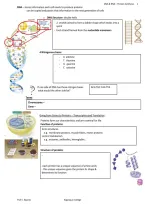
DNA – stores information each cell needs to produce proteins
- can be copied and passes that information to the next generation of cells
DNA Structure- double helix
- 2 strands joined to form a ladder shape which twists into a
spiral
- Each strand formed from the nucleotide monomers
4 Nitrogenous bases
- A adenine
- T thymine
- G guanine
- C cytosine
-
If one side of DNA has these nitrogen bases ACG TGC CAG TTA
what would the other side be?
Terms
Chromosome –
Gene –
Going from Genes to Proteins – Transcription and Translation
Proteins form our characteristics and are essential for life
Function of proteins:
form structures
e.g. membrane proteins, muscle fibers, motor proteins
control metabolism
e.g. enzymes, antibodies, hemoglobin…
Structure of proteins
-
-each protein has a unique sequence of amino acids
- this unique sequence gives the protein its shape &
determines its function
Prof C. Baynes Algonquin College
DNA – stores information each cell needs to produce proteins
- can be copied and passes that information to the next generation of cells
DNA Structure- double helix
- 2 strands joined to form a ladder shape which twists into a
spiral
- Each strand formed from the nucleotide monomers
4 Nitrogenous bases
- A adenine
- T thymine
- G guanine
- C cytosine
-
If one side of DNA has these nitrogen bases ACG TGC CAG TTA
what would the other side be?
Terms
Chromosome –
Gene –
Going from Genes to Proteins – Transcription and Translation
Proteins form our characteristics and are essential for life
Function of proteins:
form structures
e.g. membrane proteins, muscle fibers, motor proteins
control metabolism
e.g. enzymes, antibodies, hemoglobin…
Structure of proteins
-
-each protein has a unique sequence of amino acids
- this unique sequence gives the protein its shape &
determines its function
Prof C. Baynes Algonquin College


