
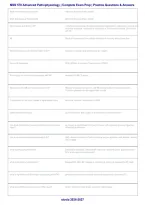
MSN 570 Advanced Pathophysiology | Complete Exam Prep | Practice Questions & Answers
MSN 570 Advance Patho EXAM MSN 570 Advance Patho EXAM
MSN 570 Advance Patho EXAM MSN 570 Advance Patho EXAM
What causes cell death in MI? unstable plaque breaks off, triggering platelet aggregation, coagulation cascade and
thrombus formation. continued no blood flow in 10 seconds ischemia, 20 minutes
cell die
MI Death of myocardium from sudden blockage of coronary artery blood flow
What consequence of cell death leads to CP? hypoxia as cannot meet cell demand for oxygen
How is MI diagnosed EKG (STEMI) or elevated Troponin (non-STEMI)
What might you find in blood consistent with MI? elevated CK MB, Troponin
Where does CK MB and Troponin come from? Release of lysosomal enzymes; CK MB detected after myocardial necrosis,
Troponin released from damaged heart muscle
3 mechanism of cell injury related to reperfussion injury ischemia, necrosis, reperfussion l/t RAS
define reperfussion injury injury that occurs after oxygen is reintroduced to tissue perfusion
how does inflammatory process contribute to reperfussion as oxygen is reintroduced it comes in contact with damaged proteins triggering
injury? inflammatory response
how does oxidative process contribute to RI? RAS causes impairment of cell membrane and pro-apotptoic cells release. making
cell unstable
what is primary Hypertension? Essential or idiopathic, elevated BP without an identified cause, accounts for 90 -
95% of all cases of hypertension?
what is secondary hypertension? Elevated BP, labile BP; related to conditions ie kidney dz; resistant to BP meds
what is significance of Ventricular hypertrophy and HTN? persistent hypertension leads to ventricular hypertrophy; decrease CO
what comorbidities/conditions does HTN cause? stroke, ischemia, heart failure, aneurysm, hemorrhage
stuvia 2026-2027
, MSN 570 Advanced Pathophysiology | Complete Exam Prep | Practice Questions & Answers
what is preload? volume of blood in ventricles at end of diastole
what is afterload? peripheral resistance against which the left ventricle must pump
hoe does HTN l/t CHF? overwork left ventricle due to increase pressure; decreased pumping ability of heart
and decreases CO.
identify pathological process of gangrene? form of coagulative necrosis; interruption of blood flow l/t denaturing cells enzymes
and bacterial invasion
three types of gangrene dry, wet & gas
what is the major treatment approach for gangrene? removing affective tissue to prevent infection; treating problem that led to gangrene
why use antibiotic for gangrene? to slow bacterial damage
What are the two major necrotic processes? Coagulative and liquifactive
What is coagulative necrosis? necrosis caused y interruption of blood flow l/t desrease Ph, and bacterial growth
what is liquifactive necrosis? Caustic enzymes dissolve and liquify necrotic cell; cottage cheese like appearance.
Describe dry gangrene hypoxia l/t ischemia l/t last of blood flow l/t coagulative necrosis
Describe wet gangrene extensive damage from bacteria with WBC's that have invaided site produces a
liquid wound
describe gas gangrene Presence of clostridium (aerobic bacteria) releases toxins and destroy surrounding
cell. Most fatal.
Colon cancer inherited vs genetic Colon CA inherited- occurs on gremline
Colon CA genetic occurs on somatic cells
Describe FAP - familial adenomatous polyposis Gene defect on chromosome 1 or 5; involves tumor suppressor genes, hereditary
condition
stuvia 2026-2027
MSN 570 Advance Patho EXAM MSN 570 Advance Patho EXAM
MSN 570 Advance Patho EXAM MSN 570 Advance Patho EXAM
What causes cell death in MI? unstable plaque breaks off, triggering platelet aggregation, coagulation cascade and
thrombus formation. continued no blood flow in 10 seconds ischemia, 20 minutes
cell die
MI Death of myocardium from sudden blockage of coronary artery blood flow
What consequence of cell death leads to CP? hypoxia as cannot meet cell demand for oxygen
How is MI diagnosed EKG (STEMI) or elevated Troponin (non-STEMI)
What might you find in blood consistent with MI? elevated CK MB, Troponin
Where does CK MB and Troponin come from? Release of lysosomal enzymes; CK MB detected after myocardial necrosis,
Troponin released from damaged heart muscle
3 mechanism of cell injury related to reperfussion injury ischemia, necrosis, reperfussion l/t RAS
define reperfussion injury injury that occurs after oxygen is reintroduced to tissue perfusion
how does inflammatory process contribute to reperfussion as oxygen is reintroduced it comes in contact with damaged proteins triggering
injury? inflammatory response
how does oxidative process contribute to RI? RAS causes impairment of cell membrane and pro-apotptoic cells release. making
cell unstable
what is primary Hypertension? Essential or idiopathic, elevated BP without an identified cause, accounts for 90 -
95% of all cases of hypertension?
what is secondary hypertension? Elevated BP, labile BP; related to conditions ie kidney dz; resistant to BP meds
what is significance of Ventricular hypertrophy and HTN? persistent hypertension leads to ventricular hypertrophy; decrease CO
what comorbidities/conditions does HTN cause? stroke, ischemia, heart failure, aneurysm, hemorrhage
stuvia 2026-2027
, MSN 570 Advanced Pathophysiology | Complete Exam Prep | Practice Questions & Answers
what is preload? volume of blood in ventricles at end of diastole
what is afterload? peripheral resistance against which the left ventricle must pump
hoe does HTN l/t CHF? overwork left ventricle due to increase pressure; decreased pumping ability of heart
and decreases CO.
identify pathological process of gangrene? form of coagulative necrosis; interruption of blood flow l/t denaturing cells enzymes
and bacterial invasion
three types of gangrene dry, wet & gas
what is the major treatment approach for gangrene? removing affective tissue to prevent infection; treating problem that led to gangrene
why use antibiotic for gangrene? to slow bacterial damage
What are the two major necrotic processes? Coagulative and liquifactive
What is coagulative necrosis? necrosis caused y interruption of blood flow l/t desrease Ph, and bacterial growth
what is liquifactive necrosis? Caustic enzymes dissolve and liquify necrotic cell; cottage cheese like appearance.
Describe dry gangrene hypoxia l/t ischemia l/t last of blood flow l/t coagulative necrosis
Describe wet gangrene extensive damage from bacteria with WBC's that have invaided site produces a
liquid wound
describe gas gangrene Presence of clostridium (aerobic bacteria) releases toxins and destroy surrounding
cell. Most fatal.
Colon cancer inherited vs genetic Colon CA inherited- occurs on gremline
Colon CA genetic occurs on somatic cells
Describe FAP - familial adenomatous polyposis Gene defect on chromosome 1 or 5; involves tumor suppressor genes, hereditary
condition
stuvia 2026-2027


