
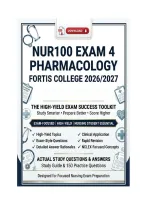
,NUR100 Pharmacology Exam 4 Study Guide &
150 Practice Questions Fortis College
2026/2027
1. A nurse is teaching a patient about metformin (Glucophage). Which statement by the patient
indicates a need for further teaching?
A. "I will take this medication with my morning and evening meals."
B. "I should stop taking this medication 48 hours before any CT scan with contrast."
C. "This medication will help my pancreas produce more insulin to lower my blood sugar."
D. "I might experience some stomach upset when I first start taking this drug."
Correct Answer: C. "This medication will help my pancreas produce more insulin to lower my
blood sugar."
Rationale: Metformin is a biguanide that works by decreasing glucose production in the liver
and increasing insulin sensitivity in peripheral tissues. It does not stimulate the pancreas to
produce more insulin, which is the mechanism of sulfonylureas. The patient's misunderstanding
of the mechanism of action requires correction to ensure they understand how the drug
manages their condition.
2. When administering Lispro (Humalog) insulin, at what time should the nurse ensure the
patient eats a meal?
,A. 30 to 60 minutes after administration
B. 2 hours after administration
C. Within 15 minutes of administration
D. Immediately before the administration
Correct Answer: C. Within 15 minutes of administration
Rationale: Lispro is a rapid-acting insulin with an onset of action between 15 to 30 minutes.
Therefore, the patient must have food available and eat within 15 minutes of the injection to
prevent a rapid drop in blood glucose levels. Providing food too late can lead to severe
hypoglycemia during the peak of the insulin activity.
3. A patient is receiving levothyroxine (Synthroid) for hypothyroidism. Which assessment finding
would suggest the dose is too high?
A. Bradycardia and hypotension
B. Weight gain and lethargy
C. Constipation and cold intolerance
, D. Tachycardia and palpitations
Correct Answer: D. Tachycardia and palpitations
Rationale: Levothyroxine toxicity or over-replacement manifests as signs of hyperthyroidism,
such as tachycardia, tremors, heat intolerance, and palpitations. Weight gain and lethargy are
symptoms of under-replacement or continuing hypothyroidism. Monitoring the heart rate is a
critical nursing intervention when initiating or adjusting the dose of this medication.
4. What is the primary rationale for instructing a patient to rinse their mouth after using a
fluticasone (Flovent) inhaler?
A. To prevent systemic absorption of the corticosteroid
B. To improve the taste of the medication in the mouth
C. To reduce the risk of dental caries and enamel erosion
D. To prevent the development of oral candidiasis (thrush)
Correct Answer: D. To prevent the development of oral candidiasis (thrush)
Rationale: Inhaled corticosteroids can suppress the local immune response in the oral cavity,
leading to fungal overgrowth. Rinsing the mouth and spitting out the water helps remove
residual medication from the oral mucosa. This simple hygiene step significantly reduces the
incidence of painful oral yeast infections in patients with asthma or COPD.
150 Practice Questions Fortis College
2026/2027
1. A nurse is teaching a patient about metformin (Glucophage). Which statement by the patient
indicates a need for further teaching?
A. "I will take this medication with my morning and evening meals."
B. "I should stop taking this medication 48 hours before any CT scan with contrast."
C. "This medication will help my pancreas produce more insulin to lower my blood sugar."
D. "I might experience some stomach upset when I first start taking this drug."
Correct Answer: C. "This medication will help my pancreas produce more insulin to lower my
blood sugar."
Rationale: Metformin is a biguanide that works by decreasing glucose production in the liver
and increasing insulin sensitivity in peripheral tissues. It does not stimulate the pancreas to
produce more insulin, which is the mechanism of sulfonylureas. The patient's misunderstanding
of the mechanism of action requires correction to ensure they understand how the drug
manages their condition.
2. When administering Lispro (Humalog) insulin, at what time should the nurse ensure the
patient eats a meal?
,A. 30 to 60 minutes after administration
B. 2 hours after administration
C. Within 15 minutes of administration
D. Immediately before the administration
Correct Answer: C. Within 15 minutes of administration
Rationale: Lispro is a rapid-acting insulin with an onset of action between 15 to 30 minutes.
Therefore, the patient must have food available and eat within 15 minutes of the injection to
prevent a rapid drop in blood glucose levels. Providing food too late can lead to severe
hypoglycemia during the peak of the insulin activity.
3. A patient is receiving levothyroxine (Synthroid) for hypothyroidism. Which assessment finding
would suggest the dose is too high?
A. Bradycardia and hypotension
B. Weight gain and lethargy
C. Constipation and cold intolerance
, D. Tachycardia and palpitations
Correct Answer: D. Tachycardia and palpitations
Rationale: Levothyroxine toxicity or over-replacement manifests as signs of hyperthyroidism,
such as tachycardia, tremors, heat intolerance, and palpitations. Weight gain and lethargy are
symptoms of under-replacement or continuing hypothyroidism. Monitoring the heart rate is a
critical nursing intervention when initiating or adjusting the dose of this medication.
4. What is the primary rationale for instructing a patient to rinse their mouth after using a
fluticasone (Flovent) inhaler?
A. To prevent systemic absorption of the corticosteroid
B. To improve the taste of the medication in the mouth
C. To reduce the risk of dental caries and enamel erosion
D. To prevent the development of oral candidiasis (thrush)
Correct Answer: D. To prevent the development of oral candidiasis (thrush)
Rationale: Inhaled corticosteroids can suppress the local immune response in the oral cavity,
leading to fungal overgrowth. Rinsing the mouth and spitting out the water helps remove
residual medication from the oral mucosa. This simple hygiene step significantly reduces the
incidence of painful oral yeast infections in patients with asthma or COPD.


