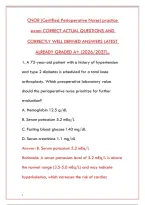
CNOR (Certified Perioperative Nurse) practice
exam CORRECT ACTUAL QUESTIONS AND
CORRECTLY WELL DEFINED ANSWERS LATEST
ALREADY GRADED A+ (2026/2027).,
1. A 72-year-old patient with a history of hypertension
and type 2 diabetes is scheduled for a total knee
arthroplasty. Which preoperative laboratory value
should the perioperative nurse prioritize for further
evaluation?
A. Hemoglobin 12.5 g/dL
B. Serum potassium 5.2 mEq/L
C. Fasting blood glucose 140 mg/dL
D. Serum creatinine 1.1 mg/dL
Answer: B. Serum potassium 5.2 mEq/L
Rationale: A serum potassium level of 5.2 mEq/L is above
the normal range (3.5-5.0 mEq/L) and may indicate
hyperkalemia, which increases the risk of cardiac
1
,arrhythmias during anesthesia. While the hemoglobin is
slightly low (normal 12-16 g/dL for females), the glucose
is elevated but expected in a diabetic patient, and the
creatinine is within normal limits. Hyperkalemia requires
prompt intervention before proceeding with surgery. The
perioperative nurse should notify the anesthesia provider
and surgeon for further evaluation and management.
2. Which assessment finding in a preoperative patient
would be most concerning for potential malignant
hyperthermia susceptibility?
A. History of muscle cramps during exercise
B. Family history of unexplained perioperative death
C. Patient reports allergy to penicillin
D. Body mass index of 32
Answer: B. Family history of unexplained perioperative
death
2
,Rationale: Malignant hyperthermia (MH) is an autosomal
dominant genetic disorder triggered by certain anesthetic
agents. A family history of unexplained perioperative
death, especially in relatives who received general
anesthesia, is a classic red flag for MH susceptibility.
Other risk factors include a personal or family history of
MH, muscle rigidity, or unexplained postoperative fever.
Muscle cramps, penicillin allergy, and obesity are not
specific indicators of MH risk.
3. The preoperative nurse is assessing a patient who
reports taking St. John's wort for depression. Which
perioperative concern is most associated with this herbal
supplement?
A. Increased risk of bleeding
B. Prolonged sedation
C. Induction of cytochrome P450 enzymes
D. Hypertensive crisis
3
, Answer: C. Induction of cytochrome P450 enzymes
Rationale: St. John's wort is a potent inducer of the
cytochrome P450 enzyme system, which can significantly
alter the metabolism of many anesthetic agents and
perioperative medications, potentially leading to reduced
efficacy of drugs such as midazolam, fentanyl, and
warfarin. While garlic and ginkgo biloba are associated
with increased bleeding risk, and MAO inhibitors with
hypertensive crisis, St. John's wort's primary concern is
drug interactions through enzyme induction.
4. A patient scheduled for surgery has a serum sodium
level of 128 mEq/L. The nurse should recognize this as:
A. Hypernatremia
B. Hyponatremia
C. Hyperkalemia
D. Hypokalemia
Answer: B. Hyponatremia
4
exam CORRECT ACTUAL QUESTIONS AND
CORRECTLY WELL DEFINED ANSWERS LATEST
ALREADY GRADED A+ (2026/2027).,
1. A 72-year-old patient with a history of hypertension
and type 2 diabetes is scheduled for a total knee
arthroplasty. Which preoperative laboratory value
should the perioperative nurse prioritize for further
evaluation?
A. Hemoglobin 12.5 g/dL
B. Serum potassium 5.2 mEq/L
C. Fasting blood glucose 140 mg/dL
D. Serum creatinine 1.1 mg/dL
Answer: B. Serum potassium 5.2 mEq/L
Rationale: A serum potassium level of 5.2 mEq/L is above
the normal range (3.5-5.0 mEq/L) and may indicate
hyperkalemia, which increases the risk of cardiac
1
,arrhythmias during anesthesia. While the hemoglobin is
slightly low (normal 12-16 g/dL for females), the glucose
is elevated but expected in a diabetic patient, and the
creatinine is within normal limits. Hyperkalemia requires
prompt intervention before proceeding with surgery. The
perioperative nurse should notify the anesthesia provider
and surgeon for further evaluation and management.
2. Which assessment finding in a preoperative patient
would be most concerning for potential malignant
hyperthermia susceptibility?
A. History of muscle cramps during exercise
B. Family history of unexplained perioperative death
C. Patient reports allergy to penicillin
D. Body mass index of 32
Answer: B. Family history of unexplained perioperative
death
2
,Rationale: Malignant hyperthermia (MH) is an autosomal
dominant genetic disorder triggered by certain anesthetic
agents. A family history of unexplained perioperative
death, especially in relatives who received general
anesthesia, is a classic red flag for MH susceptibility.
Other risk factors include a personal or family history of
MH, muscle rigidity, or unexplained postoperative fever.
Muscle cramps, penicillin allergy, and obesity are not
specific indicators of MH risk.
3. The preoperative nurse is assessing a patient who
reports taking St. John's wort for depression. Which
perioperative concern is most associated with this herbal
supplement?
A. Increased risk of bleeding
B. Prolonged sedation
C. Induction of cytochrome P450 enzymes
D. Hypertensive crisis
3
, Answer: C. Induction of cytochrome P450 enzymes
Rationale: St. John's wort is a potent inducer of the
cytochrome P450 enzyme system, which can significantly
alter the metabolism of many anesthetic agents and
perioperative medications, potentially leading to reduced
efficacy of drugs such as midazolam, fentanyl, and
warfarin. While garlic and ginkgo biloba are associated
with increased bleeding risk, and MAO inhibitors with
hypertensive crisis, St. John's wort's primary concern is
drug interactions through enzyme induction.
4. A patient scheduled for surgery has a serum sodium
level of 128 mEq/L. The nurse should recognize this as:
A. Hypernatremia
B. Hyponatremia
C. Hyperkalemia
D. Hypokalemia
Answer: B. Hyponatremia
4