Page 1 of 68
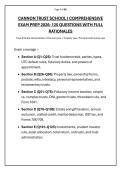
CANNON TRUST SCHOOL I COMPREHENSIVE
EXAM PREP 2026: 125 QUESTIONS WITH FULL
RATIONALES
Trust & Estate Administration / Fiduciary Law / Property Law / Principal and Income Law
Exam coverage :-
• Section A (Q1–Q25): Trust fundamentals, parties, types,
UTC default rules, fiduciary duties, and powers of
appointment.
• Section B (Q26–Q50): Property law, ownership forms,
probate, wills, intestacy, personal representatives, and
testamentary trusts.
• Section C (Q51–Q75): Fiduciary income taxation, simple
vs. complex trusts, DNI, grantor trusts, throwback rule, and
Form 1041.
• Section D (Q76–Q100): Estate and gift taxation, annual
exclusion, unified credit, marital deduction, GST tax, and
Forms 706/709.
• Section E (Q101–Q125): Investments, prudent investor
rule, asset allocation, total return, unitrusts, and trust
administration.
, Page 2 of 68
SECTION A: TRUST ADMINISTRATION FUNDAMENTALS (Q1–
Q25)
1. Which of the following best describes a trust as defined in the
Uniform Trust Code and the Cannon Trust School I curriculum?
A) A contract between the grantor and the state attorney general
authorizing charitable administration of assets
B) A fiduciary arrangement in which a trustee holds legal title to
trust property and manages it for the benefit of one or more
beneficiaries
C) A commercial transaction in which a bank purchases assets
from a customer and sells them back at a profit
D) A court-supervised proceeding for the distribution of a
decedent's estate
CORRECT ANSWER: B) A fiduciary arrangement in which a
trustee holds legal title to trust property and manages it for
the benefit of one or more beneficiaries
RATIONALE: Option B is correct because a trust is a fiduciary
relationship in which the trustee holds legal title to the trust
property (corpus) for the benefit of beneficiaries, creating
divided title. Option A is incorrect because a trust is not a
contract with the state attorney general. Option C is incorrect
because a trust is not a commercial transaction. Option D is
incorrect because court-supervised estate distribution
describes probate, not a trust.
2. In a trust relationship, who holds legal title to the trust
property?
, Page 3 of 68
A) The beneficiary
B) The grantor
C) The trustee
D) The court
CORRECT ANSWER: C) The trustee
RATIONALE: Option C is correct because the trustee holds legal
title to the trust property and manages it for the benefit of the
beneficiaries. Option A is incorrect because the beneficiary
holds equitable title, not legal title. Option B is incorrect
because the grantor creates the trust but does not hold legal
title after transfer (unless also serving as trustee). Option D is
incorrect because the court does not hold title.
3. Who holds equitable title to trust property?
A) The trustee
B) The beneficiary
C) The grantor
D) The state
CORRECT ANSWER: B) The beneficiary
RATIONALE: Option B is correct because the beneficiary holds
equitable title to the trust property and has the right to enforce
the terms of the trust. Option A is incorrect because the trustee
holds legal title. Option C is incorrect because the grantor
transfers assets to the trust. Option D is incorrect because the
state has no title interest.
4. The term "grantor" in trust law refers to:
, Page 4 of 68
A) The person who manages the trust
B) The person who receives benefits from the trust
C) The person who creates the trust and transfers assets into it
D) The court that oversees the trust
CORRECT ANSWER: C) The person who creates the trust and
transfers assets into it
RATIONALE: Option C is correct because the grantor (also
called settlor or trustor) creates the trust and transfers assets
into it. Option A is incorrect because the manager is the trustee.
Option B is incorrect because the recipient is the beneficiary.
Option D is incorrect because the court does not create the
trust.
5. What is the trust corpus?
A) The document that creates the trust
B) The trust property or principal
C) The beneficiary's interest
D) The trustee's fee
CORRECT ANSWER: B) The trust property or principal
RATIONALE: Option B is correct because the trust corpus (also
called principal or res) is the property held in trust. Option A is
incorrect because the document that creates the trust is the
trust instrument. Option C is incorrect because the
beneficiary's interest is equitable title. Option D is incorrect
because the trustee's fee is a payment for services.
6. A "simple trust" is one that:
CANNON TRUST SCHOOL I COMPREHENSIVE
EXAM PREP 2026: 125 QUESTIONS WITH FULL
RATIONALES
Trust & Estate Administration / Fiduciary Law / Property Law / Principal and Income Law
Exam coverage :-
• Section A (Q1–Q25): Trust fundamentals, parties, types,
UTC default rules, fiduciary duties, and powers of
appointment.
• Section B (Q26–Q50): Property law, ownership forms,
probate, wills, intestacy, personal representatives, and
testamentary trusts.
• Section C (Q51–Q75): Fiduciary income taxation, simple
vs. complex trusts, DNI, grantor trusts, throwback rule, and
Form 1041.
• Section D (Q76–Q100): Estate and gift taxation, annual
exclusion, unified credit, marital deduction, GST tax, and
Forms 706/709.
• Section E (Q101–Q125): Investments, prudent investor
rule, asset allocation, total return, unitrusts, and trust
administration.
, Page 2 of 68
SECTION A: TRUST ADMINISTRATION FUNDAMENTALS (Q1–
Q25)
1. Which of the following best describes a trust as defined in the
Uniform Trust Code and the Cannon Trust School I curriculum?
A) A contract between the grantor and the state attorney general
authorizing charitable administration of assets
B) A fiduciary arrangement in which a trustee holds legal title to
trust property and manages it for the benefit of one or more
beneficiaries
C) A commercial transaction in which a bank purchases assets
from a customer and sells them back at a profit
D) A court-supervised proceeding for the distribution of a
decedent's estate
CORRECT ANSWER: B) A fiduciary arrangement in which a
trustee holds legal title to trust property and manages it for
the benefit of one or more beneficiaries
RATIONALE: Option B is correct because a trust is a fiduciary
relationship in which the trustee holds legal title to the trust
property (corpus) for the benefit of beneficiaries, creating
divided title. Option A is incorrect because a trust is not a
contract with the state attorney general. Option C is incorrect
because a trust is not a commercial transaction. Option D is
incorrect because court-supervised estate distribution
describes probate, not a trust.
2. In a trust relationship, who holds legal title to the trust
property?
, Page 3 of 68
A) The beneficiary
B) The grantor
C) The trustee
D) The court
CORRECT ANSWER: C) The trustee
RATIONALE: Option C is correct because the trustee holds legal
title to the trust property and manages it for the benefit of the
beneficiaries. Option A is incorrect because the beneficiary
holds equitable title, not legal title. Option B is incorrect
because the grantor creates the trust but does not hold legal
title after transfer (unless also serving as trustee). Option D is
incorrect because the court does not hold title.
3. Who holds equitable title to trust property?
A) The trustee
B) The beneficiary
C) The grantor
D) The state
CORRECT ANSWER: B) The beneficiary
RATIONALE: Option B is correct because the beneficiary holds
equitable title to the trust property and has the right to enforce
the terms of the trust. Option A is incorrect because the trustee
holds legal title. Option C is incorrect because the grantor
transfers assets to the trust. Option D is incorrect because the
state has no title interest.
4. The term "grantor" in trust law refers to:
, Page 4 of 68
A) The person who manages the trust
B) The person who receives benefits from the trust
C) The person who creates the trust and transfers assets into it
D) The court that oversees the trust
CORRECT ANSWER: C) The person who creates the trust and
transfers assets into it
RATIONALE: Option C is correct because the grantor (also
called settlor or trustor) creates the trust and transfers assets
into it. Option A is incorrect because the manager is the trustee.
Option B is incorrect because the recipient is the beneficiary.
Option D is incorrect because the court does not create the
trust.
5. What is the trust corpus?
A) The document that creates the trust
B) The trust property or principal
C) The beneficiary's interest
D) The trustee's fee
CORRECT ANSWER: B) The trust property or principal
RATIONALE: Option B is correct because the trust corpus (also
called principal or res) is the property held in trust. Option A is
incorrect because the document that creates the trust is the
trust instrument. Option C is incorrect because the
beneficiary's interest is equitable title. Option D is incorrect
because the trustee's fee is a payment for services.
6. A "simple trust" is one that: