
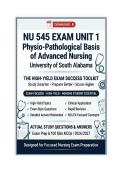
,NU 545 Physio-Pathological Basis of Advanced
Nursing Unit 1 Exam Study Guide University of
South Alabama Exam Prep & 100 Q&A MCQs
2026/2027
1. A graduate nursing student is studying how intestinal cells take up nutrients from digested
food. Which cellular function is being described?
A. Conductivity
B. Metabolic absorption
C. Secretion
D. Communication
Correct Answer: B
Rationale: Metabolic absorption is the ability of cells to take in and use nutrients and other
substances from their surroundings. Intestinal and renal tubular cells are specialized for this
function. Conductivity refers to the transmission of electrical signals, secretion is the release of
substances, and communication refers to cell-to-cell signaling.
2. Which organelle contains oxidative enzymes that use oxygen to remove hydrogen atoms,
producing hydrogen peroxide as a byproduct?
A. Lysosomes
B. Peroxisomes
,C. Mitochondria
D. Ribosomes
Correct Answer: B
Rationale: Peroxisomes contain oxidative enzymes that use oxygen to remove hydrogen atoms
in oxidative reactions, producing hydrogen peroxide (H₂O₂). Lysosomes are involved in
intracellular digestion; mitochondria produce ATP; ribosomes synthesize proteins.
3. During cell injury, which cellular component releases enzymes capable of autodigestion?
A. Mitochondria
B. Golgi apparatus
C. Lysosomes
D. Endoplasmic reticulum
Correct Answer: C
Rationale: Lysosomes contain hydrolytic enzymes that can digest cellular components. When
released during cell injury, these enzymes cause autodigestion (self-digestion) of the cell.
Mitochondria, Golgi apparatus, and endoplasmic reticulum do not contain digestive enzymes
capable of autodigestion.
4. Where is the majority of genetic information of the cell contained?
, A. Mitochondria
B. Nucleus
C. Ribosomes
D. Golgi apparatus
Correct Answer: B
Rationale: The nucleus contains the nucleolus, most of the cellular DNA, and DNA-binding
proteins. It houses the genetic information that directs cellular activities. Mitochondria contain
their own DNA but not the primary genetic information.
5. What major chemical components make up the cell membrane?
A. Lipids, proteins, and carbohydrates
B. Nucleic acids and proteins
C. Carbohydrates and nucleic acids
D. Lipids and carbohydrates only
Correct Answer: A
Rationale: Cell membranes are composed of lipids (phospholipids and cholesterol), proteins,
and carbohydrates (glycoproteins and glycolipids). The carbohydrates form the glycocalyx on the
outside of the membrane.
Nursing Unit 1 Exam Study Guide University of
South Alabama Exam Prep & 100 Q&A MCQs
2026/2027
1. A graduate nursing student is studying how intestinal cells take up nutrients from digested
food. Which cellular function is being described?
A. Conductivity
B. Metabolic absorption
C. Secretion
D. Communication
Correct Answer: B
Rationale: Metabolic absorption is the ability of cells to take in and use nutrients and other
substances from their surroundings. Intestinal and renal tubular cells are specialized for this
function. Conductivity refers to the transmission of electrical signals, secretion is the release of
substances, and communication refers to cell-to-cell signaling.
2. Which organelle contains oxidative enzymes that use oxygen to remove hydrogen atoms,
producing hydrogen peroxide as a byproduct?
A. Lysosomes
B. Peroxisomes
,C. Mitochondria
D. Ribosomes
Correct Answer: B
Rationale: Peroxisomes contain oxidative enzymes that use oxygen to remove hydrogen atoms
in oxidative reactions, producing hydrogen peroxide (H₂O₂). Lysosomes are involved in
intracellular digestion; mitochondria produce ATP; ribosomes synthesize proteins.
3. During cell injury, which cellular component releases enzymes capable of autodigestion?
A. Mitochondria
B. Golgi apparatus
C. Lysosomes
D. Endoplasmic reticulum
Correct Answer: C
Rationale: Lysosomes contain hydrolytic enzymes that can digest cellular components. When
released during cell injury, these enzymes cause autodigestion (self-digestion) of the cell.
Mitochondria, Golgi apparatus, and endoplasmic reticulum do not contain digestive enzymes
capable of autodigestion.
4. Where is the majority of genetic information of the cell contained?
, A. Mitochondria
B. Nucleus
C. Ribosomes
D. Golgi apparatus
Correct Answer: B
Rationale: The nucleus contains the nucleolus, most of the cellular DNA, and DNA-binding
proteins. It houses the genetic information that directs cellular activities. Mitochondria contain
their own DNA but not the primary genetic information.
5. What major chemical components make up the cell membrane?
A. Lipids, proteins, and carbohydrates
B. Nucleic acids and proteins
C. Carbohydrates and nucleic acids
D. Lipids and carbohydrates only
Correct Answer: A
Rationale: Cell membranes are composed of lipids (phospholipids and cholesterol), proteins,
and carbohydrates (glycoproteins and glycolipids). The carbohydrates form the glycocalyx on the
outside of the membrane.


