
LAB REPORT: BACTERIAL CELL STRUCTURES
BIO 101 (BIO101) — Virtual Lab / Simulation Insights
Important: This is a completed model/example report based on standard bacterial-cell biology. It is not a record of results actually
obtained from a specific simulation. Replace the illustrative observations with your simulator's screenshots and recorded values before
submitting.
Student: ____________________________
Course: BIO 101 (BIO101)
Lab: Bacterial Cell Structures
Date: ____________________________
1. Objective
To identify major bacterial cell structures, relate each structure to its function, and use microscopic/simulation
observations to distinguish common bacterial cell-envelope arrangements.
2. Background
Bacteria are prokaryotic cells. They do not have a membrane-bound nucleus; instead, their primary chromosome is
located in a nucleoid region. Common structures include the plasma membrane, cell wall, ribosomes, cytoplasm,
nucleoid, capsule or slime layer, pili/fimbriae, and flagella. The presence and arrangement of these structures vary
among species.
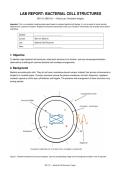
Figure 1. Illustrative bacterial-cell structure diagram. Use the corresponding image from the assigned simulation if one is required.
BIO 101 — Bacterial Cell Structures | Page 1
BIO 101 (BIO101) — Virtual Lab / Simulation Insights
Important: This is a completed model/example report based on standard bacterial-cell biology. It is not a record of results actually
obtained from a specific simulation. Replace the illustrative observations with your simulator's screenshots and recorded values before
submitting.
Student: ____________________________
Course: BIO 101 (BIO101)
Lab: Bacterial Cell Structures
Date: ____________________________
1. Objective
To identify major bacterial cell structures, relate each structure to its function, and use microscopic/simulation
observations to distinguish common bacterial cell-envelope arrangements.
2. Background
Bacteria are prokaryotic cells. They do not have a membrane-bound nucleus; instead, their primary chromosome is
located in a nucleoid region. Common structures include the plasma membrane, cell wall, ribosomes, cytoplasm,
nucleoid, capsule or slime layer, pili/fimbriae, and flagella. The presence and arrangement of these structures vary
among species.
Figure 1. Illustrative bacterial-cell structure diagram. Use the corresponding image from the assigned simulation if one is required.
BIO 101 — Bacterial Cell Structures | Page 1


