
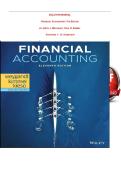
SOLUTION MANUAL
FINANCIAL ACCOUNTING 11TH EDITION
BY JERRY J. WEYGANDT, PAUL D. KIMMEL
CHAPTERS 1 - 13 | COMPLETE
,TABLE OF CONTENTS re re
Chapter 1. Accounting in Action
re re re re
Chapter 2. The Recording Process
re re re re
Chapter 3. Adjusting the Accounts
re re re re
Chapter 4. Completing the Accounting Cycle
re re re re re
Chapter 5. Accounting for Merchandising Operations
re re re re re
Chapter 6. Inventories
re re
Chapter 7. Fraud, Internal Control and Cash
re re re re re re
Chapter 8. Accounting for Receivables
re re re re
Chapter 9. Plant Assets, Natural Resources and Intangible Assets
re re re re re re re re
Chapter 10. Liabilities
re re
Chapter 11. Corporations: Organisations, Stock Transactions and Stockholders’ Eq
re re re re re re re re
uity
Chapter 12. Statement of Cash Flows
re re re re re
Chapter 13. Financial Analysis: The Big Picture
re re re re re re re
,CHAPTER 1
re
Accounting in Action re re
ASSIGNMENT CLASSIFICATION TABLE re re
Brief Exerci
re A
Learning Objectives
re Questions ses Do It!
re Exercises Problems
1. 1, 2, 3, 4, 5
re re re re 1 1, 2re
Identify the activities and re re re er
users associated with acco
re re re
unting.
2. Explain the building blocks of acco
re re re re re re 6, 7, 8, 9, 10
re re re re 2 3, 4re
unting: ethics, principles,and as
re re er re
sumptions.
3. 11, 12, 13, 14.
re re re 1, 2, 3, 4, 5
re re re re 3 5
State the accounting eq
re re re 22
uation, and define itsco
re re re er
mponents.
4. 15, 16, 18
re re 6, 7, 8, 9
re re re 4 6, 7, 8
re re 1A, 2A, 4A,
re re
Analyze the effects of busines
re re re re 5A
s transactions on theaccountin
re re re er
g equation.
re
5. 17, 19, 20, 21,
re re re 10, 11 re 5 8, 9, 10, 11,
re re re 2A, 3A, 4A,
re re
Describe the four financial stat re re re re
12, 13, 14, 15,
re re re 5A
ements and how they areprep
re re re re er
16, 17, 18
re re
ared.
, ANSWERS TO QUESTIONS re re
1. True. Virtually every organization and person in our society uses accounting information. Businesses, inve
re re re re re re re re re re re re re
stors, creditors, government agencies, and not-for-
re re re re re
profit organizations must use accounting information to operate effectively.
re re re re re re re re
LO 1, BT: K, Difficulty: Easy, TOT: 2 min., AACSB: None, AICPA FC: Reporting, IMA: Reporting
r e r e r e r e r e r e r e re r e r e re re r e r e r e
2. Accounting is the process of identifying, recording, and communicating the economic events of an orga
re re re re re re re r e r e re re re re re
nization to interested users of the information. The first activity of the accounting process is to identify ec
re re re re re re re re re re re re re re re re re
onomic events that are relevant to a particular business. Once identified and measured, the events are re
re re re re re re re re re re re re re re re re
corded to provide a history of the financial activities of the organization. Recording consists of keeping a c
re re re re re re re re re re re re re re re re re
hronological diary of these measured events in anorderly and systematic manner. The information is com
re re re re re re re er re re re re re re re
municated through the preparation and distribution of accounting reports, the most common of
re re re re re re re r e r e r e r e r e r e
which are called financial statements.A vital element in the communication process is the accountant’s a
re r e re re er re re re re re re re re re re
bility and responsibility to analyze and interpret the reported information.
re re re re re re re re re
LO 1, BT: K, Difficulty: Easy, TOT: 2 min., AACSB: None, AICPA FC: Reporting, IMA: Reporting
r e r e r e r e r e r e r e re r e r e re re r e r e r e
3. (a) Internal users are those who plan, organize, and run the business and therefore are officers and other
re re re re re re re re re re re re re re re re re re
decision makers. re
(b) To assist management, accounting provides internal reports. Examples include financial comparison
re re re re re re re re re re
s of operating alternatives, projections of income from new sales campaigns,and forecasts of cas
re re re re re r e re re re r e er re re re
h needs for the next year. re re re re re
LO 1, BT: K, Difficulty: Easy, TOT: 2 min., AACSB: None, AICPA FC: Reporting, IMA: Reporting
r e r e r e r e r e r e r e re r e r e re re r e r e r e
4. (a) Investors (owners) use accounting information to make decisions to buy, hold, or sell stock.
re re re re re re re re re re re re re
(b) Creditors use accounting information to evaluate the risks of granting credit or lending money.
re re re re re re re re re re re re re
LO 1, BT: K, Difficulty: Easy, TOT: 2 min., AACSB: None, AICPA FC: Reporting, IMA: Reporting
r e r e r e r e r e r e r e re r e r e re re r e r e r e
5. False. Bookkeeping usually involves only the recording of economic events and therefore is just one part
re re re re re re re re re re re re re re re re
of the entire accounting process. Accounting, on the other hand, involves the entire process of identifyin
re re re re re re re re re re re re re re re
g, recording, and communicating economic events.
re re re re re
LO 1, BT: C, Difficulty: Easy, TOT: 2 min., AACSB: None, AICPA FC: Reporting, IMA: Reporting
re re r e r e r e r e re re r e r e re re re r e re
6. Harper Travel Agency should report the land at $85,000 on its December 31, 2022 balance sheet. This i
re re re re re re re re re re re re r e r e re re re
s true not only at the time the land is purchased, but also over the time the land is held. In determining w
re re re re re re re re re re re re re re re re re re re re re re
hich measurement principle to use (historical cost or fair value) companies weigh the factual nature of co
re re re re re re re re re re re re re re re re
st figures versus the relevance of fair value. In general, companies use historical cost. Only in situations w
re re re re re re re re re re re re re re re re re
here assets are actively traded do companies apply the fair value principle.
re re re re re r e re re re re re
LO 2, BT: C, Difficulty: Easy, TOT: 2 min., AACSB: None, AICPA FC: Measurement, Analysis and Interpretation IMA: Re
r e r e r e r e r e r e r e r e r e r e r e r e r e re r e r e r e re
porting
7. The monetary unit assumption requires that only transaction data capable of being expressed in terms of
re re re re re re re re re re re re re re re re
money be included in the accounting records. This assumption enables accounting to quantify (measure)
re re re re re re re re re re re re re re
economic events. re
LO 2, BT: K, Difficulty: Easy, TOT: 2 min., AACSB: None, AICPA FC: Measurement, Analysis and Interpretation IMA:Reporting
re re re re re re re re re re re re re re re re r e er
FINANCIAL ACCOUNTING 11TH EDITION
BY JERRY J. WEYGANDT, PAUL D. KIMMEL
CHAPTERS 1 - 13 | COMPLETE
,TABLE OF CONTENTS re re
Chapter 1. Accounting in Action
re re re re
Chapter 2. The Recording Process
re re re re
Chapter 3. Adjusting the Accounts
re re re re
Chapter 4. Completing the Accounting Cycle
re re re re re
Chapter 5. Accounting for Merchandising Operations
re re re re re
Chapter 6. Inventories
re re
Chapter 7. Fraud, Internal Control and Cash
re re re re re re
Chapter 8. Accounting for Receivables
re re re re
Chapter 9. Plant Assets, Natural Resources and Intangible Assets
re re re re re re re re
Chapter 10. Liabilities
re re
Chapter 11. Corporations: Organisations, Stock Transactions and Stockholders’ Eq
re re re re re re re re
uity
Chapter 12. Statement of Cash Flows
re re re re re
Chapter 13. Financial Analysis: The Big Picture
re re re re re re re
,CHAPTER 1
re
Accounting in Action re re
ASSIGNMENT CLASSIFICATION TABLE re re
Brief Exerci
re A
Learning Objectives
re Questions ses Do It!
re Exercises Problems
1. 1, 2, 3, 4, 5
re re re re 1 1, 2re
Identify the activities and re re re er
users associated with acco
re re re
unting.
2. Explain the building blocks of acco
re re re re re re 6, 7, 8, 9, 10
re re re re 2 3, 4re
unting: ethics, principles,and as
re re er re
sumptions.
3. 11, 12, 13, 14.
re re re 1, 2, 3, 4, 5
re re re re 3 5
State the accounting eq
re re re 22
uation, and define itsco
re re re er
mponents.
4. 15, 16, 18
re re 6, 7, 8, 9
re re re 4 6, 7, 8
re re 1A, 2A, 4A,
re re
Analyze the effects of busines
re re re re 5A
s transactions on theaccountin
re re re er
g equation.
re
5. 17, 19, 20, 21,
re re re 10, 11 re 5 8, 9, 10, 11,
re re re 2A, 3A, 4A,
re re
Describe the four financial stat re re re re
12, 13, 14, 15,
re re re 5A
ements and how they areprep
re re re re er
16, 17, 18
re re
ared.
, ANSWERS TO QUESTIONS re re
1. True. Virtually every organization and person in our society uses accounting information. Businesses, inve
re re re re re re re re re re re re re
stors, creditors, government agencies, and not-for-
re re re re re
profit organizations must use accounting information to operate effectively.
re re re re re re re re
LO 1, BT: K, Difficulty: Easy, TOT: 2 min., AACSB: None, AICPA FC: Reporting, IMA: Reporting
r e r e r e r e r e r e r e re r e r e re re r e r e r e
2. Accounting is the process of identifying, recording, and communicating the economic events of an orga
re re re re re re re r e r e re re re re re
nization to interested users of the information. The first activity of the accounting process is to identify ec
re re re re re re re re re re re re re re re re re
onomic events that are relevant to a particular business. Once identified and measured, the events are re
re re re re re re re re re re re re re re re re
corded to provide a history of the financial activities of the organization. Recording consists of keeping a c
re re re re re re re re re re re re re re re re re
hronological diary of these measured events in anorderly and systematic manner. The information is com
re re re re re re re er re re re re re re re
municated through the preparation and distribution of accounting reports, the most common of
re re re re re re re r e r e r e r e r e r e
which are called financial statements.A vital element in the communication process is the accountant’s a
re r e re re er re re re re re re re re re re
bility and responsibility to analyze and interpret the reported information.
re re re re re re re re re
LO 1, BT: K, Difficulty: Easy, TOT: 2 min., AACSB: None, AICPA FC: Reporting, IMA: Reporting
r e r e r e r e r e r e r e re r e r e re re r e r e r e
3. (a) Internal users are those who plan, organize, and run the business and therefore are officers and other
re re re re re re re re re re re re re re re re re re
decision makers. re
(b) To assist management, accounting provides internal reports. Examples include financial comparison
re re re re re re re re re re
s of operating alternatives, projections of income from new sales campaigns,and forecasts of cas
re re re re re r e re re re r e er re re re
h needs for the next year. re re re re re
LO 1, BT: K, Difficulty: Easy, TOT: 2 min., AACSB: None, AICPA FC: Reporting, IMA: Reporting
r e r e r e r e r e r e r e re r e r e re re r e r e r e
4. (a) Investors (owners) use accounting information to make decisions to buy, hold, or sell stock.
re re re re re re re re re re re re re
(b) Creditors use accounting information to evaluate the risks of granting credit or lending money.
re re re re re re re re re re re re re
LO 1, BT: K, Difficulty: Easy, TOT: 2 min., AACSB: None, AICPA FC: Reporting, IMA: Reporting
r e r e r e r e r e r e r e re r e r e re re r e r e r e
5. False. Bookkeeping usually involves only the recording of economic events and therefore is just one part
re re re re re re re re re re re re re re re re
of the entire accounting process. Accounting, on the other hand, involves the entire process of identifyin
re re re re re re re re re re re re re re re
g, recording, and communicating economic events.
re re re re re
LO 1, BT: C, Difficulty: Easy, TOT: 2 min., AACSB: None, AICPA FC: Reporting, IMA: Reporting
re re r e r e r e r e re re r e r e re re re r e re
6. Harper Travel Agency should report the land at $85,000 on its December 31, 2022 balance sheet. This i
re re re re re re re re re re re re r e r e re re re
s true not only at the time the land is purchased, but also over the time the land is held. In determining w
re re re re re re re re re re re re re re re re re re re re re re
hich measurement principle to use (historical cost or fair value) companies weigh the factual nature of co
re re re re re re re re re re re re re re re re
st figures versus the relevance of fair value. In general, companies use historical cost. Only in situations w
re re re re re re re re re re re re re re re re re
here assets are actively traded do companies apply the fair value principle.
re re re re re r e re re re re re
LO 2, BT: C, Difficulty: Easy, TOT: 2 min., AACSB: None, AICPA FC: Measurement, Analysis and Interpretation IMA: Re
r e r e r e r e r e r e r e r e r e r e r e r e r e re r e r e r e re
porting
7. The monetary unit assumption requires that only transaction data capable of being expressed in terms of
re re re re re re re re re re re re re re re re
money be included in the accounting records. This assumption enables accounting to quantify (measure)
re re re re re re re re re re re re re re
economic events. re
LO 2, BT: K, Difficulty: Easy, TOT: 2 min., AACSB: None, AICPA FC: Measurement, Analysis and Interpretation IMA:Reporting
re re re re re re re re re re re re re re re re r e er


