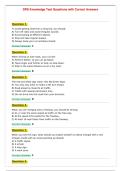
DPS Knowledge Test Questions with Correct Answers
Question 1.
To avoid getting tired from a long trip, you should:
A) Turn off radio and avoid irregular sounds.
B) Avoid looking at different objects.
C) Stop and take regular breaks.
D) Always keep your car windows closed.
Correct Answer: C
Question 2.
When driving on wet roads, your car will:
A) Perform better, so you can go faster.
B) Take longer and further to stop, so slow down.
C) Stop in the same distance as on a dry road.
Correct Answer: B
Question 3.
The red and white sign mean: (Do Not Enter Sign)
A) You may only enter to make a left turn ahead.
B) Road ahead is closed to all traffic.
C) Traffic with special permission only.
D) Do not drive into this road from your direction.
Correct Answer: D
Question 4.
When you are merging onto a freeway, you should be driving:
A) At, or near the same speed as traffic on the free-way.
B) At the speed limit posted for the freeway.
C) At least 10 mph faster than traffic on the freeway.
Correct Answer: A
Question 5.
When you see this sign, what should you expect ahead? (A yellow triangle with a red
octagon inside with an arrow pointing up ahead)
A) A traffic signal.
B) A school.
C) A stop sign.
D) A work zone.
Correct Answer: C
Question 6.
,If your vehicle breaks down on a highway:
A) Have all passengers stay in the car.
B) Move your car off the pavement to the side of the road.
C) Turn on your headlights.
Correct Answer: B
Question 7.
True or False? Caffeine can help drowsy drivers stay alert, it can also make a drunk driver
sober.
Correct Answer: False
Question 8.
Signalling communicates your intentions when dri-ving and:
A) Helps others understand your intentions and plan ahead.
B) Gives you the right-of-way.
C) It is common courtesy, but not required by law.
Correct Answer: A
Question 9.
Why should you avoid sitting in a parked car with the heater running and windows closed?
A) Open windows are a driver distraction.
B) It is illegal.
C) There is a risk of carbon monoxide poisoning.
Correct Answer: C
Question 10.
Before entering another roadway, you see this sign. What does it tell you? (Yellow
diamond sign, 2 arrows, one merging with the other)
A) You must be prepared too merge.
B) You may pass on either side of the obstruction ahead.
C) You may continue without merging.
D) There is a two-way traffic ahead.
Correct Answer: C
Question 11.
When you move, you must report your new address to Texas Department of Public Safety
within:
A) 45 days.
B) 30 days.
C) 10 days.
D) 5 days.
Correct Answer: B
Question 12.
, If your car stalls on railroad tracks and a train is ap-proaching, you should:
A) Run in the same direction as the train, staying clear of the tracks.
B) Run in the direction that you were traveling, getting as far away from the crossing as
possible.
C) Stay beside the car, but clear of the tracks.
D) Run towards the train, staying clear of the tracks.
Correct Answer: D
Question 13.
When should you use your parking lights?
A) If weather conditions require you to use your wind-shield wipers.
B) At night and when approaching another vehicle from behind.
C) When driving in fog.
D) None of the above.
Correct Answer: D
Question 14.
What does this sign (a steady yellow X) mean?
A) You are not allowed to drive in the lane.
B) You should prepare to change lane.
C) You must be prepared to stop ahead.
D) There is a traffic light ahead.
Correct Answer: B
Question 15.
When driving beside a motorcycle:
A) Do not drive in the motorcyclist's lane.
B) Keep 2 feet between your car and the motorcycle. C) Share the same lane if the speed
limit is 35 mph or less.
Correct Answer: A
Question 16.
Which of the following freeze first when wet?
A) Tunnels.
B) Intersections.
C) Bridges.
D) Open expressways.
Correct Answer: C
Question 17.
Texas Basic Speed Law means:
A) The maximum speed limit in Texas is 70 mph.
B) You must never drive slower than the rest of traffic.
C) You must not driver faster than is safe for existing conditions.
Question 1.
To avoid getting tired from a long trip, you should:
A) Turn off radio and avoid irregular sounds.
B) Avoid looking at different objects.
C) Stop and take regular breaks.
D) Always keep your car windows closed.
Correct Answer: C
Question 2.
When driving on wet roads, your car will:
A) Perform better, so you can go faster.
B) Take longer and further to stop, so slow down.
C) Stop in the same distance as on a dry road.
Correct Answer: B
Question 3.
The red and white sign mean: (Do Not Enter Sign)
A) You may only enter to make a left turn ahead.
B) Road ahead is closed to all traffic.
C) Traffic with special permission only.
D) Do not drive into this road from your direction.
Correct Answer: D
Question 4.
When you are merging onto a freeway, you should be driving:
A) At, or near the same speed as traffic on the free-way.
B) At the speed limit posted for the freeway.
C) At least 10 mph faster than traffic on the freeway.
Correct Answer: A
Question 5.
When you see this sign, what should you expect ahead? (A yellow triangle with a red
octagon inside with an arrow pointing up ahead)
A) A traffic signal.
B) A school.
C) A stop sign.
D) A work zone.
Correct Answer: C
Question 6.
,If your vehicle breaks down on a highway:
A) Have all passengers stay in the car.
B) Move your car off the pavement to the side of the road.
C) Turn on your headlights.
Correct Answer: B
Question 7.
True or False? Caffeine can help drowsy drivers stay alert, it can also make a drunk driver
sober.
Correct Answer: False
Question 8.
Signalling communicates your intentions when dri-ving and:
A) Helps others understand your intentions and plan ahead.
B) Gives you the right-of-way.
C) It is common courtesy, but not required by law.
Correct Answer: A
Question 9.
Why should you avoid sitting in a parked car with the heater running and windows closed?
A) Open windows are a driver distraction.
B) It is illegal.
C) There is a risk of carbon monoxide poisoning.
Correct Answer: C
Question 10.
Before entering another roadway, you see this sign. What does it tell you? (Yellow
diamond sign, 2 arrows, one merging with the other)
A) You must be prepared too merge.
B) You may pass on either side of the obstruction ahead.
C) You may continue without merging.
D) There is a two-way traffic ahead.
Correct Answer: C
Question 11.
When you move, you must report your new address to Texas Department of Public Safety
within:
A) 45 days.
B) 30 days.
C) 10 days.
D) 5 days.
Correct Answer: B
Question 12.
, If your car stalls on railroad tracks and a train is ap-proaching, you should:
A) Run in the same direction as the train, staying clear of the tracks.
B) Run in the direction that you were traveling, getting as far away from the crossing as
possible.
C) Stay beside the car, but clear of the tracks.
D) Run towards the train, staying clear of the tracks.
Correct Answer: D
Question 13.
When should you use your parking lights?
A) If weather conditions require you to use your wind-shield wipers.
B) At night and when approaching another vehicle from behind.
C) When driving in fog.
D) None of the above.
Correct Answer: D
Question 14.
What does this sign (a steady yellow X) mean?
A) You are not allowed to drive in the lane.
B) You should prepare to change lane.
C) You must be prepared to stop ahead.
D) There is a traffic light ahead.
Correct Answer: B
Question 15.
When driving beside a motorcycle:
A) Do not drive in the motorcyclist's lane.
B) Keep 2 feet between your car and the motorcycle. C) Share the same lane if the speed
limit is 35 mph or less.
Correct Answer: A
Question 16.
Which of the following freeze first when wet?
A) Tunnels.
B) Intersections.
C) Bridges.
D) Open expressways.
Correct Answer: C
Question 17.
Texas Basic Speed Law means:
A) The maximum speed limit in Texas is 70 mph.
B) You must never drive slower than the rest of traffic.
C) You must not driver faster than is safe for existing conditions.