Page 1 of 46
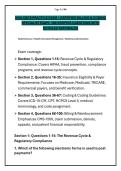
NHA CBCS PRACTICE EXAM – CERTIFIED BILLING & CODING
SPECIALIST EXAM : 100 VERIFIED QUESTIONS WITH
DETAILED RATIONALES
Health Sciences / Health Information Management / Healthcare Administration
Exam coverage:
➢ Section 1, Questions 1-15: Revenue Cycle & Regulatory
Compliance: Covers HIPAA, fraud prevention, compliance
programs, and revenue cycle concepts.
➢ Section 2, Questions 16-35: Insurance Eligibility & Payer
Requirements: Focuses on Medicare, Medicaid, TRICARE,
commercial payers, and benefit verification.
➢ Section 3, Questions 36-67: Coding & Coding Guidelines:
Covers ICD-10-CM, CPT, HCPCS Level II, medical
terminology, and code assignment.
➢ Section 4, Questions 68-100: Billing & Reimbursement:
Emphasizes CMS-1500, claim submission, denials,
appeals, and patient financial responsibility.
Section 1: Questions 1-15: The Revenue Cycle &
Regulatory Compliance
1. Which of the following electronic forms is used to post
payments?
, Page 2 of 46
A. Electronic Funds Transfer (EFT)
B. Electronic Remittance Advice (ERA)
C. Explanation of Benefits (EOB)
D. Advanced Beneficiary Notice (ABN)
CORRECT ANSWER: B
RATIONALE: The Electronic Remittance Advice (ERA) is the
electronic form used to post payments, detailing how claims
have been processed and paid. It is a standard electronic
transaction used in the healthcare revenue cycle to post
payments to patient accounts.
2. A clean claim is received by Medicare on March 1. By
which date must payment be made to meet Medicare
compliance requirements?
A. March 15
B. March 30
C. April 15
D. April 30
CORRECT ANSWER: B
RATIONALE: Under Medicare prompt pay requirements, a
clean claim must be paid within 30 days of receipt. For a
clean claim received on March 1, the allowable last day for
payment is March 30. This is a key compliance requirement
for Medicare payers.
3. Which federal act establishes standards for the
privacy and security of protected health information?
, Page 3 of 46
A. HITECH Act
B. False Claims Act
C. HIPAA
D. Anti-Kickback Statute
CORRECT ANSWER: C
RATIONALE: The Health Insurance Portability and
Accountability Act (HIPAA) establishes national standards
for the privacy and security of protected health information
(PHI). Compliance with HIPAA regulations is essential for
billing and coding specialists.
4. What is the primary purpose of a Compliance Program
in a healthcare organization?
A. To maximize revenue
B. To prevent and detect fraud, waste, and abuse
C. To reduce patient wait times
D. To increase patient satisfaction
CORRECT ANSWER: B
RATIONALE: Compliance programs are designed to ensure
adherence to laws, regulations, and ethical standards. A key
purpose is to prevent and detect fraud, waste, and abuse in
healthcare billing.
5. Which of the following is a task associated with the
Revenue Cycle domain?
A. Assigning ICD-10-CM diagnosis codes
B. Verifying patient insurance eligibility
C. Managing the billing cycle and ensuring compliance with
, Page 4 of 46
payer regulations
D. Submitting claims for reimbursement
CORRECT ANSWER: C
RATIONALE: The Revenue Cycle domain includes managing
billing cycles, processing insurance claims, and ensuring
compliance with payer regulations. This domain covers 15%
of the CBCS exam.
6. Which of the following is required to maintain the
integrity of patient data?
A. Regularly updating EHR systems
B. Verifying insurance eligibility
C. Assigning accurate codes for diagnoses and procedures
D. Ensuring HIPAA compliance
CORRECT ANSWER: D
RATIONALE: Ensuring HIPAA compliance and following
confidentiality protocols is essential for maintaining patient
data integrity. This includes proper handling and protection
of protected health information.
7. The HITECH Act is primarily associated with which of
the following?
A. Electronic health records and meaningful use
B. Insurance claims processing
C. Medical coding guidelines
D. Patient eligibility verification
NHA CBCS PRACTICE EXAM – CERTIFIED BILLING & CODING
SPECIALIST EXAM : 100 VERIFIED QUESTIONS WITH
DETAILED RATIONALES
Health Sciences / Health Information Management / Healthcare Administration
Exam coverage:
➢ Section 1, Questions 1-15: Revenue Cycle & Regulatory
Compliance: Covers HIPAA, fraud prevention, compliance
programs, and revenue cycle concepts.
➢ Section 2, Questions 16-35: Insurance Eligibility & Payer
Requirements: Focuses on Medicare, Medicaid, TRICARE,
commercial payers, and benefit verification.
➢ Section 3, Questions 36-67: Coding & Coding Guidelines:
Covers ICD-10-CM, CPT, HCPCS Level II, medical
terminology, and code assignment.
➢ Section 4, Questions 68-100: Billing & Reimbursement:
Emphasizes CMS-1500, claim submission, denials,
appeals, and patient financial responsibility.
Section 1: Questions 1-15: The Revenue Cycle &
Regulatory Compliance
1. Which of the following electronic forms is used to post
payments?
, Page 2 of 46
A. Electronic Funds Transfer (EFT)
B. Electronic Remittance Advice (ERA)
C. Explanation of Benefits (EOB)
D. Advanced Beneficiary Notice (ABN)
CORRECT ANSWER: B
RATIONALE: The Electronic Remittance Advice (ERA) is the
electronic form used to post payments, detailing how claims
have been processed and paid. It is a standard electronic
transaction used in the healthcare revenue cycle to post
payments to patient accounts.
2. A clean claim is received by Medicare on March 1. By
which date must payment be made to meet Medicare
compliance requirements?
A. March 15
B. March 30
C. April 15
D. April 30
CORRECT ANSWER: B
RATIONALE: Under Medicare prompt pay requirements, a
clean claim must be paid within 30 days of receipt. For a
clean claim received on March 1, the allowable last day for
payment is March 30. This is a key compliance requirement
for Medicare payers.
3. Which federal act establishes standards for the
privacy and security of protected health information?
, Page 3 of 46
A. HITECH Act
B. False Claims Act
C. HIPAA
D. Anti-Kickback Statute
CORRECT ANSWER: C
RATIONALE: The Health Insurance Portability and
Accountability Act (HIPAA) establishes national standards
for the privacy and security of protected health information
(PHI). Compliance with HIPAA regulations is essential for
billing and coding specialists.
4. What is the primary purpose of a Compliance Program
in a healthcare organization?
A. To maximize revenue
B. To prevent and detect fraud, waste, and abuse
C. To reduce patient wait times
D. To increase patient satisfaction
CORRECT ANSWER: B
RATIONALE: Compliance programs are designed to ensure
adherence to laws, regulations, and ethical standards. A key
purpose is to prevent and detect fraud, waste, and abuse in
healthcare billing.
5. Which of the following is a task associated with the
Revenue Cycle domain?
A. Assigning ICD-10-CM diagnosis codes
B. Verifying patient insurance eligibility
C. Managing the billing cycle and ensuring compliance with
, Page 4 of 46
payer regulations
D. Submitting claims for reimbursement
CORRECT ANSWER: C
RATIONALE: The Revenue Cycle domain includes managing
billing cycles, processing insurance claims, and ensuring
compliance with payer regulations. This domain covers 15%
of the CBCS exam.
6. Which of the following is required to maintain the
integrity of patient data?
A. Regularly updating EHR systems
B. Verifying insurance eligibility
C. Assigning accurate codes for diagnoses and procedures
D. Ensuring HIPAA compliance
CORRECT ANSWER: D
RATIONALE: Ensuring HIPAA compliance and following
confidentiality protocols is essential for maintaining patient
data integrity. This includes proper handling and protection
of protected health information.
7. The HITECH Act is primarily associated with which of
the following?
A. Electronic health records and meaningful use
B. Insurance claims processing
C. Medical coding guidelines
D. Patient eligibility verification