NR 566 Midterm Exam Review Comprehensive Study Guide 2026/27 Update - CU
Week 1
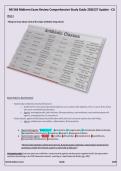
-Things to know about each of the major antibiotic drug classes
Bactericidal vs. Bacteriostatic
• Bactericidal antibiotics directly kill bacteria
o preferred for immunocompromised patients such as those with diabetes, HIV, or cancer & for those
who have overwhelming infections.
o Agents: aminoglycosides, beta-lactams, fluoroquinolones, metronidazole, most antimycobacterial
agents, streptogramins, & vancomycin.
• Bacteriostatic agents inhibit bacterial proliferation while the host's immune system does the killing.
o Agents: clindamycin, macrolides, sulfonamides, & tetracyclines
o Bactericidal agents: “BANG Q R.I.P” - Beta-lactams, Aminoglicosides, Nitroimidazoles (Metronidazole),
Glycopeptides (Vancomycin), Quinolones, Rifampicin, Polymyxins (Colistin)
o Bacteriostatic agents: “Ms. Colt” - Macrolides, Sulfonamides, Chloramphenicol, Oxazolidinones,
Lincosamides (Clindamycin), Tetracyclines
*Bactericidal antibiotics kill bacteria directly, & bacteriostatic antibiotics stop/weaken bacteria from
growing to enable the immune system to take hold of infection*
Aminoglycosides (narrow-spectrum antibiotics used primarily against aerobic gram-negative bacilli; disrupt protein
synthesis by binding to the 30S ribosomal subunit, resulting in rapid bacterial death) (pg. 683)
NR 566 Midterm Exam Guide 2026
, • Examples: Gentamicin, Tobramycin, Amikacin, Neomycin, Kanamycin, Streptomycin, Paromycin, Plazomicin
(pg. 687)
• Indications for use: Treatment of serious infections caused by gram-negative aerobic bacilli (Pseudomonas
aeruginosa, enterobacteriaceae, topical infection, ocular bacterial infections, intestinal amebiasis, complicated
UTI) (pg. 687)
NR 566 Midterm Exam Guide 2026
, • Contraindications & high-risk patients: Aminoglycosides should be used with caution in patients with renal
impairment, preexisting hearing impairment, & those receiving ototoxic & nephrotoxic drugs. (ppg. 685-
687)
• Monitoring needs: Aminoglycoside levels (peaks & troughs) & renal function must be monitored. Monitor for
neurotoxicity, ototoxicity, & nephrotoxicity.
• Which ones require renal dosing adjustments and how much (i.e., 25%, 50%, etc.): To avoid serious toxicity, we
must reduce dosage size or increase the dosing interval in patients with kidney disease. (pg. 685)
*Clarithromycin
• Patient education: *Patients should be informed about the symptoms of vestibular & cochlear damage &
instructed to report them.
• Lifespan considerations: (pg. 685)
Infants: Aminoglycosides are approved to treat bacterial infections in infants younger than 8 days. Dosing is
based on weight & length of gestation.
Children/adolescents: Aminoglycosides are safe for use against bacterial infections in children & adolescents.
Pregnant women: There is evidence that use of aminoglycosides in pregnancy can harm the fetus.
Breastfeeding women: Gentamicin is probably safe to use during lactation. There is limited information
regarding its use in this way.
Older adults: Caution must be used regarding decreased renal function in the older adult.
Cephalosporins (Beta-lactam antibiotics similar in structure & actions to the penicillins; bactericidal; often resistant to
beta-lactamases, & active against a broad spectrum of pathogens; most widely used group of antibiotics) (pg. 669)
• Examples: 1st generation: Cephalexin (Keflex); 2nd generation: Cefoxitin, Cefaclor (Ceclor); 3rd generation:
Cefotaxime, Cefdinir, Ceftriaxone (Rocephin); 4th generation: Cefepime, 5th generation: Ceftaroline
• Indications for use:
1st generation: Staphylococci or streptococci (Use in patients with mild PCN allergy, strep pharyngitis, skin
infections, & surgical prophylaxis)
2nd generation: Haemophilus influenzae, Klebsiella, pneumococci, & staphylococci (Otitis, sinusitis, & respiratory
tract infections)
3rd generation: Pseudomonas aeruginosa, Neisseria gonorrhoeae, & Klebsiella, Serratia (Meningitis, gram-
negative nosocomial infections)
4th generation: Pseudomonas aeruginosa (Hospital-acquired pneumonia & complicated intra-abdominal & UTIs
due to resistant pseudomonas)
5th generation: Methicillin-resistant Staphylococcus aureus (MRSA-associated infections). (pg. 671)
• Contraindications & high-risk patients: Cephalosporins are contraindicated for patients with a history of allergic
reactions to cephalosporins or severe reactions to penicillin. Patients using cefazolin & cefotetan must not
consume alcohol. Use cefotetan, cefazolin, & ceftriaxone cautiously in patients taking other agents that also
promote bleeding (anticoagulants, thrombolytics, NSAIDS, etc). (ppg. 670-671)
• Monitoring needs: Monitor for signs of C. dif infection & renal function in patients with renal impairment
and/or prolonged use.
• Which ones require renal dosing adjustments and how much (i.e., 25%, 50%, etc.): In patients with renal
insufficiency, dosages of most cephalosporins must be reduced to prevent accumulation to toxic levels.
(EXCEPTION: Ceftriaxone (3rd generation) is eliminated largely by the liver, so dosage reduction is unnecessary in
patients with renal impairment) (pg. 669)
• Patient education: *All cephalosporins can promote C. dif infection, so patients should be instructed to report
an increase in stool frequency.
• Lifespan considerations:
Infants: 3rd generation cephalosporins are used to treat bacterial infections in neonates as well as infants.
Children/adolescents: Cephalosporins are commonly used to treat bacterial infections in children, including
otitis media & gonococcal & pneumococcal infections.
Pregnant women: All cephalosporins appear safe for use in pregnancy.
Breastfeeding women: Cephalosporins are generally not expected to cause adverse effects in breastfed infants.
Older adults: Doses should be adjusted in older adults with decreased renal function.
NR 566 Midterm Exam Guide 2026
, Tetracyclines (broad-spectrum antibiotics active against a wide variety of gram-positive & gram-negative bacteria;
suppress bacterial growth by binding to the 30S ribosomal subunit & inhibiting protein synthesis, extensive use has
NR 566 Midterm Exam Guide 2026
Week 1
-Things to know about each of the major antibiotic drug classes
Bactericidal vs. Bacteriostatic
• Bactericidal antibiotics directly kill bacteria
o preferred for immunocompromised patients such as those with diabetes, HIV, or cancer & for those
who have overwhelming infections.
o Agents: aminoglycosides, beta-lactams, fluoroquinolones, metronidazole, most antimycobacterial
agents, streptogramins, & vancomycin.
• Bacteriostatic agents inhibit bacterial proliferation while the host's immune system does the killing.
o Agents: clindamycin, macrolides, sulfonamides, & tetracyclines
o Bactericidal agents: “BANG Q R.I.P” - Beta-lactams, Aminoglicosides, Nitroimidazoles (Metronidazole),
Glycopeptides (Vancomycin), Quinolones, Rifampicin, Polymyxins (Colistin)
o Bacteriostatic agents: “Ms. Colt” - Macrolides, Sulfonamides, Chloramphenicol, Oxazolidinones,
Lincosamides (Clindamycin), Tetracyclines
*Bactericidal antibiotics kill bacteria directly, & bacteriostatic antibiotics stop/weaken bacteria from
growing to enable the immune system to take hold of infection*
Aminoglycosides (narrow-spectrum antibiotics used primarily against aerobic gram-negative bacilli; disrupt protein
synthesis by binding to the 30S ribosomal subunit, resulting in rapid bacterial death) (pg. 683)
NR 566 Midterm Exam Guide 2026
, • Examples: Gentamicin, Tobramycin, Amikacin, Neomycin, Kanamycin, Streptomycin, Paromycin, Plazomicin
(pg. 687)
• Indications for use: Treatment of serious infections caused by gram-negative aerobic bacilli (Pseudomonas
aeruginosa, enterobacteriaceae, topical infection, ocular bacterial infections, intestinal amebiasis, complicated
UTI) (pg. 687)
NR 566 Midterm Exam Guide 2026
, • Contraindications & high-risk patients: Aminoglycosides should be used with caution in patients with renal
impairment, preexisting hearing impairment, & those receiving ototoxic & nephrotoxic drugs. (ppg. 685-
687)
• Monitoring needs: Aminoglycoside levels (peaks & troughs) & renal function must be monitored. Monitor for
neurotoxicity, ototoxicity, & nephrotoxicity.
• Which ones require renal dosing adjustments and how much (i.e., 25%, 50%, etc.): To avoid serious toxicity, we
must reduce dosage size or increase the dosing interval in patients with kidney disease. (pg. 685)
*Clarithromycin
• Patient education: *Patients should be informed about the symptoms of vestibular & cochlear damage &
instructed to report them.
• Lifespan considerations: (pg. 685)
Infants: Aminoglycosides are approved to treat bacterial infections in infants younger than 8 days. Dosing is
based on weight & length of gestation.
Children/adolescents: Aminoglycosides are safe for use against bacterial infections in children & adolescents.
Pregnant women: There is evidence that use of aminoglycosides in pregnancy can harm the fetus.
Breastfeeding women: Gentamicin is probably safe to use during lactation. There is limited information
regarding its use in this way.
Older adults: Caution must be used regarding decreased renal function in the older adult.
Cephalosporins (Beta-lactam antibiotics similar in structure & actions to the penicillins; bactericidal; often resistant to
beta-lactamases, & active against a broad spectrum of pathogens; most widely used group of antibiotics) (pg. 669)
• Examples: 1st generation: Cephalexin (Keflex); 2nd generation: Cefoxitin, Cefaclor (Ceclor); 3rd generation:
Cefotaxime, Cefdinir, Ceftriaxone (Rocephin); 4th generation: Cefepime, 5th generation: Ceftaroline
• Indications for use:
1st generation: Staphylococci or streptococci (Use in patients with mild PCN allergy, strep pharyngitis, skin
infections, & surgical prophylaxis)
2nd generation: Haemophilus influenzae, Klebsiella, pneumococci, & staphylococci (Otitis, sinusitis, & respiratory
tract infections)
3rd generation: Pseudomonas aeruginosa, Neisseria gonorrhoeae, & Klebsiella, Serratia (Meningitis, gram-
negative nosocomial infections)
4th generation: Pseudomonas aeruginosa (Hospital-acquired pneumonia & complicated intra-abdominal & UTIs
due to resistant pseudomonas)
5th generation: Methicillin-resistant Staphylococcus aureus (MRSA-associated infections). (pg. 671)
• Contraindications & high-risk patients: Cephalosporins are contraindicated for patients with a history of allergic
reactions to cephalosporins or severe reactions to penicillin. Patients using cefazolin & cefotetan must not
consume alcohol. Use cefotetan, cefazolin, & ceftriaxone cautiously in patients taking other agents that also
promote bleeding (anticoagulants, thrombolytics, NSAIDS, etc). (ppg. 670-671)
• Monitoring needs: Monitor for signs of C. dif infection & renal function in patients with renal impairment
and/or prolonged use.
• Which ones require renal dosing adjustments and how much (i.e., 25%, 50%, etc.): In patients with renal
insufficiency, dosages of most cephalosporins must be reduced to prevent accumulation to toxic levels.
(EXCEPTION: Ceftriaxone (3rd generation) is eliminated largely by the liver, so dosage reduction is unnecessary in
patients with renal impairment) (pg. 669)
• Patient education: *All cephalosporins can promote C. dif infection, so patients should be instructed to report
an increase in stool frequency.
• Lifespan considerations:
Infants: 3rd generation cephalosporins are used to treat bacterial infections in neonates as well as infants.
Children/adolescents: Cephalosporins are commonly used to treat bacterial infections in children, including
otitis media & gonococcal & pneumococcal infections.
Pregnant women: All cephalosporins appear safe for use in pregnancy.
Breastfeeding women: Cephalosporins are generally not expected to cause adverse effects in breastfed infants.
Older adults: Doses should be adjusted in older adults with decreased renal function.
NR 566 Midterm Exam Guide 2026
, Tetracyclines (broad-spectrum antibiotics active against a wide variety of gram-positive & gram-negative bacteria;
suppress bacterial growth by binding to the 30S ribosomal subunit & inhibiting protein synthesis, extensive use has
NR 566 Midterm Exam Guide 2026