
AHIP 2027 Final Exam (STUDY BUNDLE
COMPLETE PACKAGE)
250 Original Exam-Style Questions • Correct Answers Marked • Rationales • Medicare / MA / Part D / Compliance /
FWA
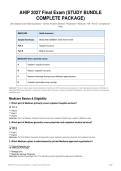
MEDICARE Health Insurance
Sample Beneficiary MEDICARE NUMBER: XXXX-XXXX-XXXX
Part A Hospital Insurance
Part B Medical Insurance
MEDICARE What it generally covers
A Inpatient / hospital insurance
B Medical / outpatient insurance
C Medicare Advantage through private Medicare-approved plans
D Outpatient prescription drug coverage
Important: This is an original study resource designed to resemble an AHIP-style final-exam practice set. It does not reproduce leaked, confidential, or
copyrighted AHIP exam questions. Current-year numerical items are based on publicly available CMS guidance; verify official materials for the applicable
certification year.
Medicare Basics & Eligibility
1. Which part of Medicare primarily covers inpatient hospital services?
■ Part A
• Part B
• Part C
• Part D
Rationale: Part A is Medicare Hospital Insurance and covers inpatient hospital care, subject to Medicare rules.
2. Which part of Medicare generally covers physician and outpatient medical services?
•■ Part A
Part B
• Part C
• Part D
Rationale: Part B is Medical Insurance and generally covers medically necessary physician and outpatient services.
3. Which Medicare option is administered by private Medicare-approved organizations?
•■ Original Medicare only
Medicare Advantage
• Medigap only
• Medicare Savings Programs
Rationale: Medicare Advantage (Part C) is offered by private organizations approved by Medicare.
AHIP 2027 Final Exam Study Bundle — Original Exam-Style Practice Page 1
, 4. Which part of Medicare provides outpatient prescription drug coverage?
• Part A
• Part B
•■ Part C
Part D
Rationale: Part D provides Medicare prescription drug coverage through Medicare-approved private plans.
5. A person generally must have which combination to enroll in a Medicare Advantage plan?
• Part A only
•■ Part B only
Part A and Part B
• Part D only
Rationale: MA enrollment generally requires entitlement to Part A and enrollment in Part B, plus applicable plan eligibility requirements.
6. What is the primary role of Medigap insurance?
•■ Replace Medicare eligibility
Help pay certain Medicare cost-sharing amounts
• Provide Medicaid benefits
• Provide employer health coverage
Rationale: Medigap policies supplement Original Medicare by helping with certain deductibles, coinsurance, and copayments.
7. Which statement best describes Original Medicare?
•■ ItIt isconsists
a single private HMO
of Part A and Part B administered by the federal government
• It is only prescription coverage
• It is Medicaid
Rationale: Original Medicare consists of Part A and Part B and is administered by the federal Medicare program.
8. A beneficiary who wants routine outpatient physician coverage under Original Medicare generally needs:
•■ Part A only
Part B
• Part D only
• A Medigap policy
Rationale: Part B is the component that generally covers physician and outpatient medical services.
9. Which program is jointly financed and administered by federal and state governments and serves eligible
low-income individuals?
•■ Medicare
Medicaid
• TRICARE
• Social Security
Rationale: Medicaid is a joint federal-state program with eligibility and administration rules that vary by state.
10. Which statement about Medicare eligibility is most accurate?
•■ Everyone becomes eligible at age 50
Eligibility can be based on age or certain disabilities or medical conditions
• Only people with private insurance qualify
• Medicare is only for low-income people
Rationale: Medicare eligibility can arise through age, disability, and certain qualifying medical conditions under federal rules.
AHIP 2027 Final Exam Study Bundle — Original Exam-Style Practice Page 2
, 11. A beneficiary enrolled in Original Medicare wants broader prescription coverage. Which product is
designed for this purpose?
■ Part D prescription drug plan
• Medigap Plan only
• Dental-only policy
• Workers' compensation
Rationale: A stand-alone Part D plan provides outpatient prescription drug coverage for people in Original Medicare who meet eligibility
and enrollment rules.
12. Which statement about Medicare and Medicaid is correct?
•■ They are identical programs
Medicaid can help some Medicare beneficiaries with costs if they qualify
• Medicare is administered by states only
• Medicaid is available regardless of income
Rationale: Some beneficiaries qualify for both programs; Medicaid may help with certain Medicare costs and services depending on
eligibility.
13. Which Medicare component is commonly called Medical Insurance?
•■ Part A
Part B
• Part C
• Part D
Rationale: Part B is Medicare Medical Insurance.
14. Which Medicare component is commonly called Hospital Insurance?
■ Part A
• Part B
• Part C
• Part D
Rationale: Part A is Medicare Hospital Insurance.
15. Which Medicare component is commonly called Medicare Advantage?
• Part A
•■ Part B
Part C
• Part D
Rationale: Medicare Advantage is Part C.
16. Which Medicare component is primarily associated with outpatient prescription drugs?
• Part A
• Part B
•■ Part C
Part D
Rationale: Part D provides outpatient prescription drug coverage.
17. A beneficiary with Original Medicare wants to see a specialist who accepts Medicare. Which statement
is generally true?
•■ AOriginal
PCP referral is always required by Original Medicare
Medicare generally does not require a PCP referral for specialist care
• Specialists are prohibited
• Only Part D controls referrals
Rationale: Original Medicare generally permits beneficiaries to see Medicare-participating specialists without a managed-care referral
requirement.
AHIP 2027 Final Exam Study Bundle — Original Exam-Style Practice Page 3
, 18. What is a key difference between Medicare Advantage and Original Medicare?
■ MA plans are private Medicare-approved plans with plan-specific rules
• Original Medicare is offered only by HMOs
• MA is Medicaid
• Original Medicare has no Part A
Rationale: MA is offered by private Medicare-approved organizations and may use networks, referrals, and other plan rules.
19. Which item is NOT a basic Medicare Part A benefit category?
• Inpatient hospital care
• Hospice care
•■ Certain skilled nursing facility care
Routine outpatient prescription drugs
Rationale: Routine outpatient prescription drug coverage is generally Part D, not Part A.
20. Which item is NOT a basic Medicare Part B category?
• Physician services
• Outpatient medical services
•■ Certain preventive services
Routine retail prescription drug coverage
Rationale: Routine retail prescription drug coverage is generally handled through Part D.
21. What does the term 'beneficiary' generally mean in Medicare materials?
■ A person eligible for or enrolled in Medicare
• Only a plan employee
• Only a physician
• A pharmacy
Rationale: A Medicare beneficiary is a person who is eligible for or enrolled in Medicare.
22. Which statement best describes a Medicare beneficiary's Medicare number?
■ It is used to identify the beneficiary for Medicare purposes
• It is always the person's Social Security number
• It is a pharmacy discount code
• It is a plan marketing code
Rationale: The Medicare number is a unique identifier used for Medicare transactions and is not simply the beneficiary's Social Security
number.
23. Why should a beneficiary protect the Medicare card and Medicare number?
■ To reduce risk of identity misuse and fraudulent billing
• Because the card is required for voting
• Because it determines income tax
• Because it replaces a driver's license
Rationale: Medicare identifiers should be protected because misuse can facilitate identity theft or fraudulent claims.
24. Which statement best describes a Medicare-approved provider?
■ A provider that meets applicable Medicare participation/approval requirements
• Any provider who accepts cash
• A provider selected by a pharmacy
• A Medicaid-only provider
Rationale: Medicare-approved or participating status is governed by Medicare rules and provider agreements.
AHIP 2027 Final Exam Study Bundle — Original Exam-Style Practice Page 4
COMPLETE PACKAGE)
250 Original Exam-Style Questions • Correct Answers Marked • Rationales • Medicare / MA / Part D / Compliance /
FWA
MEDICARE Health Insurance
Sample Beneficiary MEDICARE NUMBER: XXXX-XXXX-XXXX
Part A Hospital Insurance
Part B Medical Insurance
MEDICARE What it generally covers
A Inpatient / hospital insurance
B Medical / outpatient insurance
C Medicare Advantage through private Medicare-approved plans
D Outpatient prescription drug coverage
Important: This is an original study resource designed to resemble an AHIP-style final-exam practice set. It does not reproduce leaked, confidential, or
copyrighted AHIP exam questions. Current-year numerical items are based on publicly available CMS guidance; verify official materials for the applicable
certification year.
Medicare Basics & Eligibility
1. Which part of Medicare primarily covers inpatient hospital services?
■ Part A
• Part B
• Part C
• Part D
Rationale: Part A is Medicare Hospital Insurance and covers inpatient hospital care, subject to Medicare rules.
2. Which part of Medicare generally covers physician and outpatient medical services?
•■ Part A
Part B
• Part C
• Part D
Rationale: Part B is Medical Insurance and generally covers medically necessary physician and outpatient services.
3. Which Medicare option is administered by private Medicare-approved organizations?
•■ Original Medicare only
Medicare Advantage
• Medigap only
• Medicare Savings Programs
Rationale: Medicare Advantage (Part C) is offered by private organizations approved by Medicare.
AHIP 2027 Final Exam Study Bundle — Original Exam-Style Practice Page 1
, 4. Which part of Medicare provides outpatient prescription drug coverage?
• Part A
• Part B
•■ Part C
Part D
Rationale: Part D provides Medicare prescription drug coverage through Medicare-approved private plans.
5. A person generally must have which combination to enroll in a Medicare Advantage plan?
• Part A only
•■ Part B only
Part A and Part B
• Part D only
Rationale: MA enrollment generally requires entitlement to Part A and enrollment in Part B, plus applicable plan eligibility requirements.
6. What is the primary role of Medigap insurance?
•■ Replace Medicare eligibility
Help pay certain Medicare cost-sharing amounts
• Provide Medicaid benefits
• Provide employer health coverage
Rationale: Medigap policies supplement Original Medicare by helping with certain deductibles, coinsurance, and copayments.
7. Which statement best describes Original Medicare?
•■ ItIt isconsists
a single private HMO
of Part A and Part B administered by the federal government
• It is only prescription coverage
• It is Medicaid
Rationale: Original Medicare consists of Part A and Part B and is administered by the federal Medicare program.
8. A beneficiary who wants routine outpatient physician coverage under Original Medicare generally needs:
•■ Part A only
Part B
• Part D only
• A Medigap policy
Rationale: Part B is the component that generally covers physician and outpatient medical services.
9. Which program is jointly financed and administered by federal and state governments and serves eligible
low-income individuals?
•■ Medicare
Medicaid
• TRICARE
• Social Security
Rationale: Medicaid is a joint federal-state program with eligibility and administration rules that vary by state.
10. Which statement about Medicare eligibility is most accurate?
•■ Everyone becomes eligible at age 50
Eligibility can be based on age or certain disabilities or medical conditions
• Only people with private insurance qualify
• Medicare is only for low-income people
Rationale: Medicare eligibility can arise through age, disability, and certain qualifying medical conditions under federal rules.
AHIP 2027 Final Exam Study Bundle — Original Exam-Style Practice Page 2
, 11. A beneficiary enrolled in Original Medicare wants broader prescription coverage. Which product is
designed for this purpose?
■ Part D prescription drug plan
• Medigap Plan only
• Dental-only policy
• Workers' compensation
Rationale: A stand-alone Part D plan provides outpatient prescription drug coverage for people in Original Medicare who meet eligibility
and enrollment rules.
12. Which statement about Medicare and Medicaid is correct?
•■ They are identical programs
Medicaid can help some Medicare beneficiaries with costs if they qualify
• Medicare is administered by states only
• Medicaid is available regardless of income
Rationale: Some beneficiaries qualify for both programs; Medicaid may help with certain Medicare costs and services depending on
eligibility.
13. Which Medicare component is commonly called Medical Insurance?
•■ Part A
Part B
• Part C
• Part D
Rationale: Part B is Medicare Medical Insurance.
14. Which Medicare component is commonly called Hospital Insurance?
■ Part A
• Part B
• Part C
• Part D
Rationale: Part A is Medicare Hospital Insurance.
15. Which Medicare component is commonly called Medicare Advantage?
• Part A
•■ Part B
Part C
• Part D
Rationale: Medicare Advantage is Part C.
16. Which Medicare component is primarily associated with outpatient prescription drugs?
• Part A
• Part B
•■ Part C
Part D
Rationale: Part D provides outpatient prescription drug coverage.
17. A beneficiary with Original Medicare wants to see a specialist who accepts Medicare. Which statement
is generally true?
•■ AOriginal
PCP referral is always required by Original Medicare
Medicare generally does not require a PCP referral for specialist care
• Specialists are prohibited
• Only Part D controls referrals
Rationale: Original Medicare generally permits beneficiaries to see Medicare-participating specialists without a managed-care referral
requirement.
AHIP 2027 Final Exam Study Bundle — Original Exam-Style Practice Page 3
, 18. What is a key difference between Medicare Advantage and Original Medicare?
■ MA plans are private Medicare-approved plans with plan-specific rules
• Original Medicare is offered only by HMOs
• MA is Medicaid
• Original Medicare has no Part A
Rationale: MA is offered by private Medicare-approved organizations and may use networks, referrals, and other plan rules.
19. Which item is NOT a basic Medicare Part A benefit category?
• Inpatient hospital care
• Hospice care
•■ Certain skilled nursing facility care
Routine outpatient prescription drugs
Rationale: Routine outpatient prescription drug coverage is generally Part D, not Part A.
20. Which item is NOT a basic Medicare Part B category?
• Physician services
• Outpatient medical services
•■ Certain preventive services
Routine retail prescription drug coverage
Rationale: Routine retail prescription drug coverage is generally handled through Part D.
21. What does the term 'beneficiary' generally mean in Medicare materials?
■ A person eligible for or enrolled in Medicare
• Only a plan employee
• Only a physician
• A pharmacy
Rationale: A Medicare beneficiary is a person who is eligible for or enrolled in Medicare.
22. Which statement best describes a Medicare beneficiary's Medicare number?
■ It is used to identify the beneficiary for Medicare purposes
• It is always the person's Social Security number
• It is a pharmacy discount code
• It is a plan marketing code
Rationale: The Medicare number is a unique identifier used for Medicare transactions and is not simply the beneficiary's Social Security
number.
23. Why should a beneficiary protect the Medicare card and Medicare number?
■ To reduce risk of identity misuse and fraudulent billing
• Because the card is required for voting
• Because it determines income tax
• Because it replaces a driver's license
Rationale: Medicare identifiers should be protected because misuse can facilitate identity theft or fraudulent claims.
24. Which statement best describes a Medicare-approved provider?
■ A provider that meets applicable Medicare participation/approval requirements
• Any provider who accepts cash
• A provider selected by a pharmacy
• A Medicaid-only provider
Rationale: Medicare-approved or participating status is governed by Medicare rules and provider agreements.
AHIP 2027 Final Exam Study Bundle — Original Exam-Style Practice Page 4


