
SMQT EXAM |Actual Exam Questions With Correct Answers| 2026
Updated
250 Original Exam-Style Practice Questions — Surveyor Minimum Qualifications Test (SMQT) preparation. Answer options use large dots; the keyed answer
is shown with a large green tick inside an empty box.
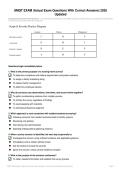
Scope & Severity Practice Diagram
Isolated Pattern Widespread
Immediate jeopardy J K L
Actual harm G H I
Potential > minimal D E F
Potential minimal A B C
Questions begin immediately below.
1. What is the primary purpose of a nursing home survey?
✓ To determine compliance with federal requirements and protect residents
To assign a facility marketing rating
To replace facility management
To determine employee salaries
2. Why do surveyors use observations, interviews, and record review together?
✓ To gather corroborating evidence from multiple sources
To shorten the survey regardless of findings
To avoid speaking with residents
To eliminate professional judgment
3. Which approach is most consistent with resident-centered surveying?
✓ Following concerns from resident outcomes back to facility systems
Reviewing only policies
Interviewing only administrators
Selecting findings before gathering evidence
4. When a survey concern is identified, the next step is generally to:
✓ Investigate the concern using sufficient evidence and applicable guidance
Immediately write a citation without review
Ask the facility to choose the severity
Ignore the concern unless several residents complain
5. What is the purpose of the entrance conference?
✓ To obtain needed information and establish the survey process
SMQT 2026 Updated • Original exam-style practice questions • Verify current CMS guidance before testing Page 1
, To negotiate citations
To approve the plan of correction
To train facility staff
6. A resident's right to make choices is best supported when staff:
✓ Provide understandable information and honor informed preferences when practicable
Make all decisions for the resident
Allow choices only at admission
Require family approval for every preference
7. Which action best supports dignity?
✓ Addressing the resident respectfully and protecting privacy
Discussing diagnoses loudly in hallways
Entering rooms without regard for privacy
Using derogatory nicknames
8. A resident refuses a non-emergency service. The best initial response is to:
✓ Assess the reason, provide relevant information, and respect informed choice
Force the service immediately
Document refusal and provide no further assessment
Discharge the resident automatically
9. Person-centered care is primarily organized around:
✓ The resident's goals, needs, strengths, and preferences
The easiest staff schedule
The newest equipment
The preferences of outside vendors
10. Which finding most strongly suggests a possible resident-rights concern?
✓ Staff repeatedly ignoring a resident's expressed preference without assessment
A resident choosing a preferred activity
Staff knocking before entering
Care plans reflecting resident goals
11. A facility's abuse-prevention system should primarily:
✓ Prevent, identify, investigate, and respond to allegations or indicators of harm
Wait for a court finding before acting
Rely only on annual staff training
Treat every allegation as a personnel issue only
12. Which is the strongest survey concern requiring prompt investigation?
✓ An unexplained injury with inconsistent accounts and no documented follow-up
A resident choosing a different breakfast
A visitor arriving late
SMQT 2026 Updated • Original exam-style practice questions • Verify current CMS guidance before testing Page 2
, A completed activity calendar
13. Why is timely reporting of an allegation important?
✓ It supports resident protection and prompt investigation
It guarantees a citation
It replaces evidence collection
It eliminates the need for corrective action
14. Neglect may involve:
✓ Failure to provide necessary care or services resulting from an act or omission
Any disagreement with a resident
Only intentional physical injury
Only financial loss
15. The best evidence review for a suspected abuse concern includes:
✓ Interviews, observations, records, timelines, and facility response
Only the accused employee's statement
Only the resident's diagnosis
Only the facility policy
EVIDENCE TRIANGULATION
Observation
Interview Record Review
Corroborate evidence before concluding
16. A comprehensive care plan should be based on:
✓ Assessment findings, resident goals, risks, and needed interventions
A generic plan used for all residents
Only physician orders
Only family preferences
17. A measurable care-plan intervention should identify:
✓ What will be done, for whom, and how the approach addresses the identified need
Only the staff member's name
Only the facility policy number
Only the date of admission
18. When a resident's condition changes significantly, staff should:
SMQT 2026 Updated • Original exam-style practice questions • Verify current CMS guidance before testing Page 3
, ✓ Assess the change and update interventions and planning as appropriate
Wait until the annual review
Use the previous plan without reassessment
Delete prior documentation
19. The term 'highest practicable well-being' emphasizes:
✓ Individualized care and services directed toward the resident's attainable best status
Identical outcomes for every resident
Only physical outcomes
Facility convenience
20. A care-plan review is strongest when it compares:
✓ Planned interventions with actual resident outcomes and current needs
The plan's font with other records
Only staff attendance
Only medication costs
21. An unnecessary medication concern may include:
✓ Lack of adequate indication, monitoring, or response to adverse consequences
Any medication with more than one side effect
Any medication ordered by a specialist
Any medication given at bedtime
22. During medication administration observation, surveyors should focus on:
✓ Whether practice is consistent with orders, professional standards, and resident safety
The brand of medication cart
The nurse's years of employment only
Whether every medication is expensive
23. A medication error investigation should consider:
✓ The resident impact, contributing factors, system controls, and corrective response
Only whether the nurse admits fault
Only the number of pills involved
Only the pharmacy invoice
24. Why is monitoring for adverse consequences important?
✓ To determine whether treatment remains appropriate and safe
To increase documentation volume only
To replace physician oversight
To eliminate resident interviews
25. Before concluding a medication-related deficient practice, surveyors should:
✓ Corroborate observations with relevant records and standards
Rely on one informal comment
SMQT 2026 Updated • Original exam-style practice questions • Verify current CMS guidance before testing Page 4
Updated
250 Original Exam-Style Practice Questions — Surveyor Minimum Qualifications Test (SMQT) preparation. Answer options use large dots; the keyed answer
is shown with a large green tick inside an empty box.
Scope & Severity Practice Diagram
Isolated Pattern Widespread
Immediate jeopardy J K L
Actual harm G H I
Potential > minimal D E F
Potential minimal A B C
Questions begin immediately below.
1. What is the primary purpose of a nursing home survey?
✓ To determine compliance with federal requirements and protect residents
To assign a facility marketing rating
To replace facility management
To determine employee salaries
2. Why do surveyors use observations, interviews, and record review together?
✓ To gather corroborating evidence from multiple sources
To shorten the survey regardless of findings
To avoid speaking with residents
To eliminate professional judgment
3. Which approach is most consistent with resident-centered surveying?
✓ Following concerns from resident outcomes back to facility systems
Reviewing only policies
Interviewing only administrators
Selecting findings before gathering evidence
4. When a survey concern is identified, the next step is generally to:
✓ Investigate the concern using sufficient evidence and applicable guidance
Immediately write a citation without review
Ask the facility to choose the severity
Ignore the concern unless several residents complain
5. What is the purpose of the entrance conference?
✓ To obtain needed information and establish the survey process
SMQT 2026 Updated • Original exam-style practice questions • Verify current CMS guidance before testing Page 1
, To negotiate citations
To approve the plan of correction
To train facility staff
6. A resident's right to make choices is best supported when staff:
✓ Provide understandable information and honor informed preferences when practicable
Make all decisions for the resident
Allow choices only at admission
Require family approval for every preference
7. Which action best supports dignity?
✓ Addressing the resident respectfully and protecting privacy
Discussing diagnoses loudly in hallways
Entering rooms without regard for privacy
Using derogatory nicknames
8. A resident refuses a non-emergency service. The best initial response is to:
✓ Assess the reason, provide relevant information, and respect informed choice
Force the service immediately
Document refusal and provide no further assessment
Discharge the resident automatically
9. Person-centered care is primarily organized around:
✓ The resident's goals, needs, strengths, and preferences
The easiest staff schedule
The newest equipment
The preferences of outside vendors
10. Which finding most strongly suggests a possible resident-rights concern?
✓ Staff repeatedly ignoring a resident's expressed preference without assessment
A resident choosing a preferred activity
Staff knocking before entering
Care plans reflecting resident goals
11. A facility's abuse-prevention system should primarily:
✓ Prevent, identify, investigate, and respond to allegations or indicators of harm
Wait for a court finding before acting
Rely only on annual staff training
Treat every allegation as a personnel issue only
12. Which is the strongest survey concern requiring prompt investigation?
✓ An unexplained injury with inconsistent accounts and no documented follow-up
A resident choosing a different breakfast
A visitor arriving late
SMQT 2026 Updated • Original exam-style practice questions • Verify current CMS guidance before testing Page 2
, A completed activity calendar
13. Why is timely reporting of an allegation important?
✓ It supports resident protection and prompt investigation
It guarantees a citation
It replaces evidence collection
It eliminates the need for corrective action
14. Neglect may involve:
✓ Failure to provide necessary care or services resulting from an act or omission
Any disagreement with a resident
Only intentional physical injury
Only financial loss
15. The best evidence review for a suspected abuse concern includes:
✓ Interviews, observations, records, timelines, and facility response
Only the accused employee's statement
Only the resident's diagnosis
Only the facility policy
EVIDENCE TRIANGULATION
Observation
Interview Record Review
Corroborate evidence before concluding
16. A comprehensive care plan should be based on:
✓ Assessment findings, resident goals, risks, and needed interventions
A generic plan used for all residents
Only physician orders
Only family preferences
17. A measurable care-plan intervention should identify:
✓ What will be done, for whom, and how the approach addresses the identified need
Only the staff member's name
Only the facility policy number
Only the date of admission
18. When a resident's condition changes significantly, staff should:
SMQT 2026 Updated • Original exam-style practice questions • Verify current CMS guidance before testing Page 3
, ✓ Assess the change and update interventions and planning as appropriate
Wait until the annual review
Use the previous plan without reassessment
Delete prior documentation
19. The term 'highest practicable well-being' emphasizes:
✓ Individualized care and services directed toward the resident's attainable best status
Identical outcomes for every resident
Only physical outcomes
Facility convenience
20. A care-plan review is strongest when it compares:
✓ Planned interventions with actual resident outcomes and current needs
The plan's font with other records
Only staff attendance
Only medication costs
21. An unnecessary medication concern may include:
✓ Lack of adequate indication, monitoring, or response to adverse consequences
Any medication with more than one side effect
Any medication ordered by a specialist
Any medication given at bedtime
22. During medication administration observation, surveyors should focus on:
✓ Whether practice is consistent with orders, professional standards, and resident safety
The brand of medication cart
The nurse's years of employment only
Whether every medication is expensive
23. A medication error investigation should consider:
✓ The resident impact, contributing factors, system controls, and corrective response
Only whether the nurse admits fault
Only the number of pills involved
Only the pharmacy invoice
24. Why is monitoring for adverse consequences important?
✓ To determine whether treatment remains appropriate and safe
To increase documentation volume only
To replace physician oversight
To eliminate resident interviews
25. Before concluding a medication-related deficient practice, surveyors should:
✓ Corroborate observations with relevant records and standards
Rely on one informal comment
SMQT 2026 Updated • Original exam-style practice questions • Verify current CMS guidance before testing Page 4


