
NYC Custodian Engineer Exam Questions With Correct Answers
(Verified-Style Answers) Plus Rationales | 2026
Original practice questions aligned to publicly described NYC DCAS exam areas. This is an independent study resource, not an official
NYC exam or official answer key.
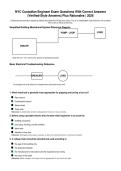
Simplified Building Mechanical-System Reference Diagram
PUMP / LOOP LOAD
BOILER
Study aid only—not a construction drawing or operating procedure.
Basic Electrical Troubleshooting Reference
BREAKER LOAD
De-energize and verify absence of voltage before authorized service work.
1. Which hand tool is generally most appropriate for gripping and turning a hex nut?
● Pipe wrench
■ Combination wrench
● Wood chisel
● Putty knife
Rationale: A combination wrench is designed to fit and turn nuts and bolts.
2. Before using a portable electric drill, the best initial inspection is to check the
● building occupancy
■ cord, plug, housing, and bit condition
● paint color
● operator's shoe size
Rationale: Damaged cords, plugs, housings, or bits can create electrical or mechanical hazards.
3. A voltage meter should be selected and used according to
● the age of the building only
● the janitorial schedule
■ the manufacturer's instructions and the expected circuit rating
● the color of the outlet
Rationale: Meter category and range must be appropriate for the circuit and task.
,4. A pipe wrench is primarily designed to
● cut sheet glass
● remove floor wax
● measure voltage
■ turn threaded pipe and fittings
Rationale: Its serrated jaws grip round pipe and fittings.
5. The safest response to a visibly damaged extension cord is to
■ remove it from service
● wrap it with paper
● place it under a rug
● use it only at night
Rationale: Damaged electrical equipment should be removed from service and handled through proper procedures.
6. When selecting a cleaning chemical, the first reference for proper use is the
● room number
■ manufacturer's label and safety information
● color of the bottle cap
● age of the mop
Rationale: The label and safety information provide intended use, dilution, hazards, and precautions.
7. Why should incompatible cleaning chemicals never be mixed?
● They make floors too shiny
● They lower water pressure
■ They may react and create dangerous heat, fumes, or other hazards
● They always become ineffective but harmless
Rationale: Chemical incompatibility can create hazardous reactions.
8. A neutral cleaner is commonly selected when the goal is to
● strip all paint
● repair wiring
● lubricate bearings
■ clean a surface without strongly acidic or alkaline action
Rationale: Neutral cleaners are commonly used for routine cleaning of compatible surfaces.
9. A wet-floor warning sign should be placed
■ before or as the wet condition is created, in a visible location
● only after someone slips
● inside a locked closet
● only after the floor is dry
Rationale: Warning and controlling the area helps reduce slip hazards.
,10. The most appropriate first step after a spill is generally to
● wash it into an electrical room
■ assess the material and hazards, then follow the applicable procedure
● immediately mix several chemicals
● ignore the spill until the next shift
Rationale: Hazard identification determines the proper response.
11. A P-trap primarily helps prevent
● pipes from expanding
● fixtures from receiving water
■ sewer gases from entering occupied space
● water from entering a drain
Rationale: The water seal in a trap blocks sewer gases.
12. A shutoff valve is installed so that a fixture or branch can be
● made permanently louder
● converted to electricity
● used as a drain cleaner
■ isolated for service
Rationale: Isolation allows maintenance without unnecessarily shutting down unrelated areas.
13. A toilet that continues to run after filling may commonly involve a problem with the
■ fill or flush mechanism
● light switch
● door closer
● floor finish
Rationale: Internal tank components control filling and flushing.
14. Before disassembling a pressurized plumbing component, an authorized worker should first
● turn on nearby lights
■ isolate and relieve pressure according to procedure
● increase pressure
● paint the fitting
Rationale: Stored pressure can cause sudden release and injury.
15. A slow drain should first be evaluated for
● the time of sunset
● the number of desks nearby
■ the location and likely cause of the restriction
● the building's exterior paint color
Rationale: Diagnosis should precede corrective action.
, 16. A circuit breaker primarily protects a circuit from
● low room temperature
● dust on furniture
● water hardness
■ overcurrent conditions
Rationale: Breakers are protective devices designed to interrupt excessive current.
17. Before servicing electrical equipment, the key safety principle is to
■ follow authorized de-energizing and verification procedures
● assume a switch is enough in every case
● work faster to reduce exposure
● touch conductors to test them
Rationale: Isolation and verification procedures are essential.
18. A GFCI is intended to provide added protection by responding to
● airflow
■ an imbalance between outgoing and returning current
● paint thickness
● water pressure
Rationale: A current imbalance may indicate leakage to ground.
19. A repeatedly tripping breaker should be treated as
● a cosmetic issue
● proof that the circuit is safe
■ a condition requiring investigation of the circuit and load
● a reason to install a larger breaker without analysis
Rationale: Repeated tripping can indicate overloads, faults, or equipment problems.
20. An electrical panel should be kept
● used for chemical storage
● covered by furniture
● open at all times
■ accessible and free of unnecessary obstruction
Rationale: Safe access supports operation and emergency response.
21. The purpose of surface preparation before painting is to
■ promote proper adhesion and finish quality
● increase electrical voltage
● sterilize plumbing
● raise boiler pressure
Rationale: Cleaning, repairing, and preparing compatible surfaces improves coating performance.
(Verified-Style Answers) Plus Rationales | 2026
Original practice questions aligned to publicly described NYC DCAS exam areas. This is an independent study resource, not an official
NYC exam or official answer key.
Simplified Building Mechanical-System Reference Diagram
PUMP / LOOP LOAD
BOILER
Study aid only—not a construction drawing or operating procedure.
Basic Electrical Troubleshooting Reference
BREAKER LOAD
De-energize and verify absence of voltage before authorized service work.
1. Which hand tool is generally most appropriate for gripping and turning a hex nut?
● Pipe wrench
■ Combination wrench
● Wood chisel
● Putty knife
Rationale: A combination wrench is designed to fit and turn nuts and bolts.
2. Before using a portable electric drill, the best initial inspection is to check the
● building occupancy
■ cord, plug, housing, and bit condition
● paint color
● operator's shoe size
Rationale: Damaged cords, plugs, housings, or bits can create electrical or mechanical hazards.
3. A voltage meter should be selected and used according to
● the age of the building only
● the janitorial schedule
■ the manufacturer's instructions and the expected circuit rating
● the color of the outlet
Rationale: Meter category and range must be appropriate for the circuit and task.
,4. A pipe wrench is primarily designed to
● cut sheet glass
● remove floor wax
● measure voltage
■ turn threaded pipe and fittings
Rationale: Its serrated jaws grip round pipe and fittings.
5. The safest response to a visibly damaged extension cord is to
■ remove it from service
● wrap it with paper
● place it under a rug
● use it only at night
Rationale: Damaged electrical equipment should be removed from service and handled through proper procedures.
6. When selecting a cleaning chemical, the first reference for proper use is the
● room number
■ manufacturer's label and safety information
● color of the bottle cap
● age of the mop
Rationale: The label and safety information provide intended use, dilution, hazards, and precautions.
7. Why should incompatible cleaning chemicals never be mixed?
● They make floors too shiny
● They lower water pressure
■ They may react and create dangerous heat, fumes, or other hazards
● They always become ineffective but harmless
Rationale: Chemical incompatibility can create hazardous reactions.
8. A neutral cleaner is commonly selected when the goal is to
● strip all paint
● repair wiring
● lubricate bearings
■ clean a surface without strongly acidic or alkaline action
Rationale: Neutral cleaners are commonly used for routine cleaning of compatible surfaces.
9. A wet-floor warning sign should be placed
■ before or as the wet condition is created, in a visible location
● only after someone slips
● inside a locked closet
● only after the floor is dry
Rationale: Warning and controlling the area helps reduce slip hazards.
,10. The most appropriate first step after a spill is generally to
● wash it into an electrical room
■ assess the material and hazards, then follow the applicable procedure
● immediately mix several chemicals
● ignore the spill until the next shift
Rationale: Hazard identification determines the proper response.
11. A P-trap primarily helps prevent
● pipes from expanding
● fixtures from receiving water
■ sewer gases from entering occupied space
● water from entering a drain
Rationale: The water seal in a trap blocks sewer gases.
12. A shutoff valve is installed so that a fixture or branch can be
● made permanently louder
● converted to electricity
● used as a drain cleaner
■ isolated for service
Rationale: Isolation allows maintenance without unnecessarily shutting down unrelated areas.
13. A toilet that continues to run after filling may commonly involve a problem with the
■ fill or flush mechanism
● light switch
● door closer
● floor finish
Rationale: Internal tank components control filling and flushing.
14. Before disassembling a pressurized plumbing component, an authorized worker should first
● turn on nearby lights
■ isolate and relieve pressure according to procedure
● increase pressure
● paint the fitting
Rationale: Stored pressure can cause sudden release and injury.
15. A slow drain should first be evaluated for
● the time of sunset
● the number of desks nearby
■ the location and likely cause of the restriction
● the building's exterior paint color
Rationale: Diagnosis should precede corrective action.
, 16. A circuit breaker primarily protects a circuit from
● low room temperature
● dust on furniture
● water hardness
■ overcurrent conditions
Rationale: Breakers are protective devices designed to interrupt excessive current.
17. Before servicing electrical equipment, the key safety principle is to
■ follow authorized de-energizing and verification procedures
● assume a switch is enough in every case
● work faster to reduce exposure
● touch conductors to test them
Rationale: Isolation and verification procedures are essential.
18. A GFCI is intended to provide added protection by responding to
● airflow
■ an imbalance between outgoing and returning current
● paint thickness
● water pressure
Rationale: A current imbalance may indicate leakage to ground.
19. A repeatedly tripping breaker should be treated as
● a cosmetic issue
● proof that the circuit is safe
■ a condition requiring investigation of the circuit and load
● a reason to install a larger breaker without analysis
Rationale: Repeated tripping can indicate overloads, faults, or equipment problems.
20. An electrical panel should be kept
● used for chemical storage
● covered by furniture
● open at all times
■ accessible and free of unnecessary obstruction
Rationale: Safe access supports operation and emergency response.
21. The purpose of surface preparation before painting is to
■ promote proper adhesion and finish quality
● increase electrical voltage
● sterilize plumbing
● raise boiler pressure
Rationale: Cleaning, repairing, and preparing compatible surfaces improves coating performance.


