
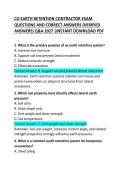
CO EARTH RETENTION CONTRACTOR EXAM
QUESTIONS AND CORRECT ANSWERS (VERIFIED
ANSWERS) Q&A 2027 |INSTANT DOWNLOAD PDF
1. What is the primary purpose of an earth retention system?
A. Increase soil moisture
B. Support soil and prevent lateral movement
C. Reduce concrete strength
D. Eliminate excavation
Correct Answer: B. Support soil and prevent lateral movement
Rationale: Earth retention systems stabilize soil masses and
protect excavations or adjacent structures from lateral
movement.
2. Which soil property most directly affects lateral earth
pressure?
A. Soil color
B. Grain shape only
C. Unit weight and shear strength
D. Soil temperature
Correct Answer: C. Unit weight and shear strength
Rationale: Soil unit weight, cohesion, friction angle, and related
strength properties strongly influence earth pressures.
3. What is a common earth retention system for temporary
excavations?
A. Sheet piling
,B. Roofing membrane
C. Floor tile
D. Drywall
Correct Answer: A. Sheet piling
Rationale: Sheet piles can provide continuous support along
excavation walls and are commonly used for temporary and
permanent earth retention.
4. What is the main purpose of a soldier pile and lagging
system?
A. Support lateral soil loads
B. Waterproof a roof
C. Reinforce concrete floors
D. Support electrical wiring
Correct Answer: A. Support lateral soil loads
Rationale: Soldier piles provide vertical structural elements
while lagging retains soil between piles.
5. What does a tieback anchor primarily do?
A. Transfers lateral forces into stable ground
B. Removes groundwater
C. Increases soil moisture
D. Supports roofing materials
Correct Answer: A. Transfers lateral forces into stable ground
Rationale: Tiebacks resist lateral loads by anchoring a retaining
system into competent soil or rock.
6. Which condition generally increases lateral pressure against
a retaining wall?
,A. Lower soil unit weight
B. Surcharge loading behind the wall
C. Removal of all nearby loads
D. Reduced backfill height
Correct Answer: B. Surcharge loading behind the wall
Rationale: Loads near the top of retained soil create additional
lateral pressure on the retaining structure.
7. What is a surcharge?
A. A load applied near or behind a retaining structure
B. A type of concrete finish
C. A drainage pipe
D. A soil-testing instrument
Correct Answer: A. A load applied near or behind a retaining
structure
Rationale: Buildings, equipment, stored materials, traffic, and
other loads can act as surcharges.
8. Why is drainage important behind retaining walls?
A. It increases hydrostatic pressure
B. It reduces water pressure behind the wall
C. It eliminates the need for structural design
D. It makes soil heavier
Correct Answer: B. It reduces water pressure behind the wall
Rationale: Proper drainage prevents excessive hydrostatic
pressure from developing behind the retaining wall.
9. What is hydrostatic pressure?
A. Pressure caused by standing or accumulated water
, B. Pressure caused only by wind
C. Pressure from concrete curing
D. Pressure from electrical current
Correct Answer: A. Pressure caused by standing or accumulated
water
Rationale: Water retained behind a wall can create substantial
lateral pressure.
10. Which material is commonly used as a drainage layer
behind a retaining wall?
A. Clean granular material
B. Organic topsoil
C. Wood chips
D. Asphalt shingles
Correct Answer: A. Clean granular material
Rationale: Free-draining granular material allows water to
move toward drainage outlets.
11. What is a weep hole used for?
A. Relieving water pressure
B. Increasing wall weight
C. Holding reinforcing steel
D. Measuring soil density
Correct Answer: A. Relieving water pressure
Rationale: Weep holes provide openings through which water
can drain from behind a retaining wall.
12. What is a geotextile commonly used for in earth retention
work?
QUESTIONS AND CORRECT ANSWERS (VERIFIED
ANSWERS) Q&A 2027 |INSTANT DOWNLOAD PDF
1. What is the primary purpose of an earth retention system?
A. Increase soil moisture
B. Support soil and prevent lateral movement
C. Reduce concrete strength
D. Eliminate excavation
Correct Answer: B. Support soil and prevent lateral movement
Rationale: Earth retention systems stabilize soil masses and
protect excavations or adjacent structures from lateral
movement.
2. Which soil property most directly affects lateral earth
pressure?
A. Soil color
B. Grain shape only
C. Unit weight and shear strength
D. Soil temperature
Correct Answer: C. Unit weight and shear strength
Rationale: Soil unit weight, cohesion, friction angle, and related
strength properties strongly influence earth pressures.
3. What is a common earth retention system for temporary
excavations?
A. Sheet piling
,B. Roofing membrane
C. Floor tile
D. Drywall
Correct Answer: A. Sheet piling
Rationale: Sheet piles can provide continuous support along
excavation walls and are commonly used for temporary and
permanent earth retention.
4. What is the main purpose of a soldier pile and lagging
system?
A. Support lateral soil loads
B. Waterproof a roof
C. Reinforce concrete floors
D. Support electrical wiring
Correct Answer: A. Support lateral soil loads
Rationale: Soldier piles provide vertical structural elements
while lagging retains soil between piles.
5. What does a tieback anchor primarily do?
A. Transfers lateral forces into stable ground
B. Removes groundwater
C. Increases soil moisture
D. Supports roofing materials
Correct Answer: A. Transfers lateral forces into stable ground
Rationale: Tiebacks resist lateral loads by anchoring a retaining
system into competent soil or rock.
6. Which condition generally increases lateral pressure against
a retaining wall?
,A. Lower soil unit weight
B. Surcharge loading behind the wall
C. Removal of all nearby loads
D. Reduced backfill height
Correct Answer: B. Surcharge loading behind the wall
Rationale: Loads near the top of retained soil create additional
lateral pressure on the retaining structure.
7. What is a surcharge?
A. A load applied near or behind a retaining structure
B. A type of concrete finish
C. A drainage pipe
D. A soil-testing instrument
Correct Answer: A. A load applied near or behind a retaining
structure
Rationale: Buildings, equipment, stored materials, traffic, and
other loads can act as surcharges.
8. Why is drainage important behind retaining walls?
A. It increases hydrostatic pressure
B. It reduces water pressure behind the wall
C. It eliminates the need for structural design
D. It makes soil heavier
Correct Answer: B. It reduces water pressure behind the wall
Rationale: Proper drainage prevents excessive hydrostatic
pressure from developing behind the retaining wall.
9. What is hydrostatic pressure?
A. Pressure caused by standing or accumulated water
, B. Pressure caused only by wind
C. Pressure from concrete curing
D. Pressure from electrical current
Correct Answer: A. Pressure caused by standing or accumulated
water
Rationale: Water retained behind a wall can create substantial
lateral pressure.
10. Which material is commonly used as a drainage layer
behind a retaining wall?
A. Clean granular material
B. Organic topsoil
C. Wood chips
D. Asphalt shingles
Correct Answer: A. Clean granular material
Rationale: Free-draining granular material allows water to
move toward drainage outlets.
11. What is a weep hole used for?
A. Relieving water pressure
B. Increasing wall weight
C. Holding reinforcing steel
D. Measuring soil density
Correct Answer: A. Relieving water pressure
Rationale: Weep holes provide openings through which water
can drain from behind a retaining wall.
12. What is a geotextile commonly used for in earth retention
work?


