
Dysrhythmia Basic Practice Exam
35 Original Questions • 2026/2027 Study Edition • Basic A Dysrhythmia
Important: This is an original practice assessment created for study. It is not an official Relias test and does not reproduce Relias
questions.
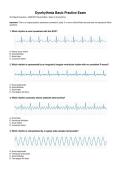
1. Which rhythm is most consistent with this ECG?
A. Normal sinus rhythm
B. Atrial fibrillation
C. Atrial flutter
D. Junctional rhythm
2. Which rhythm is represented by an irregularly irregular ventricular rhythm with no consistent P waves?
A. Sinus bradycardia
B. Atrial fibrillation
C. Atrial flutter
D. First-degree AV block
3. Which rhythm commonly shows sawtooth atrial activity?
A. Atrial flutter
B. Ventricular fibrillation
C. Sinus rhythm
D. Junctional rhythm
4. Which rhythm is characterized by a regular wide-complex tachycardia?
A. Sinus bradycardia
B. Ventricular tachycardia
C. Atrial fibrillation
D. First-degree AV block
, 5. Which rhythm is typically a narrow-complex tachycardia with a regular rate and often hidden P waves?
A. SVT
B. Asystole
C. Atrial flutter
D. Complete heart block
6. Which rhythm is a chaotic ventricular rhythm without organized QRS complexes?
A. Atrial fibrillation
B. Ventricular fibrillation
C. Sinus tachycardia
D. Junctional rhythm
7. Which ECG finding is most consistent with asystole?
A. Organized P waves with QRS complexes
B. A flat or nearly flat tracing without ventricular activity
C. Sawtooth waves
D. Regular wide QRS complexes
8. Which rhythm has a prolonged PR interval that remains constant before every QRS?
A. First-degree AV block
B. Second-degree type II AV block
C. Complete heart block
D. Atrial fibrillation
9. Which rhythm shows progressively lengthening PR intervals followed by a dropped QRS?
35 Original Questions • 2026/2027 Study Edition • Basic A Dysrhythmia
Important: This is an original practice assessment created for study. It is not an official Relias test and does not reproduce Relias
questions.
1. Which rhythm is most consistent with this ECG?
A. Normal sinus rhythm
B. Atrial fibrillation
C. Atrial flutter
D. Junctional rhythm
2. Which rhythm is represented by an irregularly irregular ventricular rhythm with no consistent P waves?
A. Sinus bradycardia
B. Atrial fibrillation
C. Atrial flutter
D. First-degree AV block
3. Which rhythm commonly shows sawtooth atrial activity?
A. Atrial flutter
B. Ventricular fibrillation
C. Sinus rhythm
D. Junctional rhythm
4. Which rhythm is characterized by a regular wide-complex tachycardia?
A. Sinus bradycardia
B. Ventricular tachycardia
C. Atrial fibrillation
D. First-degree AV block
, 5. Which rhythm is typically a narrow-complex tachycardia with a regular rate and often hidden P waves?
A. SVT
B. Asystole
C. Atrial flutter
D. Complete heart block
6. Which rhythm is a chaotic ventricular rhythm without organized QRS complexes?
A. Atrial fibrillation
B. Ventricular fibrillation
C. Sinus tachycardia
D. Junctional rhythm
7. Which ECG finding is most consistent with asystole?
A. Organized P waves with QRS complexes
B. A flat or nearly flat tracing without ventricular activity
C. Sawtooth waves
D. Regular wide QRS complexes
8. Which rhythm has a prolonged PR interval that remains constant before every QRS?
A. First-degree AV block
B. Second-degree type II AV block
C. Complete heart block
D. Atrial fibrillation
9. Which rhythm shows progressively lengthening PR intervals followed by a dropped QRS?


