
aging
wers -Client
converted.pdf@@@@@@@@@@@@!!!!!!!!!!!!!!!!!!!!!!!!!!!!!!!!!!!!!!!!!!!!!!!))))))))))))(((((((((((((((((((((())))))))))))))))))))))))))!!!!!!!!!!!!!!!
ATI Nursing
Care Practice
Leadership
Questions
and Managing
with Answers
Client
- converted.pdf@@@@@@@@@@@@!!!!!!!!!!!!!!!!!!!!!!!ATI
Care Practice Questions with Answers - converted~~~~~~~~~~~~~~~~~~~~~~!!!!!!!!!!
Nursing Leadership and Ma
ATI Nursing Leadership and Managing Client Care
ATI Nursing Leadership and Managing Client Care Practice Questions with Answers[exam-ready Answers]
Study online at https://quizlet.com/_inwwij
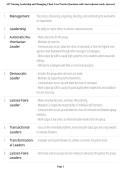
1. Management The process of planning, organizing, directing, and coordinating the work within
an organization.
2. Leadership The ability to inspire others to achieve a desired outcome.
3. Autocratic/Au- - Makes decisions for the group.
thoritarian - Motivates by coercion.
Leader - Communication occurs down the chain of command, or from the highest man-
agement level downward through other managers to employees.
- Work output by staff is usually high: good for crisis situations and bureaucratic
settings.
- Effective for employees with little or no formal education.
4. Democratic - Includes the group when decisions are made.
Leader - Motivates by supporting staff achievements.
- Communication occurs up and down the chain of command.
- Work output by staff is usually of good quality when cooperation and collabora-
tion are necessary.
5. Laissez-Faire - Makes very few decisions, and does little planning.
Leader - Motivation is largely the responsibility of individual staff members.
- Communication occurs up and down the chain of command and between group
members.
- Work output is low unless an informal leader evolves from the group.
6. Transactional - Focus on the immediate problems, maintaining the status quo and using rewards
Leaders to motivate followers.
7. Transformation- - Empower and inspire followers to achieve a common, long-term vision.
al Leaders
8. Laissez-Faire - Permissive and encourage decision making to take place throughout the group.
Leaders
Page 1
aging
wers -Client
converted.pdf@@@@@@@@@@@@!!!!!!!!!!!!!!!!!!!!!!!!!!!!!!!!!!!!!!!!!!!!!!!))))))))))))(((((((((((((((((((((())))))))))))))))))))))))))!!!!!!!!!!!!!!!
ATI Nursing
Care Practice
Leadership
Questions
and Managing
with Answers
Client
- converted.pdf@@@@@@@@@@@@!!!!!!!!!!!!!!!!!!!!!!!ATI
Care Practice Questions with Answers - converted~~~~~~~~~~~~~~~~~~~~~~!!!!!!!!!!
Nursing Leadership and Ma
,aging
wers -Client
converted.pdf@@@@@@@@@@@@!!!!!!!!!!!!!!!!!!!!!!!!!!!!!!!!!!!!!!!!!!!!!!!))))))))))))(((((((((((((((((((((())))))))))))))))))))))))))!!!!!!!!!!!!!!!
ATI Nursing
Care Practice
Leadership
Questions
and Managing
with Answers
Client
- converted.pdf@@@@@@@@@@@@!!!!!!!!!!!!!!!!!!!!!!!ATI
Care Practice Questions with Answers - converted~~~~~~~~~~~~~~~~~~~~~~!!!!!!!!!!
Nursing Leadership and Ma
ATI Nursing Leadership and Managing Client Care
ATI Nursing Leadership and Managing Client Care Practice Questions with Answers[exam-ready Answers]
Study online at https://quizlet.com/_inwwij
9. Bureaucratic - Inspire others to follow them by modeling a strong internal moral code.
Leaders
10. Situational Lead- - Flexible and can adapt their leadership style based on the situation at hand, often
ers combining both autocratic and democratic leadership styles.
11. Emotional Intelli- The ability of an individual to perceive and manage the emotions of self and others.
gence
12. Emotional Intelli- Through understanding the concept and applying it to practice in everyday situa-
gence is devel- tions.
oped:
13. Emotionally Intel- - Have insight into the emotions of members of the team.
ligent Leaders - Understand the perspective of others.
- Encourage constructive criticism and is open to new ideas.
- Manage emotions and channels them in a positive direction, which in turn helps
the team accomplish its goals.
- Are committed to the delivery of high-quality client care.
- Refrain from judgment in controversial or emotionally-charged situations until
facts are gathered.
14. Five Major Man- - Planning
agement Func- - Organizing
tions - Staffing
- Directing
- Controlling
15. Planning The decisions regarding what needs to be done, how it will be done, and who is
going to do it.
16. Organizing The organizational structure that determines the lines of authority, channels of
communication, and where decisions are made.
Page 2
aging
wers -Client
converted.pdf@@@@@@@@@@@@!!!!!!!!!!!!!!!!!!!!!!!!!!!!!!!!!!!!!!!!!!!!!!!))))))))))))(((((((((((((((((((((())))))))))))))))))))))))))!!!!!!!!!!!!!!!
ATI Nursing
Care Practice
Leadership
Questions
and Managing
with Answers
Client
- converted.pdf@@@@@@@@@@@@!!!!!!!!!!!!!!!!!!!!!!!ATI
Care Practice Questions with Answers - converted~~~~~~~~~~~~~~~~~~~~~~!!!!!!!!!!
Nursing Leadership and Ma
wers -Client
converted.pdf@@@@@@@@@@@@!!!!!!!!!!!!!!!!!!!!!!!!!!!!!!!!!!!!!!!!!!!!!!!))))))))))))(((((((((((((((((((((())))))))))))))))))))))))))!!!!!!!!!!!!!!!
ATI Nursing
Care Practice
Leadership
Questions
and Managing
with Answers
Client
- converted.pdf@@@@@@@@@@@@!!!!!!!!!!!!!!!!!!!!!!!ATI
Care Practice Questions with Answers - converted~~~~~~~~~~~~~~~~~~~~~~!!!!!!!!!!
Nursing Leadership and Ma
ATI Nursing Leadership and Managing Client Care
ATI Nursing Leadership and Managing Client Care Practice Questions with Answers[exam-ready Answers]
Study online at https://quizlet.com/_inwwij
1. Management The process of planning, organizing, directing, and coordinating the work within
an organization.
2. Leadership The ability to inspire others to achieve a desired outcome.
3. Autocratic/Au- - Makes decisions for the group.
thoritarian - Motivates by coercion.
Leader - Communication occurs down the chain of command, or from the highest man-
agement level downward through other managers to employees.
- Work output by staff is usually high: good for crisis situations and bureaucratic
settings.
- Effective for employees with little or no formal education.
4. Democratic - Includes the group when decisions are made.
Leader - Motivates by supporting staff achievements.
- Communication occurs up and down the chain of command.
- Work output by staff is usually of good quality when cooperation and collabora-
tion are necessary.
5. Laissez-Faire - Makes very few decisions, and does little planning.
Leader - Motivation is largely the responsibility of individual staff members.
- Communication occurs up and down the chain of command and between group
members.
- Work output is low unless an informal leader evolves from the group.
6. Transactional - Focus on the immediate problems, maintaining the status quo and using rewards
Leaders to motivate followers.
7. Transformation- - Empower and inspire followers to achieve a common, long-term vision.
al Leaders
8. Laissez-Faire - Permissive and encourage decision making to take place throughout the group.
Leaders
Page 1
aging
wers -Client
converted.pdf@@@@@@@@@@@@!!!!!!!!!!!!!!!!!!!!!!!!!!!!!!!!!!!!!!!!!!!!!!!))))))))))))(((((((((((((((((((((())))))))))))))))))))))))))!!!!!!!!!!!!!!!
ATI Nursing
Care Practice
Leadership
Questions
and Managing
with Answers
Client
- converted.pdf@@@@@@@@@@@@!!!!!!!!!!!!!!!!!!!!!!!ATI
Care Practice Questions with Answers - converted~~~~~~~~~~~~~~~~~~~~~~!!!!!!!!!!
Nursing Leadership and Ma
,aging
wers -Client
converted.pdf@@@@@@@@@@@@!!!!!!!!!!!!!!!!!!!!!!!!!!!!!!!!!!!!!!!!!!!!!!!))))))))))))(((((((((((((((((((((())))))))))))))))))))))))))!!!!!!!!!!!!!!!
ATI Nursing
Care Practice
Leadership
Questions
and Managing
with Answers
Client
- converted.pdf@@@@@@@@@@@@!!!!!!!!!!!!!!!!!!!!!!!ATI
Care Practice Questions with Answers - converted~~~~~~~~~~~~~~~~~~~~~~!!!!!!!!!!
Nursing Leadership and Ma
ATI Nursing Leadership and Managing Client Care
ATI Nursing Leadership and Managing Client Care Practice Questions with Answers[exam-ready Answers]
Study online at https://quizlet.com/_inwwij
9. Bureaucratic - Inspire others to follow them by modeling a strong internal moral code.
Leaders
10. Situational Lead- - Flexible and can adapt their leadership style based on the situation at hand, often
ers combining both autocratic and democratic leadership styles.
11. Emotional Intelli- The ability of an individual to perceive and manage the emotions of self and others.
gence
12. Emotional Intelli- Through understanding the concept and applying it to practice in everyday situa-
gence is devel- tions.
oped:
13. Emotionally Intel- - Have insight into the emotions of members of the team.
ligent Leaders - Understand the perspective of others.
- Encourage constructive criticism and is open to new ideas.
- Manage emotions and channels them in a positive direction, which in turn helps
the team accomplish its goals.
- Are committed to the delivery of high-quality client care.
- Refrain from judgment in controversial or emotionally-charged situations until
facts are gathered.
14. Five Major Man- - Planning
agement Func- - Organizing
tions - Staffing
- Directing
- Controlling
15. Planning The decisions regarding what needs to be done, how it will be done, and who is
going to do it.
16. Organizing The organizational structure that determines the lines of authority, channels of
communication, and where decisions are made.
Page 2
aging
wers -Client
converted.pdf@@@@@@@@@@@@!!!!!!!!!!!!!!!!!!!!!!!!!!!!!!!!!!!!!!!!!!!!!!!))))))))))))(((((((((((((((((((((())))))))))))))))))))))))))!!!!!!!!!!!!!!!
ATI Nursing
Care Practice
Leadership
Questions
and Managing
with Answers
Client
- converted.pdf@@@@@@@@@@@@!!!!!!!!!!!!!!!!!!!!!!!ATI
Care Practice Questions with Answers - converted~~~~~~~~~~~~~~~~~~~~~~!!!!!!!!!!
Nursing Leadership and Ma


