
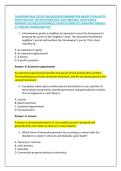
CALIFORNIA REAL ESTATE SALESPERSON EXAMINATION NEWEST EVALUATED
EXAM PRACTICE 100 QUESTIONS 2026-2027|ORIGINAL QUESTIONS &
ANSWERS |DETAILED RATIONALES |HINTED COMPLETE EXAM PREP GRADED
A+*INSTANT DOWNLOAD PDF*
1. A homeowner grants a neighbor an easement across the homeowner’s
property for access to the neighbor’s land. The easement benefits the
neighbor’s parcel and burdens the homeowner’s parcel. This is best
classified as:
A. An easement in gross
B. An easement appurtenant
C. A license
D. A profit à prendre
Answer: B. Easement appurtenant
An easement appurtenant benefits one parcel of land and burdens another.
The benefited parcel is the dominant tenement, and the burdened parcel is the
servient tenement.
2. A property owner gives another person permission to use a portion of
the property temporarily, and the permission may generally be revoked.
This arrangement is most likely a:
A. License
B. Deed restriction
C. Easement appurtenant
D. Encroachment
Answer: A. License
A license is personal permission to use another person’s property and
generally does not create an interest in real property.
3. Which form of ownership provides the surviving co-owner with the
decedent co-owner’s interest automatically upon death?
A. Tenancy in common
B. Joint tenancy
C. Severalty
D. Community property without survivorship
,Answer: B. Joint tenancy
Joint tenancy includes the right of survivorship. At the death of one joint
tenant, the surviving joint tenant or tenants generally receive the deceased
tenant’s interest.
4. Two unmarried investors purchase property as tenants in common. One
investor dies without a will. What generally happens to that investor’s
ownership interest?
A. It automatically passes to the surviving co-owner
B. It automatically becomes community property
C. It passes according to the deceased owner’s estate
D. It is transferred to the state
Answer: C. It passes according to the deceased owner’s estate
Tenancy in common does not include the right of survivorship. The deceased
owner’s interest passes through the estate.
5. Which government power permits the government to acquire private
property for a public use while providing just compensation?
A. Police power
B. Escheat
C. Eminent domain
D. Taxation
Answer: C. Eminent domain
Eminent domain is the government’s power to take private property for a
public use upon payment of legally required compensation.
6. Zoning regulations are primarily an exercise of which governmental
power?
A. Eminent domain
B. Police power
C. Escheat
D. Taxation
Answer: B. Police power
,Police power allows government to regulate property use for purposes such as
public health, safety, welfare, and general order.
7. A deed restriction states that a property may be used only for residential
purposes. This restriction is best described as:
A. A zoning ordinance
B. A private land-use control
C. Eminent domain
D. An assessment
Answer: B. A private land-use control
Deed restrictions are private controls imposed through agreements or
instruments affecting the use of property.
8. An owner owns land bordering a river. Which water-right principle
generally applies to the owner’s reasonable use of water from the river?
A. Riparian rights
B. Littoral rights
C. Appropriative rights only
D. Air rights
Answer: A. Riparian rights
Riparian rights generally concern land bordering a flowing body of water such
as a river or stream.
9. Which characteristic of real property refers to the fact that a parcel
cannot physically be moved from one location to another?
A. Scarcity
B. Immobility
C. Indestructibility
D. Situs
Answer: B. Immobility
Land is immobile because its physical location cannot be changed.
10. A fence constructed several feet over a property boundary onto
neighboring land is most accurately described as:
, A. An easement
B. An encroachment
C. A lien
D. A license
Answer: B. An encroachment
An encroachment occurs when a physical improvement crosses a property
boundary and occupies another person’s property.
11. A seller hires a broker to market property but reserves the right to sell
the property independently without owing the broker a commission if
the seller finds the buyer. What type of listing is this?
A. Exclusive-right-to-sell listing
B. Exclusive-agency listing
C. Open listing
D. Net listing
Answer: B. Exclusive-agency listing
Under an exclusive-agency listing, the broker has the exclusive right to
represent the seller, but the seller may retain the right to sell the property
independently.
12. Under an exclusive-right-to-sell listing, the seller personally finds a
buyer. Which statement is generally correct regarding the broker’s
compensation?
A. The broker is automatically entitled to no compensation
B. The broker is generally entitled to the agreed compensation
C. The buyer must pay the broker
D. The listing automatically becomes an open listing
Answer: B. The broker is generally entitled to the agreed compensation
An exclusive-right-to-sell agreement generally provides for compensation
regardless of who procures the buyer during the listing period.
13. A salesperson learns that the seller would accept substantially less than
the asking price. The salesperson tells the buyer this information without
the seller’s authorization. Which duty has most directly been violated?
EXAM PRACTICE 100 QUESTIONS 2026-2027|ORIGINAL QUESTIONS &
ANSWERS |DETAILED RATIONALES |HINTED COMPLETE EXAM PREP GRADED
A+*INSTANT DOWNLOAD PDF*
1. A homeowner grants a neighbor an easement across the homeowner’s
property for access to the neighbor’s land. The easement benefits the
neighbor’s parcel and burdens the homeowner’s parcel. This is best
classified as:
A. An easement in gross
B. An easement appurtenant
C. A license
D. A profit à prendre
Answer: B. Easement appurtenant
An easement appurtenant benefits one parcel of land and burdens another.
The benefited parcel is the dominant tenement, and the burdened parcel is the
servient tenement.
2. A property owner gives another person permission to use a portion of
the property temporarily, and the permission may generally be revoked.
This arrangement is most likely a:
A. License
B. Deed restriction
C. Easement appurtenant
D. Encroachment
Answer: A. License
A license is personal permission to use another person’s property and
generally does not create an interest in real property.
3. Which form of ownership provides the surviving co-owner with the
decedent co-owner’s interest automatically upon death?
A. Tenancy in common
B. Joint tenancy
C. Severalty
D. Community property without survivorship
,Answer: B. Joint tenancy
Joint tenancy includes the right of survivorship. At the death of one joint
tenant, the surviving joint tenant or tenants generally receive the deceased
tenant’s interest.
4. Two unmarried investors purchase property as tenants in common. One
investor dies without a will. What generally happens to that investor’s
ownership interest?
A. It automatically passes to the surviving co-owner
B. It automatically becomes community property
C. It passes according to the deceased owner’s estate
D. It is transferred to the state
Answer: C. It passes according to the deceased owner’s estate
Tenancy in common does not include the right of survivorship. The deceased
owner’s interest passes through the estate.
5. Which government power permits the government to acquire private
property for a public use while providing just compensation?
A. Police power
B. Escheat
C. Eminent domain
D. Taxation
Answer: C. Eminent domain
Eminent domain is the government’s power to take private property for a
public use upon payment of legally required compensation.
6. Zoning regulations are primarily an exercise of which governmental
power?
A. Eminent domain
B. Police power
C. Escheat
D. Taxation
Answer: B. Police power
,Police power allows government to regulate property use for purposes such as
public health, safety, welfare, and general order.
7. A deed restriction states that a property may be used only for residential
purposes. This restriction is best described as:
A. A zoning ordinance
B. A private land-use control
C. Eminent domain
D. An assessment
Answer: B. A private land-use control
Deed restrictions are private controls imposed through agreements or
instruments affecting the use of property.
8. An owner owns land bordering a river. Which water-right principle
generally applies to the owner’s reasonable use of water from the river?
A. Riparian rights
B. Littoral rights
C. Appropriative rights only
D. Air rights
Answer: A. Riparian rights
Riparian rights generally concern land bordering a flowing body of water such
as a river or stream.
9. Which characteristic of real property refers to the fact that a parcel
cannot physically be moved from one location to another?
A. Scarcity
B. Immobility
C. Indestructibility
D. Situs
Answer: B. Immobility
Land is immobile because its physical location cannot be changed.
10. A fence constructed several feet over a property boundary onto
neighboring land is most accurately described as:
, A. An easement
B. An encroachment
C. A lien
D. A license
Answer: B. An encroachment
An encroachment occurs when a physical improvement crosses a property
boundary and occupies another person’s property.
11. A seller hires a broker to market property but reserves the right to sell
the property independently without owing the broker a commission if
the seller finds the buyer. What type of listing is this?
A. Exclusive-right-to-sell listing
B. Exclusive-agency listing
C. Open listing
D. Net listing
Answer: B. Exclusive-agency listing
Under an exclusive-agency listing, the broker has the exclusive right to
represent the seller, but the seller may retain the right to sell the property
independently.
12. Under an exclusive-right-to-sell listing, the seller personally finds a
buyer. Which statement is generally correct regarding the broker’s
compensation?
A. The broker is automatically entitled to no compensation
B. The broker is generally entitled to the agreed compensation
C. The buyer must pay the broker
D. The listing automatically becomes an open listing
Answer: B. The broker is generally entitled to the agreed compensation
An exclusive-right-to-sell agreement generally provides for compensation
regardless of who procures the buyer during the listing period.
13. A salesperson learns that the seller would accept substantially less than
the asking price. The salesperson tells the buyer this information without
the seller’s authorization. Which duty has most directly been violated?


