
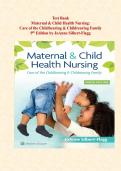
Test Bank
Maternal & Child Health Nursing:
Care of the Childbearing & Childrearing Family
9th Edition by JoAnne Silbert-Flagg
,Test Bank for Maternal & Child Health Nursing: Care of the
Childbearing & Childrearing Family, 9th Edition by JoAnne
Silbert-Flagg Latest Edition |A Comprehensive Sample OF
720 Multichoice Practice Questions Covering Full Scope of
the Text Book| Each Question Includes the Correct Answer
with a Detailed Rationale| Guaranteed Pass
Table of Contents
Unit 1: Maternal and Child Health Nursing Practice
1. A Framework for Maternal and Child Health Nursing
2. Diversity and Inclusion in Maternal Child Nursing
3. The Childbearing and Childrearing Family in the Community
4. Home Care and the Childbearing and Childrearing Family
Unit 2: The Nursing Role in Preparing Families for Childbearing and
Childrearing
5. The Nursing Role in Reproductive and Sexual Health
6. Nursing Care for the Family in Need of Reproductive Life Planning
7. The Nursing Role in Genetic Assessment and Counseling
8. Nursing Care of the Family Having Difficulty Conceiving a Child
Unit 3: The Nursing Role in Caring for Families During Normal Pregnancy,
Birth, the Postpartum, and Newborn Periods
9. Nursing Care During Normal Pregnancy and Care of the Developing Fetus
10.Nursing Care Related to Psychological and Physiologic Changes of
Pregnancy
11.Nursing Care Related to Assessment of a Pregnant Family
12.Nursing Care to Promote Fetal and Maternal Health
, 13.The Nursing Role in Promoting Nutritional Health During Pregnancy
14.Preparing a Family for Childbirth and Parenting
15.Nursing Care of a Family During Labor and Birth
16.The Nursing Role in Providing Comfort During Labor and Birth
17.Nursing Care of a Postpartal Family
18.Nursing Care of a Family with a Newborn
19.Nutritional Needs of a Newborn
Unit 4: The Nursing Role in Caring for a Family During Complications of
Pregnancy, Birth, or the Postpartal Period
20.Nursing Care of a Family Experiencing a Pregnancy Complication from a
Preexisting or Newly Acquired Illness
21.Nursing Care of a Family Experiencing a Sudden Pregnancy Complication
22.Nursing Care of a Pregnant Family with Special Needs
23.Nursing Care of a Family Experiencing a Complication of Labor or Birth
24.Nursing Care of a Family During a Surgical Intervention for Birth
25.Nursing Care of a Family Experiencing a Postpartum Complication
26.Nursing Care of a Family with a High-Risk Newborn
27.Nursing Care of the Child Born with a Physical or Developmental
Difference
Unit 5: The Nursing Role in Health Promotion for Childrearing Family
28.Principles of Growth and Development
29.Nursing Care of a Family with an Infant
30.Nursing Care of a Family with a Toddler
31.Nursing Care of a Family with a Preschool Child
32.Nursing Care of a Family with a School-Age Child
33.Nursing Care of a Family with an Adolescent
34.Child Health Assessment
, 35.Communication and Teaching with Children and Families
Unit 6: The Nursing Role in Supporting the Health of Ill Children and Their
Families
36.Nursing Care of a Family with a Child Who Is Ill
37.Nursing Care of a Family When a Child Needs Diagnostic or Therapeutic
Modalities
38.Nursing Care of a Family When a Child Needs Medication Administration
or Intravenous Therapy
39.Pain Management in Children
Unit 7: The Nursing Role in Restoring and Maintaining the Health of
Children and Families with Physiologic Disorders
40.Nursing Care of a Family When a Child Has a Respiratory Disorder
41.Nursing Care of a Family When a Child Has a Cardiovascular Disorder
42.Nursing Care of a Family When a Child Has an Immune Disorder
43.Nursing Care of a Family When a Child Has an Infectious Disorder
44.Nursing Care of a Family When a Child Has a Hematologic Disorder
45.Nursing Care of a Family When a Child Has a Gastrointestinal Disorder
46.Nursing Care of a Family When a Child Has a Renal or Urinary Tract
Disorder
47.Nursing Care of a Family When a Child Has a Reproductive Disorder
48.Nursing Care of a Family When a Child Has an Endocrine or a Metabolic
Disorder
49.Nursing Care of a Family When a Child Has a Neurologic Disorder
50.Nursing Care of a Family When a Child Has a Vision or Hearing Disorder
51.Nursing Care of a Family When a Child Has a Musculoskeletal Disorder
52.Nursing Care of a Family When a Child Has an Unintentional Injury
53.Nursing Care of a Family When a Child or Adolescent Has a Malignancy
Maternal & Child Health Nursing:
Care of the Childbearing & Childrearing Family
9th Edition by JoAnne Silbert-Flagg
,Test Bank for Maternal & Child Health Nursing: Care of the
Childbearing & Childrearing Family, 9th Edition by JoAnne
Silbert-Flagg Latest Edition |A Comprehensive Sample OF
720 Multichoice Practice Questions Covering Full Scope of
the Text Book| Each Question Includes the Correct Answer
with a Detailed Rationale| Guaranteed Pass
Table of Contents
Unit 1: Maternal and Child Health Nursing Practice
1. A Framework for Maternal and Child Health Nursing
2. Diversity and Inclusion in Maternal Child Nursing
3. The Childbearing and Childrearing Family in the Community
4. Home Care and the Childbearing and Childrearing Family
Unit 2: The Nursing Role in Preparing Families for Childbearing and
Childrearing
5. The Nursing Role in Reproductive and Sexual Health
6. Nursing Care for the Family in Need of Reproductive Life Planning
7. The Nursing Role in Genetic Assessment and Counseling
8. Nursing Care of the Family Having Difficulty Conceiving a Child
Unit 3: The Nursing Role in Caring for Families During Normal Pregnancy,
Birth, the Postpartum, and Newborn Periods
9. Nursing Care During Normal Pregnancy and Care of the Developing Fetus
10.Nursing Care Related to Psychological and Physiologic Changes of
Pregnancy
11.Nursing Care Related to Assessment of a Pregnant Family
12.Nursing Care to Promote Fetal and Maternal Health
, 13.The Nursing Role in Promoting Nutritional Health During Pregnancy
14.Preparing a Family for Childbirth and Parenting
15.Nursing Care of a Family During Labor and Birth
16.The Nursing Role in Providing Comfort During Labor and Birth
17.Nursing Care of a Postpartal Family
18.Nursing Care of a Family with a Newborn
19.Nutritional Needs of a Newborn
Unit 4: The Nursing Role in Caring for a Family During Complications of
Pregnancy, Birth, or the Postpartal Period
20.Nursing Care of a Family Experiencing a Pregnancy Complication from a
Preexisting or Newly Acquired Illness
21.Nursing Care of a Family Experiencing a Sudden Pregnancy Complication
22.Nursing Care of a Pregnant Family with Special Needs
23.Nursing Care of a Family Experiencing a Complication of Labor or Birth
24.Nursing Care of a Family During a Surgical Intervention for Birth
25.Nursing Care of a Family Experiencing a Postpartum Complication
26.Nursing Care of a Family with a High-Risk Newborn
27.Nursing Care of the Child Born with a Physical or Developmental
Difference
Unit 5: The Nursing Role in Health Promotion for Childrearing Family
28.Principles of Growth and Development
29.Nursing Care of a Family with an Infant
30.Nursing Care of a Family with a Toddler
31.Nursing Care of a Family with a Preschool Child
32.Nursing Care of a Family with a School-Age Child
33.Nursing Care of a Family with an Adolescent
34.Child Health Assessment
, 35.Communication and Teaching with Children and Families
Unit 6: The Nursing Role in Supporting the Health of Ill Children and Their
Families
36.Nursing Care of a Family with a Child Who Is Ill
37.Nursing Care of a Family When a Child Needs Diagnostic or Therapeutic
Modalities
38.Nursing Care of a Family When a Child Needs Medication Administration
or Intravenous Therapy
39.Pain Management in Children
Unit 7: The Nursing Role in Restoring and Maintaining the Health of
Children and Families with Physiologic Disorders
40.Nursing Care of a Family When a Child Has a Respiratory Disorder
41.Nursing Care of a Family When a Child Has a Cardiovascular Disorder
42.Nursing Care of a Family When a Child Has an Immune Disorder
43.Nursing Care of a Family When a Child Has an Infectious Disorder
44.Nursing Care of a Family When a Child Has a Hematologic Disorder
45.Nursing Care of a Family When a Child Has a Gastrointestinal Disorder
46.Nursing Care of a Family When a Child Has a Renal or Urinary Tract
Disorder
47.Nursing Care of a Family When a Child Has a Reproductive Disorder
48.Nursing Care of a Family When a Child Has an Endocrine or a Metabolic
Disorder
49.Nursing Care of a Family When a Child Has a Neurologic Disorder
50.Nursing Care of a Family When a Child Has a Vision or Hearing Disorder
51.Nursing Care of a Family When a Child Has a Musculoskeletal Disorder
52.Nursing Care of a Family When a Child Has an Unintentional Injury
53.Nursing Care of a Family When a Child or Adolescent Has a Malignancy


