
NYC MANAGEMENT AUDITOR TRAINEE EXAM 6072 |
2026/2027 COMPREHENSIVE EXAM QUESTIONS & DETAILED
RATIONALES
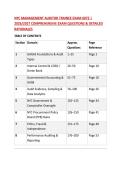
TABLE OF CONTENTS
Section Domain Approx. Page
Questions Reference
1 GAGAS Foundations & Audit 1–25 Page 2
Types
2 Internal Control & COSO / 26–50 Page 10
Green Book
3 Governmental Accounting & 51–75 Page 18
GASB
4 Audit Evidence, Sampling & 76–100 Page 26
Data Analytics
5 NYC Government & 101–125 Page 34
Comptroller Oversight
6 NYC Procurement Policy 126–150 Page 41
Board (PPB) Rules
7 Ethics, Fraud & 151–175 Page 48
Independence
8 Performance Auditing & 176–200 Page 53
Reporting
,SECTION 1: GAGAS FOUNDATIONS & AUDIT TYPES (Questions 1–25)
Question 1: Which GAGAS standard category addresses auditor
qualifications and quality?
A. Field Work Standards
B. Reporting Standards
C. General Standards
D. Performance Standards
CORRECT ANSWER: C. Rationale: The general standards under GAGAS
address auditor qualifications, independence, due professional care,
and quality control.
Question 2: What is the primary purpose of an attestation
engagement under GAGAS?
A. To provide an opinion on financial statements
B. To examine, review, or perform agreed-upon procedures on subject
matter
C. To assess economy, efficiency, and effectiveness
D. To detect fraud
CORRECT ANSWER: B. Rationale: Attestation engagements involve
issuing an examination, review, or agreed-upon procedures report on
subject matter or an assertion about subject matter.
Question 3: An auditor is engaged to examine a city agency's
forecasted revenue. This is classified as:
A. Financial audit
B. Performance audit
C. Compliance audit
D. Attestation engagement
CORRECT ANSWER: D. Rationale: Examining a forecast or projection is
,an attestation engagement because it involves reporting on subject
matter other than historical financial statements.
Question 4: Under GAGAS, which of the following is a required
element of audit documentation?
A. Only the final audit report
B. Evidence of supervisory review
C. Personal opinions of the audit team
D. The audit budget
CORRECT ANSWER: B. Rationale: Audit documentation must
demonstrate that the work was supervised and reviewed, providing
evidence of the auditor's basis for conclusions.
Question 5: What is the concept of professional skepticism?
A. Assuming management is dishonest
B. Accepting all evidence without question
C. Maintaining a questioning mind and critically assessing evidence
D. Avoiding difficult questions
CORRECT ANSWER: C. Rationale: Professional skepticism requires a
questioning mind and a critical assessment of audit evidence, without
assuming dishonesty.
Question 6: An auditor issues a disclaimer of opinion. This means:
A. The financial statements are fairly presented
B. Except for a specific matter, the statements are fairly presented
C. The auditor cannot express an opinion
D. The financial statements are misleading
CORRECT ANSWER: C. Rationale: A disclaimer of opinion is issued when
the auditor is unable to obtain sufficient appropriate evidence to form
an opinion.
, Question 7: Which of the following is a performance audit objective?
A. Express an opinion on financial statements
B. Assess program effectiveness
C. Test internal controls over financial reporting
D. Prepare tax returns
CORRECT ANSWER: B. Rationale: Performance audits assess program
economy, efficiency, and effectiveness, not merely financial statement
presentation.
Question 8: GAGAS requires auditors to be independent in:
A. Fact only
B. Appearance only
C. Both fact and appearance
D. Neither fact nor appearance
CORRECT ANSWER: C. Rationale: Independence must be maintained
both in mental attitude (fact) and in the perception of a reasonable
person (appearance).
Question 9: The Yellow Book is published by:
A. AICPA
B. GAO
C. SEC
D. NYC Comptroller
CORRECT ANSWER: B. Rationale: The U.S. Government Accountability
Office issues the Yellow Book, which establishes government auditing
standards.
Question 10: What is the primary purpose of a compliance audit?
A. Evaluate efficiency
B. Determine adherence to laws, regulations, and contract provisions
2026/2027 COMPREHENSIVE EXAM QUESTIONS & DETAILED
RATIONALES
TABLE OF CONTENTS
Section Domain Approx. Page
Questions Reference
1 GAGAS Foundations & Audit 1–25 Page 2
Types
2 Internal Control & COSO / 26–50 Page 10
Green Book
3 Governmental Accounting & 51–75 Page 18
GASB
4 Audit Evidence, Sampling & 76–100 Page 26
Data Analytics
5 NYC Government & 101–125 Page 34
Comptroller Oversight
6 NYC Procurement Policy 126–150 Page 41
Board (PPB) Rules
7 Ethics, Fraud & 151–175 Page 48
Independence
8 Performance Auditing & 176–200 Page 53
Reporting
,SECTION 1: GAGAS FOUNDATIONS & AUDIT TYPES (Questions 1–25)
Question 1: Which GAGAS standard category addresses auditor
qualifications and quality?
A. Field Work Standards
B. Reporting Standards
C. General Standards
D. Performance Standards
CORRECT ANSWER: C. Rationale: The general standards under GAGAS
address auditor qualifications, independence, due professional care,
and quality control.
Question 2: What is the primary purpose of an attestation
engagement under GAGAS?
A. To provide an opinion on financial statements
B. To examine, review, or perform agreed-upon procedures on subject
matter
C. To assess economy, efficiency, and effectiveness
D. To detect fraud
CORRECT ANSWER: B. Rationale: Attestation engagements involve
issuing an examination, review, or agreed-upon procedures report on
subject matter or an assertion about subject matter.
Question 3: An auditor is engaged to examine a city agency's
forecasted revenue. This is classified as:
A. Financial audit
B. Performance audit
C. Compliance audit
D. Attestation engagement
CORRECT ANSWER: D. Rationale: Examining a forecast or projection is
,an attestation engagement because it involves reporting on subject
matter other than historical financial statements.
Question 4: Under GAGAS, which of the following is a required
element of audit documentation?
A. Only the final audit report
B. Evidence of supervisory review
C. Personal opinions of the audit team
D. The audit budget
CORRECT ANSWER: B. Rationale: Audit documentation must
demonstrate that the work was supervised and reviewed, providing
evidence of the auditor's basis for conclusions.
Question 5: What is the concept of professional skepticism?
A. Assuming management is dishonest
B. Accepting all evidence without question
C. Maintaining a questioning mind and critically assessing evidence
D. Avoiding difficult questions
CORRECT ANSWER: C. Rationale: Professional skepticism requires a
questioning mind and a critical assessment of audit evidence, without
assuming dishonesty.
Question 6: An auditor issues a disclaimer of opinion. This means:
A. The financial statements are fairly presented
B. Except for a specific matter, the statements are fairly presented
C. The auditor cannot express an opinion
D. The financial statements are misleading
CORRECT ANSWER: C. Rationale: A disclaimer of opinion is issued when
the auditor is unable to obtain sufficient appropriate evidence to form
an opinion.
, Question 7: Which of the following is a performance audit objective?
A. Express an opinion on financial statements
B. Assess program effectiveness
C. Test internal controls over financial reporting
D. Prepare tax returns
CORRECT ANSWER: B. Rationale: Performance audits assess program
economy, efficiency, and effectiveness, not merely financial statement
presentation.
Question 8: GAGAS requires auditors to be independent in:
A. Fact only
B. Appearance only
C. Both fact and appearance
D. Neither fact nor appearance
CORRECT ANSWER: C. Rationale: Independence must be maintained
both in mental attitude (fact) and in the perception of a reasonable
person (appearance).
Question 9: The Yellow Book is published by:
A. AICPA
B. GAO
C. SEC
D. NYC Comptroller
CORRECT ANSWER: B. Rationale: The U.S. Government Accountability
Office issues the Yellow Book, which establishes government auditing
standards.
Question 10: What is the primary purpose of a compliance audit?
A. Evaluate efficiency
B. Determine adherence to laws, regulations, and contract provisions


