
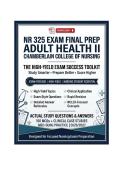
,NR 325 Adult Health II Final Exam Prep Med-
Surg Practice chamberlain collage of
nursing150 MCQs + Clinical Case Studies
2026/2027
1. A patient with acute decompensated heart failure has a BNP level of 1,800 pg/mL and is
experiencing dyspnea, orthopnea, and bibasilar crackles. Which nursing intervention should be
implemented first?
A. Administer furosemide IV as prescribed
B. Place the patient in high Fowler's position
C. Obtain a 12-lead ECG
D. Insert an indwelling urinary catheter
Correct Answer: B
Rationale: The patient is in respiratory distress from pulmonary edema. The priority is to
improve oxygenation by placing the patient in high Fowler's position, which decreases venous
return and facilitates breathing. Diuretics and diagnostic tests follow.
2. A nurse is assessing a patient with an acute STEMI who has a troponin level of 12.5 ng/mL.
Which finding is most concerning?
A. Blood pressure of 138/82 mm Hg
B. Heart rate of 92 bpm
C. New onset of ventricular fibrillation
D. Mild chest discomfort
,Correct Answer: C
Rationale: Ventricular fibrillation is a lethal dysrhythmia that requires immediate defibrillation.
Troponin elevation confirms myocardial damage; ventricular fibrillation is the most life-
threatening complication.
3. A patient with atrial fibrillation is prescribed warfarin. The patient's INR is 5.8. Which action
should the nurse take first?
A. Administer vitamin K
B. Hold the warfarin dose and notify the provider
C. Continue the warfarin as prescribed
D. Encourage the patient to increase vitamin K intake
Correct Answer: B
Rationale: An INR of 5.8 is above the therapeutic range (2.0–3.0) and indicates an increased risk
of bleeding. The warfarin dose should be held, and the provider notified. Vitamin K may be
administered if bleeding occurs or if the INR is critically elevated.
4. A nurse is caring for a patient receiving a heparin infusion for a pulmonary embolism. The
patient's aPTT is 95 seconds. Which action should the nurse take?
A. Increase the heparin infusion rate
B. Stop the heparin infusion immediately
C. Continue the infusion and recheck in 6 hours
D. Administer protamine sulfate
Correct Answer: B
, Rationale: The therapeutic aPTT range for heparin therapy is typically 1.5–2.5 times the control
value (approximately 45–70 seconds). An aPTT of 95 seconds indicates supratherapeutic
anticoagulation and increased bleeding risk. The infusion should be stopped, and the provider
notified.
5. A patient with an abdominal aortic aneurysm reports sudden, severe back pain and becomes
hypotensive. Which action should the nurse take first?
A. Administer pain medication
B. Assess vital signs and notify the provider immediately
C. Apply a heating pad
D. Encourage ambulation
Correct Answer: B
Rationale: Sudden severe back pain in a patient with AAA may indicate rupture, a life-
threatening emergency requiring immediate intervention. The nurse should assess for signs of
shock and notify the provider immediately.
6. A nurse is assessing a patient with peripheral arterial disease who has an ABI of 0.4. Which
finding should the nurse expect?
A. Intermittent claudication relieved by rest
B. Pitting edema of the lower extremities
C. Warm, reddened extremities
D. Bounding pulses
Correct Answer: A
Rationale: An ABI <0.9 indicates PAD. ABI 0.4 indicates moderate to severe PAD. The classic
symptom is intermittent claudication (ischemic muscle pain) that is relieved by rest.
Surg Practice chamberlain collage of
nursing150 MCQs + Clinical Case Studies
2026/2027
1. A patient with acute decompensated heart failure has a BNP level of 1,800 pg/mL and is
experiencing dyspnea, orthopnea, and bibasilar crackles. Which nursing intervention should be
implemented first?
A. Administer furosemide IV as prescribed
B. Place the patient in high Fowler's position
C. Obtain a 12-lead ECG
D. Insert an indwelling urinary catheter
Correct Answer: B
Rationale: The patient is in respiratory distress from pulmonary edema. The priority is to
improve oxygenation by placing the patient in high Fowler's position, which decreases venous
return and facilitates breathing. Diuretics and diagnostic tests follow.
2. A nurse is assessing a patient with an acute STEMI who has a troponin level of 12.5 ng/mL.
Which finding is most concerning?
A. Blood pressure of 138/82 mm Hg
B. Heart rate of 92 bpm
C. New onset of ventricular fibrillation
D. Mild chest discomfort
,Correct Answer: C
Rationale: Ventricular fibrillation is a lethal dysrhythmia that requires immediate defibrillation.
Troponin elevation confirms myocardial damage; ventricular fibrillation is the most life-
threatening complication.
3. A patient with atrial fibrillation is prescribed warfarin. The patient's INR is 5.8. Which action
should the nurse take first?
A. Administer vitamin K
B. Hold the warfarin dose and notify the provider
C. Continue the warfarin as prescribed
D. Encourage the patient to increase vitamin K intake
Correct Answer: B
Rationale: An INR of 5.8 is above the therapeutic range (2.0–3.0) and indicates an increased risk
of bleeding. The warfarin dose should be held, and the provider notified. Vitamin K may be
administered if bleeding occurs or if the INR is critically elevated.
4. A nurse is caring for a patient receiving a heparin infusion for a pulmonary embolism. The
patient's aPTT is 95 seconds. Which action should the nurse take?
A. Increase the heparin infusion rate
B. Stop the heparin infusion immediately
C. Continue the infusion and recheck in 6 hours
D. Administer protamine sulfate
Correct Answer: B
, Rationale: The therapeutic aPTT range for heparin therapy is typically 1.5–2.5 times the control
value (approximately 45–70 seconds). An aPTT of 95 seconds indicates supratherapeutic
anticoagulation and increased bleeding risk. The infusion should be stopped, and the provider
notified.
5. A patient with an abdominal aortic aneurysm reports sudden, severe back pain and becomes
hypotensive. Which action should the nurse take first?
A. Administer pain medication
B. Assess vital signs and notify the provider immediately
C. Apply a heating pad
D. Encourage ambulation
Correct Answer: B
Rationale: Sudden severe back pain in a patient with AAA may indicate rupture, a life-
threatening emergency requiring immediate intervention. The nurse should assess for signs of
shock and notify the provider immediately.
6. A nurse is assessing a patient with peripheral arterial disease who has an ABI of 0.4. Which
finding should the nurse expect?
A. Intermittent claudication relieved by rest
B. Pitting edema of the lower extremities
C. Warm, reddened extremities
D. Bounding pulses
Correct Answer: A
Rationale: An ABI <0.9 indicates PAD. ABI 0.4 indicates moderate to severe PAD. The classic
symptom is intermittent claudication (ischemic muscle pain) that is relieved by rest.


