
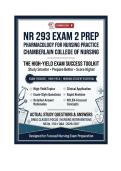
,NR 293 Pharmacology for Nursing Practice
Exam 2 Prep Drug Classes chamberlain collage
of nursing + 150 Q&A Nursing Interventions +
MCQs 2026/2027
1. A patient is prescribed amoxicillin for streptococcal pharyngitis. The nurse explains the
mechanism of action of penicillins. Which statement by the nurse is correct?
A. Penicillins inhibit bacterial protein synthesis by binding to the 30S ribosomal subunit
B. Penicillins disrupt the bacterial cell membrane, causing cell lysis
C. Penicillins inhibit bacterial cell wall synthesis by binding to penicillin-binding proteins (PBPs),
disrupting peptidoglycan cross-linking
D. Penicillins inhibit bacterial DNA gyrase, preventing DNA replication
Correct Answer: C
Rationale: Penicillins, including amoxicillin and ampicillin, exert their bactericidal effect by
binding to penicillin-binding proteins (PBPs) and inhibiting transpeptidation, which prevents
cross-linking of peptidoglycan in the bacterial cell wall. This weakened cell wall leads to osmotic
lysis, particularly during active bacterial growth. Option A describes aminoglycosides or
tetracyclines (30S binding). Option B describes polymyxins. Option D describes
fluoroquinolones, which inhibit DNA gyrase. Per Chamberlain NR 293, cell wall synthesis
inhibition is the cornerstone mechanism for the penicillin class.
2. A patient with a history of anaphylaxis to penicillin is being evaluated for antibiotic therapy.
The nurse understands that cross-reactivity between penicillins and cephalosporins is
approximately:
,A. 50–60%, making cephalosporins absolutely contraindicated
B. 10%, which is considered low risk
C. Less than 1%, indicating no meaningful cross-reactivity
D. 25–30%, requiring graded challenge testing before use
Correct Answer: B
Rationale: Cross-reactivity between penicillins and cephalosporins is approximately 10% and is
considered low risk per current 2026 pharmacology guidelines. The shared beta-lactam ring
structure is responsible, but first-generation cephalosporins carry slightly higher risk than later
generations. Patients with anaphylaxis to penicillin should be assessed carefully, but
cephalosporins are not absolutely contraindicated. The 50–60% figure is outdated. Per
Chamberlain NR 293, nurses should understand that true IgE-mediated cross-reactivity is low.
3. A nurse is administering ceftriaxone (Rocephin) to a patient with a severe Gram-negative
infection. Which statement about cephalosporin generations is correct?
A. First-generation cephalosporins provide the broadest Gram-negative coverage
B. Ceftriaxone is a third-generation cephalosporin with enhanced Gram-negative coverage,
including some cephalosporinase-producing strains
C. Cephalosporins are classified primarily by their protein synthesis inhibition mechanism
D. Third-generation cephalosporins have stronger Gram-positive coverage than first-generation
agents
Correct Answer: B
Rationale: Ceftriaxone is a third-generation cephalosporin with significantly enhanced Gram-
negative coverage compared to first-generation agents. First-generation cephalosporins (e.g.,
cephalexin) are most effective against Gram-positive organisms. Later generations provide
progressively broader Gram-negative coverage. Cephalosporins, like penicillins, inhibit cell wall
synthesis, not protein synthesis.
, 4. A patient taking tetracycline should be instructed to avoid which of the following to prevent
decreased absorption?
A. Water
B. Dairy products, antacids, and iron supplements
C. Fruit juices
D. High-fiber foods
Correct Answer: B
Rationale: Tetracyclines chelate with divalent and trivalent cations (calcium, magnesium, iron,
aluminum), forming insoluble complexes that significantly reduce absorption. Patients should
avoid dairy products, antacids, and iron supplements within 2 hours of taking tetracycline.
5. A patient receiving vancomycin develops flushing, hypotension, and a rash on the upper body.
Which condition should the nurse suspect?
A. Anaphylactic shock
B. Vancomycin infusion reaction (formerly known as red man syndrome)
C. Stevens-Johnson syndrome
D. Serum sickness
Correct Answer: B
Rationale: Vancomycin infusion reaction (formerly called red man syndrome) is caused by rapid
infusion of vancomycin, leading to histamine release. It is characterized by flushing,
hypotension, and rash on the upper body. It is not a true allergic reaction. The nurse should
slow the infusion rate and administer antihistamines as prescribed.
6. A patient is prescribed ciprofloxacin (Cipro). Which instruction should the nurse include?
Exam 2 Prep Drug Classes chamberlain collage
of nursing + 150 Q&A Nursing Interventions +
MCQs 2026/2027
1. A patient is prescribed amoxicillin for streptococcal pharyngitis. The nurse explains the
mechanism of action of penicillins. Which statement by the nurse is correct?
A. Penicillins inhibit bacterial protein synthesis by binding to the 30S ribosomal subunit
B. Penicillins disrupt the bacterial cell membrane, causing cell lysis
C. Penicillins inhibit bacterial cell wall synthesis by binding to penicillin-binding proteins (PBPs),
disrupting peptidoglycan cross-linking
D. Penicillins inhibit bacterial DNA gyrase, preventing DNA replication
Correct Answer: C
Rationale: Penicillins, including amoxicillin and ampicillin, exert their bactericidal effect by
binding to penicillin-binding proteins (PBPs) and inhibiting transpeptidation, which prevents
cross-linking of peptidoglycan in the bacterial cell wall. This weakened cell wall leads to osmotic
lysis, particularly during active bacterial growth. Option A describes aminoglycosides or
tetracyclines (30S binding). Option B describes polymyxins. Option D describes
fluoroquinolones, which inhibit DNA gyrase. Per Chamberlain NR 293, cell wall synthesis
inhibition is the cornerstone mechanism for the penicillin class.
2. A patient with a history of anaphylaxis to penicillin is being evaluated for antibiotic therapy.
The nurse understands that cross-reactivity between penicillins and cephalosporins is
approximately:
,A. 50–60%, making cephalosporins absolutely contraindicated
B. 10%, which is considered low risk
C. Less than 1%, indicating no meaningful cross-reactivity
D. 25–30%, requiring graded challenge testing before use
Correct Answer: B
Rationale: Cross-reactivity between penicillins and cephalosporins is approximately 10% and is
considered low risk per current 2026 pharmacology guidelines. The shared beta-lactam ring
structure is responsible, but first-generation cephalosporins carry slightly higher risk than later
generations. Patients with anaphylaxis to penicillin should be assessed carefully, but
cephalosporins are not absolutely contraindicated. The 50–60% figure is outdated. Per
Chamberlain NR 293, nurses should understand that true IgE-mediated cross-reactivity is low.
3. A nurse is administering ceftriaxone (Rocephin) to a patient with a severe Gram-negative
infection. Which statement about cephalosporin generations is correct?
A. First-generation cephalosporins provide the broadest Gram-negative coverage
B. Ceftriaxone is a third-generation cephalosporin with enhanced Gram-negative coverage,
including some cephalosporinase-producing strains
C. Cephalosporins are classified primarily by their protein synthesis inhibition mechanism
D. Third-generation cephalosporins have stronger Gram-positive coverage than first-generation
agents
Correct Answer: B
Rationale: Ceftriaxone is a third-generation cephalosporin with significantly enhanced Gram-
negative coverage compared to first-generation agents. First-generation cephalosporins (e.g.,
cephalexin) are most effective against Gram-positive organisms. Later generations provide
progressively broader Gram-negative coverage. Cephalosporins, like penicillins, inhibit cell wall
synthesis, not protein synthesis.
, 4. A patient taking tetracycline should be instructed to avoid which of the following to prevent
decreased absorption?
A. Water
B. Dairy products, antacids, and iron supplements
C. Fruit juices
D. High-fiber foods
Correct Answer: B
Rationale: Tetracyclines chelate with divalent and trivalent cations (calcium, magnesium, iron,
aluminum), forming insoluble complexes that significantly reduce absorption. Patients should
avoid dairy products, antacids, and iron supplements within 2 hours of taking tetracycline.
5. A patient receiving vancomycin develops flushing, hypotension, and a rash on the upper body.
Which condition should the nurse suspect?
A. Anaphylactic shock
B. Vancomycin infusion reaction (formerly known as red man syndrome)
C. Stevens-Johnson syndrome
D. Serum sickness
Correct Answer: B
Rationale: Vancomycin infusion reaction (formerly called red man syndrome) is caused by rapid
infusion of vancomycin, leading to histamine release. It is characterized by flushing,
hypotension, and rash on the upper body. It is not a true allergic reaction. The nurse should
slow the infusion rate and administer antihistamines as prescribed.
6. A patient is prescribed ciprofloxacin (Cipro). Which instruction should the nurse include?


