
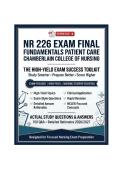
,NR 226 Fundamentals Patient Care Final Exam
Prep Practice chamberlain collage of nursing
150 Q&A + Detailed Rationales 2026/2027
1. A nurse is reviewing a patient's medical record and notes a discrepancy between the patient's
reported pain level and the nurse's observation of the patient's behavior. Which component of
the nursing process requires the nurse to validate this data before proceeding?
A. Assessment
B. Diagnosis
C. Planning
D. Evaluation
Correct Answer: A
Rationale: Assessment is the systematic collection and verification of data. The nurse must
validate discrepancies between subjective and objective findings before clustering data for
diagnosis.
2. Which of the following is the correct order of the nursing process?
A. Assessment, Planning, Diagnosis, Implementation, Evaluation
B. Diagnosis, Assessment, Planning, Implementation, Evaluation
C. Assessment, Diagnosis, Planning, Implementation, Evaluation
D. Planning, Assessment, Diagnosis, Implementation, Evaluation
,Correct Answer: C
Rationale: The nursing process follows the sequence of Assessment, Diagnosis, Planning,
Implementation, and Evaluation (ADPIE). This systematic framework guides nursing care.
3. A nurse is caring for a patient who has been prescribed a new medication. The patient asks
the nurse about the purpose of the medication. Which action by the nurse demonstrates the
ethical principle of veracity?
A. Telling the patient the medication is for pain when it is actually for anxiety
B. Informing the patient that the medication is a new drug with unknown effects
C. Providing the patient with accurate information about the medication's purpose
D. Deferring the question to the healthcare provider to avoid giving wrong information
Correct Answer: C
Rationale: Veracity is the ethical principle of telling the truth. Providing accurate information
upholds this principle.
4. A nurse is preparing to administer a blood transfusion to a patient. Which action should the
nurse take first to ensure patient safety?
A. Verify the patient's identity using two identifiers
B. Obtain the patient's vital signs
C. Ensure the blood product is compatible with the patient's blood type
D. Explain the procedure to the patient
Correct Answer: A
Rationale: The first step in any procedure is to verify the patient's identity using two identifiers
to prevent errors.
, 5. A nurse is assessing a patient who is experiencing shortness of breath. Which assessment
finding would require immediate intervention?
A. Respiratory rate of 22 breaths per minute
B. Oxygen saturation of 88% on room air
C. Use of accessory muscles during respiration
D. Patient reporting feeling anxious
Correct Answer: B
Rationale: An oxygen saturation of 88% on room air indicates hypoxemia and requires
immediate intervention.
6. A nurse is using the Clinical Judgment Measurement Model (CJMM). Which cognitive skill
involves analyzing cues and recognizing patterns?
A. Recognize cues
B. Analyze cues
C. Prioritize hypotheses
D. Generate solutions
Correct Answer: B
Rationale: Analyze cues involves interpreting and linking cues to recognize patterns.
7. A nurse is prioritizing patient care. Which patient should the nurse assess first?
A. A patient requesting pain medication
Prep Practice chamberlain collage of nursing
150 Q&A + Detailed Rationales 2026/2027
1. A nurse is reviewing a patient's medical record and notes a discrepancy between the patient's
reported pain level and the nurse's observation of the patient's behavior. Which component of
the nursing process requires the nurse to validate this data before proceeding?
A. Assessment
B. Diagnosis
C. Planning
D. Evaluation
Correct Answer: A
Rationale: Assessment is the systematic collection and verification of data. The nurse must
validate discrepancies between subjective and objective findings before clustering data for
diagnosis.
2. Which of the following is the correct order of the nursing process?
A. Assessment, Planning, Diagnosis, Implementation, Evaluation
B. Diagnosis, Assessment, Planning, Implementation, Evaluation
C. Assessment, Diagnosis, Planning, Implementation, Evaluation
D. Planning, Assessment, Diagnosis, Implementation, Evaluation
,Correct Answer: C
Rationale: The nursing process follows the sequence of Assessment, Diagnosis, Planning,
Implementation, and Evaluation (ADPIE). This systematic framework guides nursing care.
3. A nurse is caring for a patient who has been prescribed a new medication. The patient asks
the nurse about the purpose of the medication. Which action by the nurse demonstrates the
ethical principle of veracity?
A. Telling the patient the medication is for pain when it is actually for anxiety
B. Informing the patient that the medication is a new drug with unknown effects
C. Providing the patient with accurate information about the medication's purpose
D. Deferring the question to the healthcare provider to avoid giving wrong information
Correct Answer: C
Rationale: Veracity is the ethical principle of telling the truth. Providing accurate information
upholds this principle.
4. A nurse is preparing to administer a blood transfusion to a patient. Which action should the
nurse take first to ensure patient safety?
A. Verify the patient's identity using two identifiers
B. Obtain the patient's vital signs
C. Ensure the blood product is compatible with the patient's blood type
D. Explain the procedure to the patient
Correct Answer: A
Rationale: The first step in any procedure is to verify the patient's identity using two identifiers
to prevent errors.
, 5. A nurse is assessing a patient who is experiencing shortness of breath. Which assessment
finding would require immediate intervention?
A. Respiratory rate of 22 breaths per minute
B. Oxygen saturation of 88% on room air
C. Use of accessory muscles during respiration
D. Patient reporting feeling anxious
Correct Answer: B
Rationale: An oxygen saturation of 88% on room air indicates hypoxemia and requires
immediate intervention.
6. A nurse is using the Clinical Judgment Measurement Model (CJMM). Which cognitive skill
involves analyzing cues and recognizing patterns?
A. Recognize cues
B. Analyze cues
C. Prioritize hypotheses
D. Generate solutions
Correct Answer: B
Rationale: Analyze cues involves interpreting and linking cues to recognize patterns.
7. A nurse is prioritizing patient care. Which patient should the nurse assess first?
A. A patient requesting pain medication


