

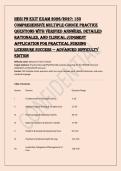
HESI PN EXIT EXAM 2026/2027: 150
Comprehensive Multiple-Choice Practice
Questions with Verified Answers, Detailed
Rationales, and Clinical Judgment
Application for Practical Nursing
Licensure Success — Advanced Difficulty
Edition
Difficulty Level: Advanced / Hard / Mixed
Target Audience: Practical Nursing (PN/LPN/LVN) students preparing for the HESI PN Exit Exam
2026/2027 and NCLEX-PN licensure
Format: 150 multiple-choice questions with one correct answer each, detailed rationales, and exam-
standard language
Table of Contents
Section Domain Question Range
I Fundamentals of Nursing & Safety 1–20
II Medical-Surgical Nursing & Complex Care 21–45
III Pharmacology & Medication Safety 46–70
IV Maternal-Newborn & Women’s Health 71–90
V Pediatric Nursing & Developmental Care 91–110
VI Psychiatric & Mental Health Nursing 111–125
Leadership, Delegation & Management of
VII 126–140
Care
,Section Domain Question Range
VIII Priority, Safety & Critical Thinking 141–150
Section I: Fundamentals of Nursing & Safety (Questions 1–20)
🟢 1. A practical nurse is preparing to perform hand hygiene before entering a client’s room. The nurse’s
hands are visibly soiled with blood. Which action should the nurse take?
A. Apply alcohol-based hand rub and rub until dry
🔴🔴 B. Wash hands with soap and water for at least 20 seconds
C. Wipe hands with a disinfectant wipe
D. Put on gloves without washing hands
Correct Answer: B
Rationale: When hands are visibly soiled with blood or body fluids, soap and water must be used.
Alcohol-based hand rubs are ineffective against visible organic material. Standard precautions require
thorough handwashing to prevent transmission of bloodborne pathogens.
🟢 2. A PN is caring for a client with a new colostomy. Which observation indicates a healthy stoma?
A. Dark purple and dry
🔴🔴 B. Beefy red and moist
C. Pale pink and dry
D. Blue-tinged and cool
Correct Answer: B
Rationale: A healthy stoma is beefy red and moist, indicating adequate blood supply. Dark purple, pale,
or blue-tinged stomas indicate ischemia or necrosis and require immediate notification of the provider.
🟢 3. A PN is assisting a client with ambulation after knee surgery. Which action is most important to
ensure client safety?
A. Apply a gait belt and stand on the client’s weaker side
🔴🔴 B. Assess the client’s orthostatic vital signs before ambulation
C. Ask the client to walk as quickly as possible
D. Have the client use a walker without instruction
Correct Answer: B
Rationale: Orthostatic hypotension is a common postoperative complication that increases fall risk.
Assessing vital signs before ambulation ensures the client is hemodynamically stable. A gait belt and
standing on the weaker side are also important, but assessment precedes intervention.
,🟢 4. A PN is preparing to administer a prescribed medication to a homeless client at a community
psychiatric clinic. The client states the usual dosage taken is different from the dose the nurse is giving.
Which action should the nurse take?
A. Inform the client that he may refuse the medication and document whether the client takes it
🔴🔴 B. Withhold the medication until the dosage can be confirmed
C. Explain to the client that the dosage has been changed
D. Tell the client to take the medication, then verify the dosage at the next team meeting
Correct Answer: B
Rationale: The nurse must withhold the medication and verify the prescribed dosage with the provider
or pharmacist. Administering an unverified dose could cause harm. Client statements about medication
discrepancies require investigation before administration.
🟢 5. A PN is caring for a client with pneumonia who develops initial signs of septic shock and multi-organ
failure. The provider prescribes a sepsis protocol. Which intervention is most important for the nurse to
include in the plan of care?
🔴🔴 A. Maintain strict intake and output
B. Keep the head of the bed raised 45 degrees
C. Observe for excessive warmth of extremities
D. Monitor blood glucose level
Correct Answer: A
Rationale: Strict intake and output monitoring is critical in septic shock to assess fluid resuscitation
effectiveness and organ perfusion. Septic shock causes massive fluid shifts; accurate I&O guides therapy.
Other interventions are important but secondary to hemodynamic monitoring.
🟢 6. A PN is observing a client self-administering a dose of subcutaneous insulin. Which step of the
injection technique should the PN reteach?
A. Inject air into the insulin vial to displace the dose
🔴🔴 B. Selects the same site used for the previous injection
C. Rotates between the abdomen and thighs
D. Cleanses the site with an alcohol swab
Correct Answer: B
Rationale: Insulin injection sites must be rotated to prevent lipohypertrophy, which impairs insulin
absorption. Using the same site repeatedly causes tissue changes and unpredictable glucose control.
Site rotation is a critical teaching point.
, 🟢 7. A PN is reviewing a telemetry strip. The PR interval progressively lengthens until a QRS complex is
dropped. The pattern repeats. What rhythm is present?
A. First-degree AV block
🔴🔴 B. Second-degree AV block type I (Wenckebach)
C. Second-degree AV block type II (Mobitz II)
D. Third-degree AV block
Correct Answer: B
Rationale: Wenckebach (Mobitz I) is characterized by progressive PR prolongation until a non-conducted
P wave. First-degree has a constant prolonged PR without dropped beats. Mobitz II has a constant PR
with sudden dropped QRS. Third-degree has complete AV dissociation.
🟢 8. A PN is caring for a client who requires hand hygiene and infection control. What is the priority
nursing action?
🔴🔴 A. Implement the evidence-based nursing intervention and monitor the client’s response
B. Delay the action until the end of the shift to complete other tasks first
C. Ask an unlicensed assistant to perform the skilled assessment independently
D. Document the finding without taking further action
Correct Answer: A
Rationale: The correct action follows the nursing process and prioritizes client safety using evidence-
based practice. Delaying care, violating scope of practice, or failing to address the clinical need all
compromise client safety.
🟢 9. During morning assessment, a PN notes a client’s vital signs are stable but require timely
intervention. Which action should the nurse take first?
A. Increase the frequency of vital signs without addressing the underlying issue
🔴🔴 B. Notify the registered nurse and implement appropriate safety measures immediately
C. Continue with the current plan and reassess only if the client complains
D. Instruct the family to manage the situation without nursing involvement
Correct Answer: B
Rationale: Priority is given to interventions that protect the client from immediate harm. The other
choices postpone action, ignore assessment findings, or inappropriately shift responsibility.
🟢 10. A PN is calculating intake and output for a client. The client drank 8 oz of coffee, 4 oz of juice, and
12 oz of water. The client also received 100 mL of IV fluids. What is the total intake in mL?
A. 620 mL
🔴🔴 B. 820 mL
Comprehensive Multiple-Choice Practice
Questions with Verified Answers, Detailed
Rationales, and Clinical Judgment
Application for Practical Nursing
Licensure Success — Advanced Difficulty
Edition
Difficulty Level: Advanced / Hard / Mixed
Target Audience: Practical Nursing (PN/LPN/LVN) students preparing for the HESI PN Exit Exam
2026/2027 and NCLEX-PN licensure
Format: 150 multiple-choice questions with one correct answer each, detailed rationales, and exam-
standard language
Table of Contents
Section Domain Question Range
I Fundamentals of Nursing & Safety 1–20
II Medical-Surgical Nursing & Complex Care 21–45
III Pharmacology & Medication Safety 46–70
IV Maternal-Newborn & Women’s Health 71–90
V Pediatric Nursing & Developmental Care 91–110
VI Psychiatric & Mental Health Nursing 111–125
Leadership, Delegation & Management of
VII 126–140
Care
,Section Domain Question Range
VIII Priority, Safety & Critical Thinking 141–150
Section I: Fundamentals of Nursing & Safety (Questions 1–20)
🟢 1. A practical nurse is preparing to perform hand hygiene before entering a client’s room. The nurse’s
hands are visibly soiled with blood. Which action should the nurse take?
A. Apply alcohol-based hand rub and rub until dry
🔴🔴 B. Wash hands with soap and water for at least 20 seconds
C. Wipe hands with a disinfectant wipe
D. Put on gloves without washing hands
Correct Answer: B
Rationale: When hands are visibly soiled with blood or body fluids, soap and water must be used.
Alcohol-based hand rubs are ineffective against visible organic material. Standard precautions require
thorough handwashing to prevent transmission of bloodborne pathogens.
🟢 2. A PN is caring for a client with a new colostomy. Which observation indicates a healthy stoma?
A. Dark purple and dry
🔴🔴 B. Beefy red and moist
C. Pale pink and dry
D. Blue-tinged and cool
Correct Answer: B
Rationale: A healthy stoma is beefy red and moist, indicating adequate blood supply. Dark purple, pale,
or blue-tinged stomas indicate ischemia or necrosis and require immediate notification of the provider.
🟢 3. A PN is assisting a client with ambulation after knee surgery. Which action is most important to
ensure client safety?
A. Apply a gait belt and stand on the client’s weaker side
🔴🔴 B. Assess the client’s orthostatic vital signs before ambulation
C. Ask the client to walk as quickly as possible
D. Have the client use a walker without instruction
Correct Answer: B
Rationale: Orthostatic hypotension is a common postoperative complication that increases fall risk.
Assessing vital signs before ambulation ensures the client is hemodynamically stable. A gait belt and
standing on the weaker side are also important, but assessment precedes intervention.
,🟢 4. A PN is preparing to administer a prescribed medication to a homeless client at a community
psychiatric clinic. The client states the usual dosage taken is different from the dose the nurse is giving.
Which action should the nurse take?
A. Inform the client that he may refuse the medication and document whether the client takes it
🔴🔴 B. Withhold the medication until the dosage can be confirmed
C. Explain to the client that the dosage has been changed
D. Tell the client to take the medication, then verify the dosage at the next team meeting
Correct Answer: B
Rationale: The nurse must withhold the medication and verify the prescribed dosage with the provider
or pharmacist. Administering an unverified dose could cause harm. Client statements about medication
discrepancies require investigation before administration.
🟢 5. A PN is caring for a client with pneumonia who develops initial signs of septic shock and multi-organ
failure. The provider prescribes a sepsis protocol. Which intervention is most important for the nurse to
include in the plan of care?
🔴🔴 A. Maintain strict intake and output
B. Keep the head of the bed raised 45 degrees
C. Observe for excessive warmth of extremities
D. Monitor blood glucose level
Correct Answer: A
Rationale: Strict intake and output monitoring is critical in septic shock to assess fluid resuscitation
effectiveness and organ perfusion. Septic shock causes massive fluid shifts; accurate I&O guides therapy.
Other interventions are important but secondary to hemodynamic monitoring.
🟢 6. A PN is observing a client self-administering a dose of subcutaneous insulin. Which step of the
injection technique should the PN reteach?
A. Inject air into the insulin vial to displace the dose
🔴🔴 B. Selects the same site used for the previous injection
C. Rotates between the abdomen and thighs
D. Cleanses the site with an alcohol swab
Correct Answer: B
Rationale: Insulin injection sites must be rotated to prevent lipohypertrophy, which impairs insulin
absorption. Using the same site repeatedly causes tissue changes and unpredictable glucose control.
Site rotation is a critical teaching point.
, 🟢 7. A PN is reviewing a telemetry strip. The PR interval progressively lengthens until a QRS complex is
dropped. The pattern repeats. What rhythm is present?
A. First-degree AV block
🔴🔴 B. Second-degree AV block type I (Wenckebach)
C. Second-degree AV block type II (Mobitz II)
D. Third-degree AV block
Correct Answer: B
Rationale: Wenckebach (Mobitz I) is characterized by progressive PR prolongation until a non-conducted
P wave. First-degree has a constant prolonged PR without dropped beats. Mobitz II has a constant PR
with sudden dropped QRS. Third-degree has complete AV dissociation.
🟢 8. A PN is caring for a client who requires hand hygiene and infection control. What is the priority
nursing action?
🔴🔴 A. Implement the evidence-based nursing intervention and monitor the client’s response
B. Delay the action until the end of the shift to complete other tasks first
C. Ask an unlicensed assistant to perform the skilled assessment independently
D. Document the finding without taking further action
Correct Answer: A
Rationale: The correct action follows the nursing process and prioritizes client safety using evidence-
based practice. Delaying care, violating scope of practice, or failing to address the clinical need all
compromise client safety.
🟢 9. During morning assessment, a PN notes a client’s vital signs are stable but require timely
intervention. Which action should the nurse take first?
A. Increase the frequency of vital signs without addressing the underlying issue
🔴🔴 B. Notify the registered nurse and implement appropriate safety measures immediately
C. Continue with the current plan and reassess only if the client complains
D. Instruct the family to manage the situation without nursing involvement
Correct Answer: B
Rationale: Priority is given to interventions that protect the client from immediate harm. The other
choices postpone action, ignore assessment findings, or inappropriately shift responsibility.
🟢 10. A PN is calculating intake and output for a client. The client drank 8 oz of coffee, 4 oz of juice, and
12 oz of water. The client also received 100 mL of IV fluids. What is the total intake in mL?
A. 620 mL
🔴🔴 B. 820 mL


