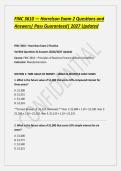
FINC 3610 — Harrelson Exam 2 Questions and
Answers| Pass Guaranteed| 2027 Updated
FINC 3610 – Harrelson Exam 2 Practice
Verified Questions & Answers (2026/2027 Update)
Course: FINC 3610 – Principles of Business Finance (Auburn University)
Instructor: Mandy Harrelson
SECTION 1: TIME VALUE OF MONEY – SINGLE & MULTIPLE CASH FLOWS
1. What is the future value of $1,000 that earns 10% compound interest for
three years?
A. $1,300
B. $1,331
C. $1,100
D. $1,210
**Correct Answer: B. $1,331. Rationale:** Year 1: $1,000 × 1.10 = $1,100. Year 2:
$1,100 × 1.10 = $1,210. Year 3: $1,210 × 1.10 = $1,331 .
2. What is the future value of $1,000 that earns 10% simple interest for six
years?
A. $1,600
B. $1,771
C. $1,500
D. $1,331
,**Correct Answer: A. $1,600. Rationale:** Simple interest: $1,000 × 0.10 × 6 years
= $600 interest. Total = $1,000 + $600 = $1,600 .
3. You deposit $5,000 into a savings account today. You plan on withdrawing the
money in exactly 30 years. Interest rates are 7%, compounded annually. What is
your account balance at the end of 30 years?
A. $38,061
B. $35,000
C. $40,000
D. $25,000
**Correct Answer: A. $38,061. Rationale:** Using a financial calculator: N=30,
I/YR=7, PV=-5,000, FV = $38,061 .
4. You plan to invest $17,000 at the end of the year for six years at 10% per year.
How much will you have at the end of six years?
A. $30,116
B. $27,000
C. $25,000
D. $32,000
**Correct Answer: A. $30,116. Rationale:** N=6, I/YR=10, PV=-17,000, FV =
$30,116 .
5. You are trying to save to buy a new $60,000 car. You have $22,000 today that
can be invested at 4% annual interest. How long will it be before you have
enough to buy the car?
A. 25.5 years
B. 20 years
,C. 15 years
D. 30 years
Correct Answer: A. 25.5 years. Rationale: PV=-22,000, FV=60,000, I/YR=4, N =
25.5 years .
6. You have just received notification that you have won the $1 million first prize
in the Centennial Lottery. The prize will be awarded on your 100th birthday, 80
years from now. What is the present value of your windfall if the appropriate
discount rate is 15%?
A. $13.93
B. $100,000
C. $1,000,000
D. $50,000
**Correct Answer: A. $13.93. Rationale:** FV=1,000,000, N=80, I/YR=15, PV =
$13.93 .
7. You open a bank account today with $7,000. You expect to deposit $4,000 at
the end of each of the next three years. Interest rates are 8%, compounded
annually. How much will you have in your account in three years?
A. $21,803.58
B. $19,000
C. $25,000
D. $18,000
**Correct Answer: A. $21,803.58. Rationale:** PV=-7,000, PMT=-4,000, N=3,
I/YR=8, FV = $21,803.58 .
, 8. You are offered an investment that pays $200 in 1 year, $400 in year 2, $600 in
year 3, and $800 in year 4. You can earn 12% elsewhere. What is the most you
would pay for this investment?
A. $1,432.93
B. $2,000.00
C. $1,500.00
D. $1,200.00
**Correct Answer: A. $1,432.93. Rationale:** CFj0=200, CFj1=400, CFj2=600,
CFj3=800, I/YR=12, NPV = $1,432.93 .
9. You are offered an investment that will pay 3 installments of $5,000 each. The
first $5,000 will pay out in 4 years, and the remaining 2 installments will pay out
in year 5 and 6 respectively. What is the present value at 10%?
A. $9,342
B. $15,000
C. $12,000
D. $10,000
**Correct Answer: A. $9,342. Rationale:** CFj0=0, CFj1=0, CFj2=0, CFj3=5,000,
CFj4=5,000, CFj5=5,000, I/YR=10, NPV = $9,342 .
10. What is the present value of a perpetuity?
A. PV = CF / r
B. PV = CF × r
C. PV = CF / (r - g)
D. PV = CF × (1 + r)
Correct Answer: A. PV = CF / r. Rationale: The present value of a perpetuity (no
growth) is the cash flow divided by the discount rate .
Answers| Pass Guaranteed| 2027 Updated
FINC 3610 – Harrelson Exam 2 Practice
Verified Questions & Answers (2026/2027 Update)
Course: FINC 3610 – Principles of Business Finance (Auburn University)
Instructor: Mandy Harrelson
SECTION 1: TIME VALUE OF MONEY – SINGLE & MULTIPLE CASH FLOWS
1. What is the future value of $1,000 that earns 10% compound interest for
three years?
A. $1,300
B. $1,331
C. $1,100
D. $1,210
**Correct Answer: B. $1,331. Rationale:** Year 1: $1,000 × 1.10 = $1,100. Year 2:
$1,100 × 1.10 = $1,210. Year 3: $1,210 × 1.10 = $1,331 .
2. What is the future value of $1,000 that earns 10% simple interest for six
years?
A. $1,600
B. $1,771
C. $1,500
D. $1,331
,**Correct Answer: A. $1,600. Rationale:** Simple interest: $1,000 × 0.10 × 6 years
= $600 interest. Total = $1,000 + $600 = $1,600 .
3. You deposit $5,000 into a savings account today. You plan on withdrawing the
money in exactly 30 years. Interest rates are 7%, compounded annually. What is
your account balance at the end of 30 years?
A. $38,061
B. $35,000
C. $40,000
D. $25,000
**Correct Answer: A. $38,061. Rationale:** Using a financial calculator: N=30,
I/YR=7, PV=-5,000, FV = $38,061 .
4. You plan to invest $17,000 at the end of the year for six years at 10% per year.
How much will you have at the end of six years?
A. $30,116
B. $27,000
C. $25,000
D. $32,000
**Correct Answer: A. $30,116. Rationale:** N=6, I/YR=10, PV=-17,000, FV =
$30,116 .
5. You are trying to save to buy a new $60,000 car. You have $22,000 today that
can be invested at 4% annual interest. How long will it be before you have
enough to buy the car?
A. 25.5 years
B. 20 years
,C. 15 years
D. 30 years
Correct Answer: A. 25.5 years. Rationale: PV=-22,000, FV=60,000, I/YR=4, N =
25.5 years .
6. You have just received notification that you have won the $1 million first prize
in the Centennial Lottery. The prize will be awarded on your 100th birthday, 80
years from now. What is the present value of your windfall if the appropriate
discount rate is 15%?
A. $13.93
B. $100,000
C. $1,000,000
D. $50,000
**Correct Answer: A. $13.93. Rationale:** FV=1,000,000, N=80, I/YR=15, PV =
$13.93 .
7. You open a bank account today with $7,000. You expect to deposit $4,000 at
the end of each of the next three years. Interest rates are 8%, compounded
annually. How much will you have in your account in three years?
A. $21,803.58
B. $19,000
C. $25,000
D. $18,000
**Correct Answer: A. $21,803.58. Rationale:** PV=-7,000, PMT=-4,000, N=3,
I/YR=8, FV = $21,803.58 .
, 8. You are offered an investment that pays $200 in 1 year, $400 in year 2, $600 in
year 3, and $800 in year 4. You can earn 12% elsewhere. What is the most you
would pay for this investment?
A. $1,432.93
B. $2,000.00
C. $1,500.00
D. $1,200.00
**Correct Answer: A. $1,432.93. Rationale:** CFj0=200, CFj1=400, CFj2=600,
CFj3=800, I/YR=12, NPV = $1,432.93 .
9. You are offered an investment that will pay 3 installments of $5,000 each. The
first $5,000 will pay out in 4 years, and the remaining 2 installments will pay out
in year 5 and 6 respectively. What is the present value at 10%?
A. $9,342
B. $15,000
C. $12,000
D. $10,000
**Correct Answer: A. $9,342. Rationale:** CFj0=0, CFj1=0, CFj2=0, CFj3=5,000,
CFj4=5,000, CFj5=5,000, I/YR=10, NPV = $9,342 .
10. What is the present value of a perpetuity?
A. PV = CF / r
B. PV = CF × r
C. PV = CF / (r - g)
D. PV = CF × (1 + r)
Correct Answer: A. PV = CF / r. Rationale: The present value of a perpetuity (no
growth) is the cash flow divided by the discount rate .