
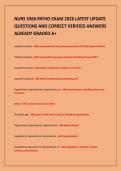
NURS 3366 PATHO EXAM 2026 LATEST UPDATE
QUESTIONS AND CORRECT VERIFIED ANSWERS
ALREADY GRADED A+
metabolic acidosis - ANS-compensation by lungs increase amount of CO2 by hyperventilation
metabolic alkalosis - ANS-compensation by lungs, slow down breathing to keep CO2 in
respiratory acidosis - ANS-kidneys compensate, produce more HCO3
respiratory alkalosis - ANS-kidneys compensate by producing acid
Hyperkalemia, hypernatremia, hypocalcemia s/s - ANS-muscle spasms, twitching, tetany, pos.
chvostek's
tetany - ANS-constant muscle contraction
Chvostek's sign - ANS-spasm of the facial muscles produced by hypocalcemia
Hyperkalemia, hypernatremia, hypocalcemia - ANS-hypo polarized
hypokalemia, hyponatremia, hypercalcemia - ANS-hyperpolarized
hypokalemia, hyponatremia, hypercalcemia s/s - ANS-sluggishness, weakness, mental
slowness, and confusion
, Normal serum osmolality - ANS-blood has normal concentration, 280-295
less water in blood - ANS-vomitting, diarrhea, decreased fluid intake,
fluid volume deficit aka dehydration s/s - ANS-poor skin turgor, dry mucous membranes, low
urine output
lab results for dehydrated person - ANS-show high serum osmolality
plasma space is hyperosmolar, hypertonic, and has osmotic pressure, fluid would shift from -
ANS-tissue to blood
plasma space less concentrated, is usually a problem of - ANS-water gain, too much water to
drink or too much IV, low urine output/ Or loss of solutes such as protein
glomerulonephritis - ANS-inflamed glomeruli allow protein into urine, Proteinuria
cirrhosis - ANS-bad liver cannot make proteins leads to hypoproteinemia
Kwashiorkor - ANS-protein malnutrition leads to hypoproteinemia
fluid volume overload, fluids would shift from - ANS-blood to tissue
cellar injury - ANS-injury ranging from reversible changes to necrosis
apoptosis - ANS-normal programmed cell death
QUESTIONS AND CORRECT VERIFIED ANSWERS
ALREADY GRADED A+
metabolic acidosis - ANS-compensation by lungs increase amount of CO2 by hyperventilation
metabolic alkalosis - ANS-compensation by lungs, slow down breathing to keep CO2 in
respiratory acidosis - ANS-kidneys compensate, produce more HCO3
respiratory alkalosis - ANS-kidneys compensate by producing acid
Hyperkalemia, hypernatremia, hypocalcemia s/s - ANS-muscle spasms, twitching, tetany, pos.
chvostek's
tetany - ANS-constant muscle contraction
Chvostek's sign - ANS-spasm of the facial muscles produced by hypocalcemia
Hyperkalemia, hypernatremia, hypocalcemia - ANS-hypo polarized
hypokalemia, hyponatremia, hypercalcemia - ANS-hyperpolarized
hypokalemia, hyponatremia, hypercalcemia s/s - ANS-sluggishness, weakness, mental
slowness, and confusion
, Normal serum osmolality - ANS-blood has normal concentration, 280-295
less water in blood - ANS-vomitting, diarrhea, decreased fluid intake,
fluid volume deficit aka dehydration s/s - ANS-poor skin turgor, dry mucous membranes, low
urine output
lab results for dehydrated person - ANS-show high serum osmolality
plasma space is hyperosmolar, hypertonic, and has osmotic pressure, fluid would shift from -
ANS-tissue to blood
plasma space less concentrated, is usually a problem of - ANS-water gain, too much water to
drink or too much IV, low urine output/ Or loss of solutes such as protein
glomerulonephritis - ANS-inflamed glomeruli allow protein into urine, Proteinuria
cirrhosis - ANS-bad liver cannot make proteins leads to hypoproteinemia
Kwashiorkor - ANS-protein malnutrition leads to hypoproteinemia
fluid volume overload, fluids would shift from - ANS-blood to tissue
cellar injury - ANS-injury ranging from reversible changes to necrosis
apoptosis - ANS-normal programmed cell death


