
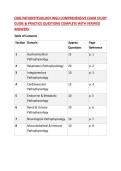
C805 PATHOPHYSIOLOGY WGU COMPREHENSIVE EXAM STUDY
GUIDE & PRACTICE QUESTIONS COMPLETE WITH VERIFIED
ANSWERS
Table of Contents
Section Domain Approx. Page
Questions Reference
1 Gastrointestinal 15 p. 1
Pathophysiology
2 Respiratory Pathophysiology 20 p. 2
3 Integumentary 10 p. 3
Pathophysiology
4 Cardiovascular 15 p. 4
Pathophysiology
5 Endocrine & Metabolic 10 p. 5
Pathophysiology
6 Renal & Urinary 10 p. 6
Pathophysiology
7 Neurological Pathophysiology 10 p. 7
8 Musculoskeletal & Immune 10 p. 8
Pathophysiology
,Section 1: Gastrointestinal Pathophysiology
1. What is the most common cause of chronic pancreatitis?
A) Gallstones
B) Chronic alcohol ingestion
C) Trauma
D) Autoimmune
B) Chronic alcohol ingestion
Rationale: Chronic alcohol ingestion is the most commonly associated
factor for chronic pancreatitis.
2. Which set of symptoms represents the hallmark features of chronic
pancreatitis?
A) Right lower quadrant pain, diarrhea, weight gain
B) Epigastric pain radiating to the back, steatorrhea, malnutrition,
diabetes mellitus
C) Left upper quadrant pain, hematemesis, melena
D) Periumbilical pain migrating to RLQ, fever, leukocytosis
B) Epigastric pain radiating to the back, steatorrhea, malnutrition,
diabetes mellitus
Rationale: These are the classic hallmark features of chronic
pancreatitis.
3. A patient presents with severe epigastric pain radiating to the back.
Which laboratory finding would best support a diagnosis of acute
pancreatitis?
A) Elevated troponin
B) Elevated lipase
C) Elevated BNP
,D) Elevated D-dimer
B) Elevated lipase
Rationale: Lipase is highly specific for pancreatic inflammation.
4. What is the primary pathophysiological mechanism of peptic ulcer
disease caused by H. pylori?
A) Increased gastric acid secretion
B) Breakdown of the gastric mucosal barrier
C) Decreased gastric mucus production
D) Delayed gastric emptying
B) Breakdown of the gastric mucosal barrier
Rationale: H. pylori colonizes the stomach and breaks down the
protective mucosal barrier.
5. Which complication is most directly associated with portal
hypertension in cirrhosis?
A) Ascites
B) Hyperkalemia
C) Polycythemia
D) Systemic hypotension
A) Ascites
Rationale: Portal hypertension increases hydrostatic pressure, leading to
fluid leakage into the peritoneal cavity.
6. A patient with ulcerative colitis is most likely to experience which
pattern of inflammation?
A) Skip lesions
B) Transmural inflammation
C) Continuous mucosal inflammation
D) Granuloma formation
, C) Continuous mucosal inflammation
Rationale: Ulcerative colitis involves continuous inflammation starting
from the rectum and extending proximally.
7. What is the classic presentation of appendicitis?
A) RLQ pain migrating to LUQ
B) Periumbilical pain migrating to RLQ
C) LLQ pain migrating to RUQ
D) Epigastric pain migrating to LLQ
B) Periumbilical pain migrating to RLQ
Rationale: Visceral pain starts periumbilical and localizes to the RLQ as
parietal peritoneum becomes involved.
8. Which condition is characterized by the formation of sac-like
outpouchings in the colon wall?
A) Diverticulosis
B) Crohn's disease
C) Ulcerative colitis
D) Cirrhosis
A) Diverticulosis
Rationale: Diverticulosis is defined by the presence of diverticula
(outpouchings) in the colon.
9. What is the primary cause of gastroesophageal reflux disease
(GERD)?
A) Weak lower esophageal sphincter
B) Strong lower esophageal sphincter
C) Pyloric stenosis
D) Hiatal hernia
GUIDE & PRACTICE QUESTIONS COMPLETE WITH VERIFIED
ANSWERS
Table of Contents
Section Domain Approx. Page
Questions Reference
1 Gastrointestinal 15 p. 1
Pathophysiology
2 Respiratory Pathophysiology 20 p. 2
3 Integumentary 10 p. 3
Pathophysiology
4 Cardiovascular 15 p. 4
Pathophysiology
5 Endocrine & Metabolic 10 p. 5
Pathophysiology
6 Renal & Urinary 10 p. 6
Pathophysiology
7 Neurological Pathophysiology 10 p. 7
8 Musculoskeletal & Immune 10 p. 8
Pathophysiology
,Section 1: Gastrointestinal Pathophysiology
1. What is the most common cause of chronic pancreatitis?
A) Gallstones
B) Chronic alcohol ingestion
C) Trauma
D) Autoimmune
B) Chronic alcohol ingestion
Rationale: Chronic alcohol ingestion is the most commonly associated
factor for chronic pancreatitis.
2. Which set of symptoms represents the hallmark features of chronic
pancreatitis?
A) Right lower quadrant pain, diarrhea, weight gain
B) Epigastric pain radiating to the back, steatorrhea, malnutrition,
diabetes mellitus
C) Left upper quadrant pain, hematemesis, melena
D) Periumbilical pain migrating to RLQ, fever, leukocytosis
B) Epigastric pain radiating to the back, steatorrhea, malnutrition,
diabetes mellitus
Rationale: These are the classic hallmark features of chronic
pancreatitis.
3. A patient presents with severe epigastric pain radiating to the back.
Which laboratory finding would best support a diagnosis of acute
pancreatitis?
A) Elevated troponin
B) Elevated lipase
C) Elevated BNP
,D) Elevated D-dimer
B) Elevated lipase
Rationale: Lipase is highly specific for pancreatic inflammation.
4. What is the primary pathophysiological mechanism of peptic ulcer
disease caused by H. pylori?
A) Increased gastric acid secretion
B) Breakdown of the gastric mucosal barrier
C) Decreased gastric mucus production
D) Delayed gastric emptying
B) Breakdown of the gastric mucosal barrier
Rationale: H. pylori colonizes the stomach and breaks down the
protective mucosal barrier.
5. Which complication is most directly associated with portal
hypertension in cirrhosis?
A) Ascites
B) Hyperkalemia
C) Polycythemia
D) Systemic hypotension
A) Ascites
Rationale: Portal hypertension increases hydrostatic pressure, leading to
fluid leakage into the peritoneal cavity.
6. A patient with ulcerative colitis is most likely to experience which
pattern of inflammation?
A) Skip lesions
B) Transmural inflammation
C) Continuous mucosal inflammation
D) Granuloma formation
, C) Continuous mucosal inflammation
Rationale: Ulcerative colitis involves continuous inflammation starting
from the rectum and extending proximally.
7. What is the classic presentation of appendicitis?
A) RLQ pain migrating to LUQ
B) Periumbilical pain migrating to RLQ
C) LLQ pain migrating to RUQ
D) Epigastric pain migrating to LLQ
B) Periumbilical pain migrating to RLQ
Rationale: Visceral pain starts periumbilical and localizes to the RLQ as
parietal peritoneum becomes involved.
8. Which condition is characterized by the formation of sac-like
outpouchings in the colon wall?
A) Diverticulosis
B) Crohn's disease
C) Ulcerative colitis
D) Cirrhosis
A) Diverticulosis
Rationale: Diverticulosis is defined by the presence of diverticula
(outpouchings) in the colon.
9. What is the primary cause of gastroesophageal reflux disease
(GERD)?
A) Weak lower esophageal sphincter
B) Strong lower esophageal sphincter
C) Pyloric stenosis
D) Hiatal hernia


