

WGU C963 Pre-Assessment Questions with Verified Answers (Correct
Update)
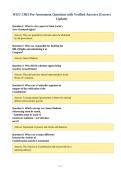
Question 1: What is a key aspect of John Locke's
view of natural rights?
Answer: They are granted by God and cannot be abolished
by the government.
Question 2: Who was responsible for drafting the
Bill of Rights and submitting it to
Congress?
Answer: James Madison
Question 3: Why did the colonists oppose being
taxed by Great Britain?
Answer: They did not have elected representatives in the
House of Commons.
Question 4: What was a Federalist argument in
support of the ratification of the
Constitution?
Answer: A strong national government is better for national
defense and economic growth
Question 5: Which concept was James Madison
referencing when he stated,
"Ambition must be made to
counteract ambition." in Federalist,
no.51?
Answer: Separation of powers and checks and balances
Question 6: What was a major difference
between the Articles of
Confederation and the Constitution
Answer: The Articles of Confederation did not provide for a
national judiciary
Page 1
, Question 7: Why did the framers design the
government under the Articles of
Confederation with a Congress?
Answer: They wanted a government that protected state
sovereignty
Question 8: What did the Great Compromise
between the Virginia Plan and the
New Jersey Plan that was finalized in
the Constitution establish?
Answer: A two-chamber Congress
Question 9: What were the results of the threefifths compromise?
Answer: It allowed slave states to count three-fifths of their
enslaved population for the purpose of
representation.
Question 10: What is a judicial check on the
executive branch?
Answer: The Supreme Court can declare actions by the
executive branch unconstitutional.
Question 11: Which power does the president
have under the Constitution?
Answer: Appointing judges
Question 12: What is a protection against an
elected president abusing powers
for personal gain?
Answer: The power of Congress to impeach the president
Question 13: Which constitutional amendment
established term limits for the
president?
Answer: The Twenty-Second Amendment
Page 2
Update)
Question 1: What is a key aspect of John Locke's
view of natural rights?
Answer: They are granted by God and cannot be abolished
by the government.
Question 2: Who was responsible for drafting the
Bill of Rights and submitting it to
Congress?
Answer: James Madison
Question 3: Why did the colonists oppose being
taxed by Great Britain?
Answer: They did not have elected representatives in the
House of Commons.
Question 4: What was a Federalist argument in
support of the ratification of the
Constitution?
Answer: A strong national government is better for national
defense and economic growth
Question 5: Which concept was James Madison
referencing when he stated,
"Ambition must be made to
counteract ambition." in Federalist,
no.51?
Answer: Separation of powers and checks and balances
Question 6: What was a major difference
between the Articles of
Confederation and the Constitution
Answer: The Articles of Confederation did not provide for a
national judiciary
Page 1
, Question 7: Why did the framers design the
government under the Articles of
Confederation with a Congress?
Answer: They wanted a government that protected state
sovereignty
Question 8: What did the Great Compromise
between the Virginia Plan and the
New Jersey Plan that was finalized in
the Constitution establish?
Answer: A two-chamber Congress
Question 9: What were the results of the threefifths compromise?
Answer: It allowed slave states to count three-fifths of their
enslaved population for the purpose of
representation.
Question 10: What is a judicial check on the
executive branch?
Answer: The Supreme Court can declare actions by the
executive branch unconstitutional.
Question 11: Which power does the president
have under the Constitution?
Answer: Appointing judges
Question 12: What is a protection against an
elected president abusing powers
for personal gain?
Answer: The power of Congress to impeach the president
Question 13: Which constitutional amendment
established term limits for the
president?
Answer: The Twenty-Second Amendment
Page 2


