
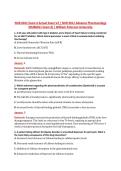
NUR 6011 Exam 4 Actual Exam V2 | NUR 6011 Advance Pharmacology
(NUR6011 Exam 4) | William Paterson University
1. A 65-year-old patient with type 2 diabetes and a history of heart failure is being considered
for an SGLT2 inhibitor. Which clinical parameter is most critical to evaluate before initiating
this therapy?
A. Estimated Glomerular Filtration Rate (eGFR)
B. Liver function tests (ALT/AST)
C. Thyroid Stimulating Hormone (TSH)
D. Serum Calcium levels
Answer: A
Rationale: SGLT2 inhibitors like empagliflozin require a certain level of renal function to
be effective in lowering blood glucose. Current guidelines generally recommend avoiding
initiation if the eGFR is below 30-45 mL/min/1.73m², depending on the specific agent.
Monitoring renal function is essential because the drug’s efficacy is dependent on glucose
filtration at the glomerulus.
2. Which statement regarding the pharmacokinetics of Levothyroxine (Synthroid) is accurate
for a pregnant patient?
A. Levothyroxine requirements usually decrease in the first trimester.
B. The half-life of levothyroxine is significantly shortened by placental enzymes.
C. Levothyroxine should be taken with prenatal vitamins to ensure absorption.
D. Increased levels of thyroid-binding globulin (TBG) necessitate a dose increase.
Answer: D
Rationale: Estrogen increases the production of thyroid-binding globulin (TBG) in the liver
during pregnancy. This leads to a decrease in free T4 levels, requiring an upward dose
adjustment of levothyroxine in most hypothyroid women. Close monitoring of TSH every 4
weeks is standard practice during the first half of pregnancy.
3. A patient taking Lithium for bipolar disorder is prescribed Naproxen for joint pain. What is
the most likely consequence of this drug interaction?
A. Increased renal clearance of Lithium leading to subtherapeutic levels.
B. Decreased renal clearance of Lithium leading to toxicity.
C. Inhibition of Lithium absorption in the gastrointestinal tract.
D. Enhanced metabolism of Naproxen by Lithium enzymes.
,Answer: B
Rationale: Nonsteroidal anti-inflammatory drugs (NSAIDs) like Naproxen reduce renal
blood flow by inhibiting prostaglandins. This reduction in renal perfusion leads to a
decrease in the fractional excretion of Lithium, raising serum levels. Patients must be
educated to avoid NSAIDs and use acetaminophen instead to prevent Lithium toxicity.
4. Long-term use of Proton Pump Inhibitors (PPIs) has been associated with which of the
following electrolyte imbalances?
A. Hyperkalemia
B. Hyponatremia
C. Hypercalcemia
D. Hypomagnesemia
Answer: D
Rationale: PPIs are linked to impaired intestinal absorption of magnesium, particularly
with usage exceeding one year. Low magnesium can lead to serious cardiovascular and
neurological adverse effects if left untreated. Clinicians should consider monitoring serum
magnesium levels in patients on chronic PPI therapy.
5. Which of the following is an absolute contraindication for the use of GLP-1 receptor
agonists like Liraglutide?
A. History of cholelithiasis
B. Personal or family history of Medullary Thyroid Carcinoma (MTC)
C. History of Type 1 Diabetes Mellitus
D. Body Mass Index (BMI) greater than 35
Answer: B
Rationale: GLP-1 receptor agonists carry a black box warning for the risk of thyroid C-cell
tumors based on animal studies. They are contraindicated in patients with a personal or
family history of Medullary Thyroid Carcinoma or Multiple Endocrine Neoplasia syndrome
type 2 (MEN 2). Patients should be counseled on the symptoms of thyroid nodules, such as
neck swelling or hoarseness.
6. When initiating a statin, which patient education point regarding myopathy is most
appropriate?
A. Muscle aches are normal and will resolve without intervention.
B. Report any unexplained muscle pain, tenderness, or weakness immediately.
C. Stop the medication only if the urine turns bright yellow.
, D. Take the statin with grapefruit juice to enhance efficacy.
Answer: B
Rationale: Statin-associated muscle symptoms (SAMS) range from mild myalgia to life-
threatening rhabdomyolysis. Patients must report new onset muscle symptoms to their
provider to assess Creatine Kinase (CK) levels and renal function. Early detection of
myopathy can prevent permanent muscle damage and renal failure.
7. A patient is prescribed Alendronate (Fosamax) for osteoporosis. Which instruction is vital
to minimize the risk of esophageal irritation?
A. Take the medication with a full glass of milk.
B. Take the medication with plain water and remain upright for 30 minutes.
C. Lie down for 30 minutes after taking the dose.
D. Crush the tablet if it is too difficult to swallow.
Answer: B
Rationale: Bisphosphonates like Alendronate can cause severe esophageal erosion if they
reflux or remain in the esophagus. Remaining upright and avoiding food or other drinks for
30 minutes ensures the drug passes quickly into the stomach. Plain water is necessary
because other liquids can significantly impair the drug’s absorption.
8. Which medication is the preferred treatment for a pregnant woman with hyperthyroidism
during the first trimester?
A. Methimazole
B. Propylthiouracil (PTU)
C. Radioactive Iodine
D. Atenolol
Answer: B
Rationale: PTU is preferred in the first trimester of pregnancy because Methimazole is
associated with embryopathy, including aplasia cutis. After the first trimester, many
clinicians switch back to Methimazole to reduce the risk of PTU-associated hepatotoxicity.
Both medications require careful monitoring of liver enzymes and white blood cell counts.
9. A patient with a history of deep vein thrombosis (DVT) is starting Warfarin (Coumadin).
What is the mechanism of action of this drug?
A. Direct inhibition of Factor Xa
B. Inhibition of Vitamin K epoxide reductase
C. Activation of Antithrombin III
(NUR6011 Exam 4) | William Paterson University
1. A 65-year-old patient with type 2 diabetes and a history of heart failure is being considered
for an SGLT2 inhibitor. Which clinical parameter is most critical to evaluate before initiating
this therapy?
A. Estimated Glomerular Filtration Rate (eGFR)
B. Liver function tests (ALT/AST)
C. Thyroid Stimulating Hormone (TSH)
D. Serum Calcium levels
Answer: A
Rationale: SGLT2 inhibitors like empagliflozin require a certain level of renal function to
be effective in lowering blood glucose. Current guidelines generally recommend avoiding
initiation if the eGFR is below 30-45 mL/min/1.73m², depending on the specific agent.
Monitoring renal function is essential because the drug’s efficacy is dependent on glucose
filtration at the glomerulus.
2. Which statement regarding the pharmacokinetics of Levothyroxine (Synthroid) is accurate
for a pregnant patient?
A. Levothyroxine requirements usually decrease in the first trimester.
B. The half-life of levothyroxine is significantly shortened by placental enzymes.
C. Levothyroxine should be taken with prenatal vitamins to ensure absorption.
D. Increased levels of thyroid-binding globulin (TBG) necessitate a dose increase.
Answer: D
Rationale: Estrogen increases the production of thyroid-binding globulin (TBG) in the liver
during pregnancy. This leads to a decrease in free T4 levels, requiring an upward dose
adjustment of levothyroxine in most hypothyroid women. Close monitoring of TSH every 4
weeks is standard practice during the first half of pregnancy.
3. A patient taking Lithium for bipolar disorder is prescribed Naproxen for joint pain. What is
the most likely consequence of this drug interaction?
A. Increased renal clearance of Lithium leading to subtherapeutic levels.
B. Decreased renal clearance of Lithium leading to toxicity.
C. Inhibition of Lithium absorption in the gastrointestinal tract.
D. Enhanced metabolism of Naproxen by Lithium enzymes.
,Answer: B
Rationale: Nonsteroidal anti-inflammatory drugs (NSAIDs) like Naproxen reduce renal
blood flow by inhibiting prostaglandins. This reduction in renal perfusion leads to a
decrease in the fractional excretion of Lithium, raising serum levels. Patients must be
educated to avoid NSAIDs and use acetaminophen instead to prevent Lithium toxicity.
4. Long-term use of Proton Pump Inhibitors (PPIs) has been associated with which of the
following electrolyte imbalances?
A. Hyperkalemia
B. Hyponatremia
C. Hypercalcemia
D. Hypomagnesemia
Answer: D
Rationale: PPIs are linked to impaired intestinal absorption of magnesium, particularly
with usage exceeding one year. Low magnesium can lead to serious cardiovascular and
neurological adverse effects if left untreated. Clinicians should consider monitoring serum
magnesium levels in patients on chronic PPI therapy.
5. Which of the following is an absolute contraindication for the use of GLP-1 receptor
agonists like Liraglutide?
A. History of cholelithiasis
B. Personal or family history of Medullary Thyroid Carcinoma (MTC)
C. History of Type 1 Diabetes Mellitus
D. Body Mass Index (BMI) greater than 35
Answer: B
Rationale: GLP-1 receptor agonists carry a black box warning for the risk of thyroid C-cell
tumors based on animal studies. They are contraindicated in patients with a personal or
family history of Medullary Thyroid Carcinoma or Multiple Endocrine Neoplasia syndrome
type 2 (MEN 2). Patients should be counseled on the symptoms of thyroid nodules, such as
neck swelling or hoarseness.
6. When initiating a statin, which patient education point regarding myopathy is most
appropriate?
A. Muscle aches are normal and will resolve without intervention.
B. Report any unexplained muscle pain, tenderness, or weakness immediately.
C. Stop the medication only if the urine turns bright yellow.
, D. Take the statin with grapefruit juice to enhance efficacy.
Answer: B
Rationale: Statin-associated muscle symptoms (SAMS) range from mild myalgia to life-
threatening rhabdomyolysis. Patients must report new onset muscle symptoms to their
provider to assess Creatine Kinase (CK) levels and renal function. Early detection of
myopathy can prevent permanent muscle damage and renal failure.
7. A patient is prescribed Alendronate (Fosamax) for osteoporosis. Which instruction is vital
to minimize the risk of esophageal irritation?
A. Take the medication with a full glass of milk.
B. Take the medication with plain water and remain upright for 30 minutes.
C. Lie down for 30 minutes after taking the dose.
D. Crush the tablet if it is too difficult to swallow.
Answer: B
Rationale: Bisphosphonates like Alendronate can cause severe esophageal erosion if they
reflux or remain in the esophagus. Remaining upright and avoiding food or other drinks for
30 minutes ensures the drug passes quickly into the stomach. Plain water is necessary
because other liquids can significantly impair the drug’s absorption.
8. Which medication is the preferred treatment for a pregnant woman with hyperthyroidism
during the first trimester?
A. Methimazole
B. Propylthiouracil (PTU)
C. Radioactive Iodine
D. Atenolol
Answer: B
Rationale: PTU is preferred in the first trimester of pregnancy because Methimazole is
associated with embryopathy, including aplasia cutis. After the first trimester, many
clinicians switch back to Methimazole to reduce the risk of PTU-associated hepatotoxicity.
Both medications require careful monitoring of liver enzymes and white blood cell counts.
9. A patient with a history of deep vein thrombosis (DVT) is starting Warfarin (Coumadin).
What is the mechanism of action of this drug?
A. Direct inhibition of Factor Xa
B. Inhibition of Vitamin K epoxide reductase
C. Activation of Antithrombin III


