
INDIANA QMA INSULIN ADMINISTRATION EXAM 2026/2027
250-QUESTION PRACTICE TEST BANK & CORRECT ANSWERS
Based on the current Indiana Department of Health QMA Insulin Administration curriculum and 2026 program information. This is a
practice bank—not a leaked, stolen, or guaranteed copy of the live state examination.
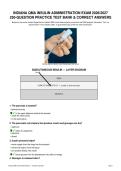
Clinical reference photo: insulin being drawn from a vial.
SUBCUTANEOUS INSULIN — LAYER DIAGRAM
Needle
SKIN
SUBCUTANEOUS FAT ← insulin is delivered here
MUSCLE
1. The pancreas is located?
• behind the knee
■ ✓ in the upper abdomen behind the stomach
• inside the chest cavity
• in the lower pelvis
2. The pancreatic cell clusters that produce insulin and glucagon are the?
• nephrons
■ ✓ Islets of Langerhans
• glomeruli
• alveoli
3. Insulin primarily helps?
• move oxygen from the lungs into the stomach
• remove all sodium from the blood
• turn protein directly into insulin
■ ✓ move glucose from the bloodstream into cells for energy
4. Glucagon is released when?
Indiana QMA Insulin Administration — Practice Test Bank Page 1
, ■ ✓ blood glucose is low and the body needs energy
• the resident is asleep
• the skin becomes dry
• blood glucose is high after every meal
5. A normal fasting/random blood glucose range listed in the Indiana module is?
• 20–40 mg/dL
■ ✓ 70–110 mg/dL
• 200–300 mg/dL
• 120–180 mg/dL
6. The three classic P's of hyperglycemia are?
• pulse, pressure, perspiration
• pain, pallor, paralysis
■ ✓ polyuria, polydipsia, and polyphagia
• pruritus, petechiae, paralysis
7. Polyuria means?
• frequent hunger
■ ✓ frequent urination
• blurred vision
• frequent thirst
8. Polydipsia means?
■ ✓ frequent or excessive thirst
• slow heart rate
• frequent hunger
• frequent urination
9. Polyphagia means?
• cold skin
• frequent urination
• frequent thirst
■ ✓ frequent or extreme hunger
10. A common sign of hypoglycemia is?
• extreme thirst only
■ ✓ sweating and shakiness
• fruity breath and deep labored breathing
• dry flushed skin only
11. A common sign of hyperglycemia is?
■ ✓ fruity odor to the breath
• tingling around the mouth
• cold clammy skin
• sudden sweating and tremor
12. Hypoglycemia can become life-threatening because the brain?
• stops needing oxygen
• stores unlimited glucose
• produces insulin itself
Indiana QMA Insulin Administration — Practice Test Bank Page 2
, ■ ✓ does not receive enough glucose to function normally
13. If a diabetic resident is unconscious, the QMA should?
• leave the resident alone
■ ✓ call 911 immediately and notify the nurse
• give insulin without an order
• give food by mouth
14. If a resident is alert but has symptoms of abnormal glucose, the QMA should first?
• give extra insulin independently
• ignore the symptoms
• withhold all fluids
■ ✓ check the blood glucose and notify the nurse
15. Scheduled insulin is closely associated with?
• avoiding all activity
• taking insulin only when symptoms occur
• skipping meals
■ ✓ scheduled meals and snacks
16. If a resident refuses a scheduled meal, the module says?
• the resident must be forced to eat
• insulin must automatically be doubled
• the QMA should ignore the refusal
■ ✓ an alternate meal or snack must be offered
17. Regular/short-acting insulin in the module is generally given?
• once a month
• 24 hours after eating
• only after exercise
■ ✓ 30–45 minutes before eating
18. Rapid-acting insulin is generally given?
• only at bedtime regardless of meals
■ ✓ just before or just after eating
• only after a fasting test
• 30 days before eating
19. Intermediate-acting insulin is commonly used?
• to replace glucagon
• to measure HbA1C
• to sterilize injection sites
■ ✓ to help control blood glucose between meals
20. Long-acting insulin is commonly used?
• to test urine protein
• to lower body temperature
• only to treat a finger-stick injury
■ ✓ to help control blood glucose throughout the day
21. Insulin is not taken as a pill because?
Indiana QMA Insulin Administration — Practice Test Bank Page 3
, • it causes immediate blindness
■ ✓ stomach acid would break it down or destroy it
• it is made of glucose
• it cannot be measured in units
22. A random blood glucose test measures?
• only glucose after 12 hours without food
■ ✓ blood glucose at a specific time
• blood pressure
• average glucose over three months
23. Fasting blood glucose requires at least?
• 24 hours without sleep
■ ✓ 12 hours without food or fluids except water
• 4 hours without food or water
• 2 hours without water
24. HbA1C reflects average glucose over approximately?
• the previous 24 hours
• the previous 10 years
■ ✓ the previous 3 months
• the previous 5 minutes
25. The HbA1C range listed as normal in the module is?
• 10–20%
• 25–40%
■ ✓ 3.8–6.4%
• 0–1%
26. During finger-stick testing, the module recommends using?
• the elbow
• the center of the palm
■ ✓ the side of the fingertip
• the top of the nail
27. Finger-stick sites should be rotated because?
• glucose cannot be measured from blood
• the meter only works once
■ ✓ repeatedly using the same finger can increase pain and bruising
• insulin is injected into fingers
28. Before using a glucose meter, the QMA should?
• use the same strip forever
• skip hand hygiene
• guess the procedure
■ ✓ follow the manufacturer's instructions
29. After placing blood on the reagent strip, the QMA should?
• immediately discard the meter
■ ✓ wait for the result to appear on the screen
• inject insulin into the finger
Indiana QMA Insulin Administration — Practice Test Bank Page 4
250-QUESTION PRACTICE TEST BANK & CORRECT ANSWERS
Based on the current Indiana Department of Health QMA Insulin Administration curriculum and 2026 program information. This is a
practice bank—not a leaked, stolen, or guaranteed copy of the live state examination.
Clinical reference photo: insulin being drawn from a vial.
SUBCUTANEOUS INSULIN — LAYER DIAGRAM
Needle
SKIN
SUBCUTANEOUS FAT ← insulin is delivered here
MUSCLE
1. The pancreas is located?
• behind the knee
■ ✓ in the upper abdomen behind the stomach
• inside the chest cavity
• in the lower pelvis
2. The pancreatic cell clusters that produce insulin and glucagon are the?
• nephrons
■ ✓ Islets of Langerhans
• glomeruli
• alveoli
3. Insulin primarily helps?
• move oxygen from the lungs into the stomach
• remove all sodium from the blood
• turn protein directly into insulin
■ ✓ move glucose from the bloodstream into cells for energy
4. Glucagon is released when?
Indiana QMA Insulin Administration — Practice Test Bank Page 1
, ■ ✓ blood glucose is low and the body needs energy
• the resident is asleep
• the skin becomes dry
• blood glucose is high after every meal
5. A normal fasting/random blood glucose range listed in the Indiana module is?
• 20–40 mg/dL
■ ✓ 70–110 mg/dL
• 200–300 mg/dL
• 120–180 mg/dL
6. The three classic P's of hyperglycemia are?
• pulse, pressure, perspiration
• pain, pallor, paralysis
■ ✓ polyuria, polydipsia, and polyphagia
• pruritus, petechiae, paralysis
7. Polyuria means?
• frequent hunger
■ ✓ frequent urination
• blurred vision
• frequent thirst
8. Polydipsia means?
■ ✓ frequent or excessive thirst
• slow heart rate
• frequent hunger
• frequent urination
9. Polyphagia means?
• cold skin
• frequent urination
• frequent thirst
■ ✓ frequent or extreme hunger
10. A common sign of hypoglycemia is?
• extreme thirst only
■ ✓ sweating and shakiness
• fruity breath and deep labored breathing
• dry flushed skin only
11. A common sign of hyperglycemia is?
■ ✓ fruity odor to the breath
• tingling around the mouth
• cold clammy skin
• sudden sweating and tremor
12. Hypoglycemia can become life-threatening because the brain?
• stops needing oxygen
• stores unlimited glucose
• produces insulin itself
Indiana QMA Insulin Administration — Practice Test Bank Page 2
, ■ ✓ does not receive enough glucose to function normally
13. If a diabetic resident is unconscious, the QMA should?
• leave the resident alone
■ ✓ call 911 immediately and notify the nurse
• give insulin without an order
• give food by mouth
14. If a resident is alert but has symptoms of abnormal glucose, the QMA should first?
• give extra insulin independently
• ignore the symptoms
• withhold all fluids
■ ✓ check the blood glucose and notify the nurse
15. Scheduled insulin is closely associated with?
• avoiding all activity
• taking insulin only when symptoms occur
• skipping meals
■ ✓ scheduled meals and snacks
16. If a resident refuses a scheduled meal, the module says?
• the resident must be forced to eat
• insulin must automatically be doubled
• the QMA should ignore the refusal
■ ✓ an alternate meal or snack must be offered
17. Regular/short-acting insulin in the module is generally given?
• once a month
• 24 hours after eating
• only after exercise
■ ✓ 30–45 minutes before eating
18. Rapid-acting insulin is generally given?
• only at bedtime regardless of meals
■ ✓ just before or just after eating
• only after a fasting test
• 30 days before eating
19. Intermediate-acting insulin is commonly used?
• to replace glucagon
• to measure HbA1C
• to sterilize injection sites
■ ✓ to help control blood glucose between meals
20. Long-acting insulin is commonly used?
• to test urine protein
• to lower body temperature
• only to treat a finger-stick injury
■ ✓ to help control blood glucose throughout the day
21. Insulin is not taken as a pill because?
Indiana QMA Insulin Administration — Practice Test Bank Page 3
, • it causes immediate blindness
■ ✓ stomach acid would break it down or destroy it
• it is made of glucose
• it cannot be measured in units
22. A random blood glucose test measures?
• only glucose after 12 hours without food
■ ✓ blood glucose at a specific time
• blood pressure
• average glucose over three months
23. Fasting blood glucose requires at least?
• 24 hours without sleep
■ ✓ 12 hours without food or fluids except water
• 4 hours without food or water
• 2 hours without water
24. HbA1C reflects average glucose over approximately?
• the previous 24 hours
• the previous 10 years
■ ✓ the previous 3 months
• the previous 5 minutes
25. The HbA1C range listed as normal in the module is?
• 10–20%
• 25–40%
■ ✓ 3.8–6.4%
• 0–1%
26. During finger-stick testing, the module recommends using?
• the elbow
• the center of the palm
■ ✓ the side of the fingertip
• the top of the nail
27. Finger-stick sites should be rotated because?
• glucose cannot be measured from blood
• the meter only works once
■ ✓ repeatedly using the same finger can increase pain and bruising
• insulin is injected into fingers
28. Before using a glucose meter, the QMA should?
• use the same strip forever
• skip hand hygiene
• guess the procedure
■ ✓ follow the manufacturer's instructions
29. After placing blood on the reagent strip, the QMA should?
• immediately discard the meter
■ ✓ wait for the result to appear on the screen
• inject insulin into the finger
Indiana QMA Insulin Administration — Practice Test Bank Page 4


