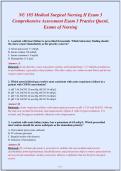
NU 185 Medical Surgical Nursing II Exam 3
Comprehensive Assessment Exam 3 Practice Questi,
Exams of Nursing
1. A patient with heart failure is prescribed furosemide. Which laboratory finding should
the nurse report immediately as the priority concern?
A. Serum potassium 3.1 mEq/L
B. Serum sodium 138 mEq/L
C. Serum creatinine 1.0 mg/dL
D. Hemoglobin 13.5 g/dL
Answer: A
Rationale: Loop diuretics cause potassium wasting, and hypokalemia (<3.5 mEq/L) predisposes
to dysrhythmias, especially in heart failure. The other values are within normal limits and do not
require urgent reporting.
2. Which arterial blood gas result is most consistent with acute respiratory failure in a
patient with COPD exacerbation?
A. pH 7.48, PaCO2 30 mm Hg, HCO3 24 mEq/L
B. pH 7.28, PaCO2 62 mm Hg, HCO3 26 mEq/L
C. pH 7.36, PaCO2 40 mm Hg, HCO3 24 mEq/L
D. pH 7.50, PaCO2 44 mm Hg, HCO3 30 mEq/L
Answer: B
Rationale: Acute respiratory failure with hypercapnia presents as pH <7.35 with PaCO2 >50 mm
Hg and near-normal bicarbonate (uncompensated). Option A reflects hyperventilation, C is
normal, and D suggests metabolic alkalosis with compensation.
3. A patient with acute kidney injury has a potassium of 6.8 mEq/L. Which prescribed
intervention should the nurse anticipate as the immediate priority?
A. Oral sodium polystyrene sulfonate
B. IV calcium gluconate
C. Regular insulin with dextrose
D. Initiation of hemodialysis
Answer: B
Rationale: IV calcium gluconate is given first to stabilize the myocardium and prevent
dysrhythmias from hyperkalemia. Insulin/dextrose and polystyrene shift or remove potassium but
do not provide immediate cardiac protection; dialysis is definitive but not the first emergent
action.
Page 1
,4. Which assessment finding is most concerning in a patient one hour after thyroidectomy?
A. Serosanguineous drainage on the dressing
B. Hoarse voice when speaking
C. Respiratory stridor with neck swelling
D. Mild incisional pain rated 4/10
Answer: C
Rationale: Stridor with neck swelling suggests hematoma formation causing airway compression,
a life-threatening emergency requiring immediate intervention. Hoarseness may indicate
recurrent laryngeal nerve involvement but is less acute; drainage and mild pain are expected
postoperatively.
5. A patient receiving chemotherapy has a neutrophil count of 400/mm³. Which instruction
is most important for the nurse to include in discharge teaching?
A. Avoid crowded public places and report fever immediately
B. Increase intake of fresh fruits and vegetables
C. Use a soft toothbrush and electric razor
D. Take acetaminophen at the first sign of infection
Answer: A
Rationale: Severe neutropenia increases infection risk; avoiding crowds and reporting fever
promptly is critical. Fresh produce may harbor pathogens, soft toothbrush/electric razor
address bleeding risk not infection, and acetaminophen may mask fever.
6. Which finding in a patient with a new below-the-knee cast requires immediate
follow-up?
A. Capillary refill of 3 seconds in the toes
B. Complaint of intense pain unrelieved by opioids
C. Mild swelling of the toes
D. Itching under the cast
Answer: B
Rationale: Unrelenting pain despite opioids is an early hallmark of compartment syndrome, a
surgical emergency. Capillary refill of 3 seconds is borderline but not definitive; mild swelling
and itching are expected.
7. A patient with cirrhosis has ascites and is prescribed spironolactone. Which parameter
best evaluates the medication's therapeutic effect?
A. Daily weight and abdominal girth
B. Serum potassium level
C. Urine specific gravity
D. Serum albumin level
Answer: A
Page 2
, Rationale: Daily weight and abdominal girth changes directly reflect fluid mobilization in ascites management. Potassium
monitoring assesses safety, not efficacy; urine specific gravity and albumin do not measure diuretic response.
8. Which intervention is the priority when a patient with a traumatic brain injury develops
a sudden decrease in level of consciousness?
A. Perform a focused neurologic assessment and notify the provider
B. Administer prescribed pain medication
C. Reposition the patient to the left side
D. Document the finding and reassess in one hour
Answer: A
Rationale: A declining LOC may indicate increased intracranial pressure or herniation;
immediate assessment and provider notification are essential. Pain medication may mask
symptoms, repositioning without assessment is unsafe, and delaying reassessment could be fatal.
9. Which statement by a patient with a new diagnosis of type 1 diabetes indicates a need for
further teaching about hypoglycemia management?
A. "I will carry glucose tablets at all times."
B. "I will check my blood glucose if I feel shaky."
C. "I will take my insulin even if I cannot eat due to illness."
D. "I will wear a medical alert bracelet."
Answer: C
Rationale: Taking insulin without eating increases hypoglycemia risk; sick-day rules require
monitoring and adjusting insulin with carbohydrate intake. The other statements reflect
appropriate self-management.
10. A patient with a pulmonary embolism is started on a heparin infusion. Which
laboratory test should the nurse monitor to evaluate therapeutic effect?
A. PT/INR
B. aPTT
C. Platelet count
D. D-dimer
Answer: B
Rationale: Unfractionated heparin therapy is monitored by aPTT, with a target of 1.5–2.5 times
control. PT/INR assesses warfarin, platelet count monitors for HIT, and D-dimer is diagnostic,
not for titration.
11. A patient with acute decompensated heart failure and a serum potassium of 3.1 mEq/L
is prescribed furosemide IV. Which assessment finding is the priority concern before
administering the dose?
A. Flat neck veins
Page 3
Comprehensive Assessment Exam 3 Practice Questi,
Exams of Nursing
1. A patient with heart failure is prescribed furosemide. Which laboratory finding should
the nurse report immediately as the priority concern?
A. Serum potassium 3.1 mEq/L
B. Serum sodium 138 mEq/L
C. Serum creatinine 1.0 mg/dL
D. Hemoglobin 13.5 g/dL
Answer: A
Rationale: Loop diuretics cause potassium wasting, and hypokalemia (<3.5 mEq/L) predisposes
to dysrhythmias, especially in heart failure. The other values are within normal limits and do not
require urgent reporting.
2. Which arterial blood gas result is most consistent with acute respiratory failure in a
patient with COPD exacerbation?
A. pH 7.48, PaCO2 30 mm Hg, HCO3 24 mEq/L
B. pH 7.28, PaCO2 62 mm Hg, HCO3 26 mEq/L
C. pH 7.36, PaCO2 40 mm Hg, HCO3 24 mEq/L
D. pH 7.50, PaCO2 44 mm Hg, HCO3 30 mEq/L
Answer: B
Rationale: Acute respiratory failure with hypercapnia presents as pH <7.35 with PaCO2 >50 mm
Hg and near-normal bicarbonate (uncompensated). Option A reflects hyperventilation, C is
normal, and D suggests metabolic alkalosis with compensation.
3. A patient with acute kidney injury has a potassium of 6.8 mEq/L. Which prescribed
intervention should the nurse anticipate as the immediate priority?
A. Oral sodium polystyrene sulfonate
B. IV calcium gluconate
C. Regular insulin with dextrose
D. Initiation of hemodialysis
Answer: B
Rationale: IV calcium gluconate is given first to stabilize the myocardium and prevent
dysrhythmias from hyperkalemia. Insulin/dextrose and polystyrene shift or remove potassium but
do not provide immediate cardiac protection; dialysis is definitive but not the first emergent
action.
Page 1
,4. Which assessment finding is most concerning in a patient one hour after thyroidectomy?
A. Serosanguineous drainage on the dressing
B. Hoarse voice when speaking
C. Respiratory stridor with neck swelling
D. Mild incisional pain rated 4/10
Answer: C
Rationale: Stridor with neck swelling suggests hematoma formation causing airway compression,
a life-threatening emergency requiring immediate intervention. Hoarseness may indicate
recurrent laryngeal nerve involvement but is less acute; drainage and mild pain are expected
postoperatively.
5. A patient receiving chemotherapy has a neutrophil count of 400/mm³. Which instruction
is most important for the nurse to include in discharge teaching?
A. Avoid crowded public places and report fever immediately
B. Increase intake of fresh fruits and vegetables
C. Use a soft toothbrush and electric razor
D. Take acetaminophen at the first sign of infection
Answer: A
Rationale: Severe neutropenia increases infection risk; avoiding crowds and reporting fever
promptly is critical. Fresh produce may harbor pathogens, soft toothbrush/electric razor
address bleeding risk not infection, and acetaminophen may mask fever.
6. Which finding in a patient with a new below-the-knee cast requires immediate
follow-up?
A. Capillary refill of 3 seconds in the toes
B. Complaint of intense pain unrelieved by opioids
C. Mild swelling of the toes
D. Itching under the cast
Answer: B
Rationale: Unrelenting pain despite opioids is an early hallmark of compartment syndrome, a
surgical emergency. Capillary refill of 3 seconds is borderline but not definitive; mild swelling
and itching are expected.
7. A patient with cirrhosis has ascites and is prescribed spironolactone. Which parameter
best evaluates the medication's therapeutic effect?
A. Daily weight and abdominal girth
B. Serum potassium level
C. Urine specific gravity
D. Serum albumin level
Answer: A
Page 2
, Rationale: Daily weight and abdominal girth changes directly reflect fluid mobilization in ascites management. Potassium
monitoring assesses safety, not efficacy; urine specific gravity and albumin do not measure diuretic response.
8. Which intervention is the priority when a patient with a traumatic brain injury develops
a sudden decrease in level of consciousness?
A. Perform a focused neurologic assessment and notify the provider
B. Administer prescribed pain medication
C. Reposition the patient to the left side
D. Document the finding and reassess in one hour
Answer: A
Rationale: A declining LOC may indicate increased intracranial pressure or herniation;
immediate assessment and provider notification are essential. Pain medication may mask
symptoms, repositioning without assessment is unsafe, and delaying reassessment could be fatal.
9. Which statement by a patient with a new diagnosis of type 1 diabetes indicates a need for
further teaching about hypoglycemia management?
A. "I will carry glucose tablets at all times."
B. "I will check my blood glucose if I feel shaky."
C. "I will take my insulin even if I cannot eat due to illness."
D. "I will wear a medical alert bracelet."
Answer: C
Rationale: Taking insulin without eating increases hypoglycemia risk; sick-day rules require
monitoring and adjusting insulin with carbohydrate intake. The other statements reflect
appropriate self-management.
10. A patient with a pulmonary embolism is started on a heparin infusion. Which
laboratory test should the nurse monitor to evaluate therapeutic effect?
A. PT/INR
B. aPTT
C. Platelet count
D. D-dimer
Answer: B
Rationale: Unfractionated heparin therapy is monitored by aPTT, with a target of 1.5–2.5 times
control. PT/INR assesses warfarin, platelet count monitors for HIT, and D-dimer is diagnostic,
not for titration.
11. A patient with acute decompensated heart failure and a serum potassium of 3.1 mEq/L
is prescribed furosemide IV. Which assessment finding is the priority concern before
administering the dose?
A. Flat neck veins
Page 3