

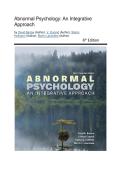
Abnormal Psychology: An Integrative
Approach
by David Barlow (Author), V. Durand (Author), Stefan
Hofmann (Author), Martin Lalumière (Author)
6th Edition
,TABLE OF CONTENTS
Chapter 1 Abnormal Behaviour in Historical Context
Chapter 2 An Integrative Approach to Psychopathology
Chapter 3 Clinical Assessment and Diagnosis
Chapter 4 Research Methods
Chapter 5 Anxiety
Chapter 6 Preoccupation and Obsession
Chapter 7 Trauma and Dissociation
Chapter 8 Mood
Chapter 9 Eating
Chapter 10 Sleeping
Chapter 11 Sex and Gender
Chapter 12 Substance Use and Impulse Control
Chapter 13 Personality
Chapter 14 Psychosis
Chapter 15 Neurodevelopment
Chapter 16 Aging and Neurocognition
Chapter 17 Mental Health and the Law
,TEST BANK
Abnormal Psychology: An Integrative Approach, 6th Canadian
Edition (Barlow, 2021)
CHAPTER 1: ABNORMAL BEHAVIOUR IN HISTORICAL CONTEXT
Multiple Choice Questions
1. Which of the following is NOT one of the criteria used to define abnormal behaviour?
a) Personal distress
b) Violation of social norms
c) Statistical infrequency
d) All of the above ARE criteria used to define abnormal behaviour
Answer: d
Difficulty: Easy
Learning Objective: Define psychological disorder and describe the criteria used to identify abnormal
behaviour.
Page Reference: Chapter 1, Section 1.1
Topic: Defining Abnormality
2. The term "psychological disorder" refers to:
a) Any behaviour that is statistically rare
b) A psychological dysfunction associated with distress or impairment in functioning that is not a
typical or culturally expected response
c) Behaviour that violates social norms
d) Any condition listed in the DSM
Answer: b
Difficulty: Moderate
Learning Objective: Define psychological disorder.
Page Reference: Chapter 1, Section 1.1
Topic: Defining Psychological Disorder
3. Jody experiences intense fear every time she sees a spider, even a photograph of one. She avoids
going to parks, basements, and garages. Her fear causes her significant distress and interferes with her
, daily life. Jody's behaviour would BEST be described as:
a) Eccentric but not abnormal
b) A normal response to a dangerous stimulus
c) A psychological dysfunction that is associated with distress and impairment
d) Statistically rare and therefore abnormal
Answer: c
Difficulty: Applied
Learning Objective: Apply criteria for defining abnormality.
Page Reference: Chapter 1, Section 1.1
Topic: Defining Abnormality
4. Which historical figure is associated with the humoral theory of disorders?
a) Plato
b) Hippocrates
c) Galen
d) Aristotle
Answer: b
Difficulty: Easy
Learning Objective: Describe historical conceptions of abnormal behaviour.
Page Reference: Chapter 1, Section 1.2
Topic: Historical Conceptions—The Biological Tradition
5. According to the humoral theory, an excess of black bile was believed to cause:
a) Anger and irritability
b) An unstable temperament
c) Melancholia (depression)
d) A sluggish and calm disposition
Answer: c
Difficulty: Moderate
Learning Objective: Describe the humoral theory of psychopathology.
Page Reference: Chapter 1, Section 1.2
Topic: The Biological Tradition
6. During the Middle Ages, abnormal behaviour was most commonly attributed to:
a) Brain pathology
b) Demonic possession and witchcraft
c) Unconscious conflicts
d) Chemical imbalances
Approach
by David Barlow (Author), V. Durand (Author), Stefan
Hofmann (Author), Martin Lalumière (Author)
6th Edition
,TABLE OF CONTENTS
Chapter 1 Abnormal Behaviour in Historical Context
Chapter 2 An Integrative Approach to Psychopathology
Chapter 3 Clinical Assessment and Diagnosis
Chapter 4 Research Methods
Chapter 5 Anxiety
Chapter 6 Preoccupation and Obsession
Chapter 7 Trauma and Dissociation
Chapter 8 Mood
Chapter 9 Eating
Chapter 10 Sleeping
Chapter 11 Sex and Gender
Chapter 12 Substance Use and Impulse Control
Chapter 13 Personality
Chapter 14 Psychosis
Chapter 15 Neurodevelopment
Chapter 16 Aging and Neurocognition
Chapter 17 Mental Health and the Law
,TEST BANK
Abnormal Psychology: An Integrative Approach, 6th Canadian
Edition (Barlow, 2021)
CHAPTER 1: ABNORMAL BEHAVIOUR IN HISTORICAL CONTEXT
Multiple Choice Questions
1. Which of the following is NOT one of the criteria used to define abnormal behaviour?
a) Personal distress
b) Violation of social norms
c) Statistical infrequency
d) All of the above ARE criteria used to define abnormal behaviour
Answer: d
Difficulty: Easy
Learning Objective: Define psychological disorder and describe the criteria used to identify abnormal
behaviour.
Page Reference: Chapter 1, Section 1.1
Topic: Defining Abnormality
2. The term "psychological disorder" refers to:
a) Any behaviour that is statistically rare
b) A psychological dysfunction associated with distress or impairment in functioning that is not a
typical or culturally expected response
c) Behaviour that violates social norms
d) Any condition listed in the DSM
Answer: b
Difficulty: Moderate
Learning Objective: Define psychological disorder.
Page Reference: Chapter 1, Section 1.1
Topic: Defining Psychological Disorder
3. Jody experiences intense fear every time she sees a spider, even a photograph of one. She avoids
going to parks, basements, and garages. Her fear causes her significant distress and interferes with her
, daily life. Jody's behaviour would BEST be described as:
a) Eccentric but not abnormal
b) A normal response to a dangerous stimulus
c) A psychological dysfunction that is associated with distress and impairment
d) Statistically rare and therefore abnormal
Answer: c
Difficulty: Applied
Learning Objective: Apply criteria for defining abnormality.
Page Reference: Chapter 1, Section 1.1
Topic: Defining Abnormality
4. Which historical figure is associated with the humoral theory of disorders?
a) Plato
b) Hippocrates
c) Galen
d) Aristotle
Answer: b
Difficulty: Easy
Learning Objective: Describe historical conceptions of abnormal behaviour.
Page Reference: Chapter 1, Section 1.2
Topic: Historical Conceptions—The Biological Tradition
5. According to the humoral theory, an excess of black bile was believed to cause:
a) Anger and irritability
b) An unstable temperament
c) Melancholia (depression)
d) A sluggish and calm disposition
Answer: c
Difficulty: Moderate
Learning Objective: Describe the humoral theory of psychopathology.
Page Reference: Chapter 1, Section 1.2
Topic: The Biological Tradition
6. During the Middle Ages, abnormal behaviour was most commonly attributed to:
a) Brain pathology
b) Demonic possession and witchcraft
c) Unconscious conflicts
d) Chemical imbalances


