
Page 1 of 106
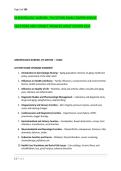
GERONTOLOGIC NURSING, 7th EDITION EXAM COMPREHENSIVE
QUESTIONS AND CORRECT ANSWERS LATEST EDITION 2026
GERONTOLOGIC NURSING, 7th EDITION — EXAM
10-POINT EXAM COVERAGE SUMMARY
1. Introduction to Gerontologic Nursing – Aging population, theories of aging, healthcare
policy, assessment of the older adult
2. Influences on Health and Illness – Family influences, socioeconomic and environmental
factors, health promotion and illness prevention
3. Influences on Quality of Life – Nutrition, sleep and activity, safety, sexuality and aging,
pain, infection and inflammation
4. Diagnostic Studies and Pharmacologic Management – Laboratory and diagnostic tests,
drugs and aging, polypharmacy, deprescribing
5. Integumentary and Sensory Function – Skin integrity, pressure injuries, wound care,
vision and hearing changes
6. Cardiovascular and Respiratory Function – Hypertension, heart failure, COPD,
pneumonia, oxygen therapy
7. Gastrointestinal and Urinary Function – Constipation, bowel obstruction, urinary tract
infections, incontinence, renal function
8. Musculoskeletal and Neurologic Function – Osteoarthritis, osteoporosis, fractures, falls,
dementia, delirium, stroke
9. Endocrine Function and Cancer – Diabetes, thyroid disorders, cancer screening,
chemotherapy, palliative care
10. Health Care Transitions and End-of-Life Issues – Care settings, chronic illness and
rehabilitation, loss, grief, hospice, advance directives
1|Page
,Page 2 of 106
SECTION 1: INTRODUCTION TO GERONTOLOGIC NURSING (30 QUESTIONS)
1. A nurse is reviewing demographic data on the aging population in the United States. Which
trend should the nurse recognize as most significant for future healthcare planning?
A) The number of adults over 65 is projected to nearly double by 2060
B) The older adult population is declining due to improved mortality
C) Most older adults live in skilled nursing facilities
D) The majority of older adults are under age 75
Rationale: The older adult population is rapidly growing; by 2060, adults over 65 are projected
to nearly double, increasing demand for gerontologic healthcare services.
2. A nurse is applying the disengagement theory of aging to understand an older adult's
behavior. Which statement best describes this theory?
A) Aging involves mutual withdrawal between the older adult and society
B) Older adults remain fully engaged in all social roles
C) Activity level is unrelated to successful aging
D) Disengagement is always pathological and should be prevented
Rationale: Disengagement theory proposes that aging involves a mutual withdrawal between
the older adult and society, though this theory has been largely replaced by activity and
continuity theories.
2|Page
,Page 3 of 106
3. A nurse is using the activity theory of aging to promote successful aging in a retirement
community. Which intervention best aligns with this theory?
A) Encouraging participation in social groups and meaningful activities
B) Discouraging social interaction to prevent overstimulation
C) Promoting isolation to allow for reflection
D) Focusing only on physical health needs
Rationale: Activity theory holds that successful aging is associated with maintaining social roles,
relationships, and meaningful activities.
4. A nurse is assessing an older adult using the comprehensive geriatric assessment. Which
domains should the nurse include in this multidimensional evaluation?
A) Physical, functional, cognitive, psychological, and social domains
B) Physical health only
C) Cognitive function only
D) Social history only
Rationale: Comprehensive geriatric assessment is multidimensional, evaluating physical health,
functional ability, cognition, psychological status, and social circumstances.
5. A nurse is assessing an older adult's functional status using the Katz Index of Independence in
Activities of Daily Living. Which activity is included in this assessment tool?
A) Bathing, dressing, toileting, transferring, continence, and feeding
B) Managing finances and shopping
C) Using the telephone and preparing meals
D) Driving and using public transportation
3|Page
, Page 4 of 106
Rationale: The Katz Index assesses basic ADLs: bathing, dressing, toileting, transferring,
continence, and feeding. IADLs are assessed separately.
6. A nurse is using the Lawton Instrumental Activities of Daily Living Scale to assess an older
adult's independence. Which activity is included in this assessment?
A) Managing medications, using the telephone, and handling finances
B) Bathing and dressing
C) Toileting and continence
D) Feeding and transferring
Rationale: The Lawton IADL Scale assesses more complex activities: using the telephone,
shopping, food preparation, housekeeping, laundry, transportation, medications, and finances.
7. A nurse is applying the continuity theory of aging to understand an older adult's adaptation
to retirement. Which statement best reflects this theory?
A) Older adults maintain consistent patterns of behavior and identity over time
B) Older adults completely abandon previous roles
C) Aging requires radical lifestyle changes
D) Continuity is impossible after retirement
Rationale: Continuity theory proposes that older adults maintain consistent patterns of
behavior, personality, and identity, adapting to aging by preserving familiar routines.
8. A nurse is assessing an older adult's nutritional status using the Mini Nutritional Assessment.
Which finding would indicate a risk for malnutrition?
A) Recent weight loss and decreased food intake
4|Page
GERONTOLOGIC NURSING, 7th EDITION EXAM COMPREHENSIVE
QUESTIONS AND CORRECT ANSWERS LATEST EDITION 2026
GERONTOLOGIC NURSING, 7th EDITION — EXAM
10-POINT EXAM COVERAGE SUMMARY
1. Introduction to Gerontologic Nursing – Aging population, theories of aging, healthcare
policy, assessment of the older adult
2. Influences on Health and Illness – Family influences, socioeconomic and environmental
factors, health promotion and illness prevention
3. Influences on Quality of Life – Nutrition, sleep and activity, safety, sexuality and aging,
pain, infection and inflammation
4. Diagnostic Studies and Pharmacologic Management – Laboratory and diagnostic tests,
drugs and aging, polypharmacy, deprescribing
5. Integumentary and Sensory Function – Skin integrity, pressure injuries, wound care,
vision and hearing changes
6. Cardiovascular and Respiratory Function – Hypertension, heart failure, COPD,
pneumonia, oxygen therapy
7. Gastrointestinal and Urinary Function – Constipation, bowel obstruction, urinary tract
infections, incontinence, renal function
8. Musculoskeletal and Neurologic Function – Osteoarthritis, osteoporosis, fractures, falls,
dementia, delirium, stroke
9. Endocrine Function and Cancer – Diabetes, thyroid disorders, cancer screening,
chemotherapy, palliative care
10. Health Care Transitions and End-of-Life Issues – Care settings, chronic illness and
rehabilitation, loss, grief, hospice, advance directives
1|Page
,Page 2 of 106
SECTION 1: INTRODUCTION TO GERONTOLOGIC NURSING (30 QUESTIONS)
1. A nurse is reviewing demographic data on the aging population in the United States. Which
trend should the nurse recognize as most significant for future healthcare planning?
A) The number of adults over 65 is projected to nearly double by 2060
B) The older adult population is declining due to improved mortality
C) Most older adults live in skilled nursing facilities
D) The majority of older adults are under age 75
Rationale: The older adult population is rapidly growing; by 2060, adults over 65 are projected
to nearly double, increasing demand for gerontologic healthcare services.
2. A nurse is applying the disengagement theory of aging to understand an older adult's
behavior. Which statement best describes this theory?
A) Aging involves mutual withdrawal between the older adult and society
B) Older adults remain fully engaged in all social roles
C) Activity level is unrelated to successful aging
D) Disengagement is always pathological and should be prevented
Rationale: Disengagement theory proposes that aging involves a mutual withdrawal between
the older adult and society, though this theory has been largely replaced by activity and
continuity theories.
2|Page
,Page 3 of 106
3. A nurse is using the activity theory of aging to promote successful aging in a retirement
community. Which intervention best aligns with this theory?
A) Encouraging participation in social groups and meaningful activities
B) Discouraging social interaction to prevent overstimulation
C) Promoting isolation to allow for reflection
D) Focusing only on physical health needs
Rationale: Activity theory holds that successful aging is associated with maintaining social roles,
relationships, and meaningful activities.
4. A nurse is assessing an older adult using the comprehensive geriatric assessment. Which
domains should the nurse include in this multidimensional evaluation?
A) Physical, functional, cognitive, psychological, and social domains
B) Physical health only
C) Cognitive function only
D) Social history only
Rationale: Comprehensive geriatric assessment is multidimensional, evaluating physical health,
functional ability, cognition, psychological status, and social circumstances.
5. A nurse is assessing an older adult's functional status using the Katz Index of Independence in
Activities of Daily Living. Which activity is included in this assessment tool?
A) Bathing, dressing, toileting, transferring, continence, and feeding
B) Managing finances and shopping
C) Using the telephone and preparing meals
D) Driving and using public transportation
3|Page
, Page 4 of 106
Rationale: The Katz Index assesses basic ADLs: bathing, dressing, toileting, transferring,
continence, and feeding. IADLs are assessed separately.
6. A nurse is using the Lawton Instrumental Activities of Daily Living Scale to assess an older
adult's independence. Which activity is included in this assessment?
A) Managing medications, using the telephone, and handling finances
B) Bathing and dressing
C) Toileting and continence
D) Feeding and transferring
Rationale: The Lawton IADL Scale assesses more complex activities: using the telephone,
shopping, food preparation, housekeeping, laundry, transportation, medications, and finances.
7. A nurse is applying the continuity theory of aging to understand an older adult's adaptation
to retirement. Which statement best reflects this theory?
A) Older adults maintain consistent patterns of behavior and identity over time
B) Older adults completely abandon previous roles
C) Aging requires radical lifestyle changes
D) Continuity is impossible after retirement
Rationale: Continuity theory proposes that older adults maintain consistent patterns of
behavior, personality, and identity, adapting to aging by preserving familiar routines.
8. A nurse is assessing an older adult's nutritional status using the Mini Nutritional Assessment.
Which finding would indicate a risk for malnutrition?
A) Recent weight loss and decreased food intake
4|Page


