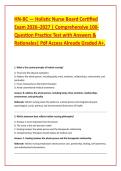
HN-BC — Holistic Nurse Board Certified
Exam 2026–2027 | Comprehensive 100-
Question Practice Test with Answers &
Rationales| Pdf Access Already Graded A+.
1. What is the central principle of holistic nursing?
A. Treat only the physical symptoms
B. Address the whole person, including body, mind, emotions, relationships, environment, and
spirituality
C. Focus exclusively on alternative therapies
D. Avoid conventional medical treatments
Answer: B. Address the whole person, including body, mind, emotions, relationships,
environment, and spirituality
Rationale: Holistic nursing views the patient as a whole person and integrates physical,
psychological, social, spiritual, and environmental dimensions of health.
2. Which statement best reflects holistic nursing philosophy?
A. Disease is more important than the person
B. The nurse is the sole decision-maker
C. Healing involves the whole person and the therapeutic relationship
D. Complementary therapies should replace all medical care
Answer: C. Healing involves the whole person and the therapeutic relationship
Rationale: Holistic nursing emphasizes whole-person care, partnership, healing, self-awareness,
and individualized interventions.
,3. A holistic nurse begins an assessment by asking the patient about personal health goals.
What principle is demonstrated?
A. Patient-centered care
B. Paternalism
C. Task-centered care
D. Disease-centered care
Answer: A. Patient-centered care
Rationale: Patient-centered care recognizes the patient's values, preferences, goals, beliefs, and
priorities.
4. Which nursing action best demonstrates presence?
A. Completing documentation while the patient speaks
B. Listening attentively without unnecessary interruption
C. Planning the next patient's care during the conversation
D. Avoiding eye contact
Answer: B. Listening attentively without unnecessary interruption
Rationale: Therapeutic presence involves being fully attentive and emotionally available to the
patient.
5. A patient says, "I'm afraid of what my diagnosis means." Which response is most
therapeutic?
A. "Don't worry; everything will be fine."
B. "You shouldn't think negatively."
C. "Tell me more about what concerns you most."
D. "The physician can answer that."
Answer: C. "Tell me more about what concerns you most."
Rationale: Open-ended communication allows the patient to express concerns and helps the
nurse understand the patient's emotional experience.
6. Which concept is foundational to therapeutic nurse-patient relationships?
,A. Authentic presence
B. Emotional detachment
C. Nurse control
D. Rapid communication
Answer: A. Authentic presence
Rationale: Authentic presence promotes trust, connection, empathy, and therapeutic
communication.
7. A holistic nurse practices mindfulness before entering a patient's room. What is the primary
purpose?
A. Increase paperwork efficiency
B. Promote self-awareness and focused presence
C. Avoid patient interaction
D. Eliminate all emotions
Answer: B. Promote self-awareness and focused presence
Rationale: Mindfulness can help nurses become more aware of thoughts, emotions, and
reactions so they can remain present with patients.
8. Which practice is most consistent with mindfulness?
A. Focusing attention on the present moment without judgment
B. Suppressing every thought
C. Multitasking continuously
D. Predicting future events
Answer: A. Focusing attention on the present moment without judgment
Rationale: Mindfulness involves intentional awareness of present experiences without
automatically judging them.
9. A nurse notices feeling frustrated with a patient. What is the best initial action?
A. Blame the patient
B. Recognize and reflect on the emotion before responding
, C. Immediately terminate the relationship
D. Ignore the emotion completely
Answer: B. Recognize and reflect on the emotion before responding
Rationale: Self-awareness helps nurses recognize personal reactions and prevent them from
interfering with therapeutic care.
10. Which concept refers to recognizing one's own thoughts, emotions, values, and biases?
A. Self-awareness
B. Projection
C. Avoidance
D. Countertransference
Answer: A. Self-awareness
Rationale: Self-awareness is essential to therapeutic practice because it helps nurses recognize
how their internal experiences may affect patient interactions.
11. Which assessment is most consistent with holistic nursing?
A. Vital signs only
B. Physical, emotional, social, spiritual, cultural, and environmental factors
C. Medication list only
D. Laboratory values only
Answer: B. Physical, emotional, social, spiritual, cultural, and environmental factors
Rationale: Holistic assessment considers multiple dimensions of health rather than focusing
only on disease.
12. A patient reports that family relationships strongly influence their health. Which domain
is being assessed?
A. Social
B. Respiratory
C. Neurologic
D. Hematologic
Exam 2026–2027 | Comprehensive 100-
Question Practice Test with Answers &
Rationales| Pdf Access Already Graded A+.
1. What is the central principle of holistic nursing?
A. Treat only the physical symptoms
B. Address the whole person, including body, mind, emotions, relationships, environment, and
spirituality
C. Focus exclusively on alternative therapies
D. Avoid conventional medical treatments
Answer: B. Address the whole person, including body, mind, emotions, relationships,
environment, and spirituality
Rationale: Holistic nursing views the patient as a whole person and integrates physical,
psychological, social, spiritual, and environmental dimensions of health.
2. Which statement best reflects holistic nursing philosophy?
A. Disease is more important than the person
B. The nurse is the sole decision-maker
C. Healing involves the whole person and the therapeutic relationship
D. Complementary therapies should replace all medical care
Answer: C. Healing involves the whole person and the therapeutic relationship
Rationale: Holistic nursing emphasizes whole-person care, partnership, healing, self-awareness,
and individualized interventions.
,3. A holistic nurse begins an assessment by asking the patient about personal health goals.
What principle is demonstrated?
A. Patient-centered care
B. Paternalism
C. Task-centered care
D. Disease-centered care
Answer: A. Patient-centered care
Rationale: Patient-centered care recognizes the patient's values, preferences, goals, beliefs, and
priorities.
4. Which nursing action best demonstrates presence?
A. Completing documentation while the patient speaks
B. Listening attentively without unnecessary interruption
C. Planning the next patient's care during the conversation
D. Avoiding eye contact
Answer: B. Listening attentively without unnecessary interruption
Rationale: Therapeutic presence involves being fully attentive and emotionally available to the
patient.
5. A patient says, "I'm afraid of what my diagnosis means." Which response is most
therapeutic?
A. "Don't worry; everything will be fine."
B. "You shouldn't think negatively."
C. "Tell me more about what concerns you most."
D. "The physician can answer that."
Answer: C. "Tell me more about what concerns you most."
Rationale: Open-ended communication allows the patient to express concerns and helps the
nurse understand the patient's emotional experience.
6. Which concept is foundational to therapeutic nurse-patient relationships?
,A. Authentic presence
B. Emotional detachment
C. Nurse control
D. Rapid communication
Answer: A. Authentic presence
Rationale: Authentic presence promotes trust, connection, empathy, and therapeutic
communication.
7. A holistic nurse practices mindfulness before entering a patient's room. What is the primary
purpose?
A. Increase paperwork efficiency
B. Promote self-awareness and focused presence
C. Avoid patient interaction
D. Eliminate all emotions
Answer: B. Promote self-awareness and focused presence
Rationale: Mindfulness can help nurses become more aware of thoughts, emotions, and
reactions so they can remain present with patients.
8. Which practice is most consistent with mindfulness?
A. Focusing attention on the present moment without judgment
B. Suppressing every thought
C. Multitasking continuously
D. Predicting future events
Answer: A. Focusing attention on the present moment without judgment
Rationale: Mindfulness involves intentional awareness of present experiences without
automatically judging them.
9. A nurse notices feeling frustrated with a patient. What is the best initial action?
A. Blame the patient
B. Recognize and reflect on the emotion before responding
, C. Immediately terminate the relationship
D. Ignore the emotion completely
Answer: B. Recognize and reflect on the emotion before responding
Rationale: Self-awareness helps nurses recognize personal reactions and prevent them from
interfering with therapeutic care.
10. Which concept refers to recognizing one's own thoughts, emotions, values, and biases?
A. Self-awareness
B. Projection
C. Avoidance
D. Countertransference
Answer: A. Self-awareness
Rationale: Self-awareness is essential to therapeutic practice because it helps nurses recognize
how their internal experiences may affect patient interactions.
11. Which assessment is most consistent with holistic nursing?
A. Vital signs only
B. Physical, emotional, social, spiritual, cultural, and environmental factors
C. Medication list only
D. Laboratory values only
Answer: B. Physical, emotional, social, spiritual, cultural, and environmental factors
Rationale: Holistic assessment considers multiple dimensions of health rather than focusing
only on disease.
12. A patient reports that family relationships strongly influence their health. Which domain
is being assessed?
A. Social
B. Respiratory
C. Neurologic
D. Hematologic