
Terms Values Examples fluid and electrolytes 155 2026/2027 (Answered)
Terms / Values / Examples fluid and electrolytes 155
Study online at https://quizlet.com/_hm5llz
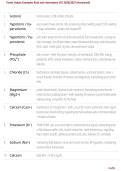
1. isotonic normal saline ; 0.9% sodium chloride
2. hypotonic / hy- excess water moves into the cells, producing cellular swelling, expect SOB, swelling
pervolemic to lower extremities, crackles and elevated BP
3. hypertonic / hy- pulls water away from the cell to the extracellular fluid compartment, causing cel-
povolemic lular shrinkage ; loss of electrolytes, expect decreased skin turgor and tachycardia,
thirst, rapid + weak pulse, dry skin, decreased urine output
4. Phosphate aids in bone + teeth formation/ strength, cell membranes, DNA, RNA, energy
(PO₄³⁻) production (ATP), cellular metabolism, cellular communication, carbohydrate me-
tabolism
5. Chloride (Cl-) fluid balance, electrolyte balance, cellular function, acid-base balance, nerve +
muscle function, formation of stomach acid (digestion), maintaining serum osmo-
larity
6. Magnesium protect blood vessels, improve insulin resistance, maintaining normal muscle +
(Mg2+) nerve function, building bones + teeth, keeping the immune system healthy while
making energy and protein for the body
7. Calcium (Ca2+) maintenance of strong bones + teeth, crucial for muscle contraction, nerve signal
transmission, blood clotting, regulating normal heartbeat, aids in hormone release
+ enzyme activation
8. Potassium (K+) THINK HEART ;acts as an electrolyte to conduct electrical signals, maintaining prop-
er fluid balance within cells, muscle contraction, nerve transmission, regulating
heart rhythm and BP, synthesize proteins and carbs, maintain ICF osmolality
9. Sodium (Na+) maintaining fluid balance, nerve and muscle function, BP regulation, maintaining
normal cellular homeostasis
10. Calcium Both M/F = 9-10.5 mg/dL
1/6
1 of 6
, Terms Values Examples fluid and electrolytes 155 2026/2027 (Answered)
Terms / Values / Examples fluid and electrolytes 155
Study online at https://quizlet.com/_hm5llz
11. Potassium Both M/F = 3.5-5 mEq/L
12. Sodium Both M/F = 135-145 mEq/L
13. Glucose Both M/F = 70-110 mg/dL
14. blood urea nitro- Both M/F = 10-20 mg/dL
gen (BUN)
15. Magnesium Both M/F Serum = 1.5-2.5 mEq/L
Therapeutic ( on mg therapy) = 3.3-6.6 mEq/L
16. Phosphorus Both M/F = 2-4.5 mEq/L
17. Troponin I Both M/F = 0-0.1 ng/mL
Onset = 4-6 hrs
Peak = 10-24 hrs
Return to normal = 10-14 days
18. Specific Gravity Both M/F = 1.005-1.030
19. Albumin (protein) 24 hrs at rest = 50-80mg
24 hrs after exercise = <250mg
20. Hematocrit (Hct) M = 42%-52%
F = 37%-47%
21. Hemoglobin M = 14-18 g/dL
(Hgb) F = 12-16 g/dL
22. White Blood Cell Both M/F = 5-10 mm^3
(WBC)
23. Platelet Count Both M/F = 150-400 mm^3
(PLT)
2/6
2 of 6
Terms / Values / Examples fluid and electrolytes 155
Study online at https://quizlet.com/_hm5llz
1. isotonic normal saline ; 0.9% sodium chloride
2. hypotonic / hy- excess water moves into the cells, producing cellular swelling, expect SOB, swelling
pervolemic to lower extremities, crackles and elevated BP
3. hypertonic / hy- pulls water away from the cell to the extracellular fluid compartment, causing cel-
povolemic lular shrinkage ; loss of electrolytes, expect decreased skin turgor and tachycardia,
thirst, rapid + weak pulse, dry skin, decreased urine output
4. Phosphate aids in bone + teeth formation/ strength, cell membranes, DNA, RNA, energy
(PO₄³⁻) production (ATP), cellular metabolism, cellular communication, carbohydrate me-
tabolism
5. Chloride (Cl-) fluid balance, electrolyte balance, cellular function, acid-base balance, nerve +
muscle function, formation of stomach acid (digestion), maintaining serum osmo-
larity
6. Magnesium protect blood vessels, improve insulin resistance, maintaining normal muscle +
(Mg2+) nerve function, building bones + teeth, keeping the immune system healthy while
making energy and protein for the body
7. Calcium (Ca2+) maintenance of strong bones + teeth, crucial for muscle contraction, nerve signal
transmission, blood clotting, regulating normal heartbeat, aids in hormone release
+ enzyme activation
8. Potassium (K+) THINK HEART ;acts as an electrolyte to conduct electrical signals, maintaining prop-
er fluid balance within cells, muscle contraction, nerve transmission, regulating
heart rhythm and BP, synthesize proteins and carbs, maintain ICF osmolality
9. Sodium (Na+) maintaining fluid balance, nerve and muscle function, BP regulation, maintaining
normal cellular homeostasis
10. Calcium Both M/F = 9-10.5 mg/dL
1/6
1 of 6
, Terms Values Examples fluid and electrolytes 155 2026/2027 (Answered)
Terms / Values / Examples fluid and electrolytes 155
Study online at https://quizlet.com/_hm5llz
11. Potassium Both M/F = 3.5-5 mEq/L
12. Sodium Both M/F = 135-145 mEq/L
13. Glucose Both M/F = 70-110 mg/dL
14. blood urea nitro- Both M/F = 10-20 mg/dL
gen (BUN)
15. Magnesium Both M/F Serum = 1.5-2.5 mEq/L
Therapeutic ( on mg therapy) = 3.3-6.6 mEq/L
16. Phosphorus Both M/F = 2-4.5 mEq/L
17. Troponin I Both M/F = 0-0.1 ng/mL
Onset = 4-6 hrs
Peak = 10-24 hrs
Return to normal = 10-14 days
18. Specific Gravity Both M/F = 1.005-1.030
19. Albumin (protein) 24 hrs at rest = 50-80mg
24 hrs after exercise = <250mg
20. Hematocrit (Hct) M = 42%-52%
F = 37%-47%
21. Hemoglobin M = 14-18 g/dL
(Hgb) F = 12-16 g/dL
22. White Blood Cell Both M/F = 5-10 mm^3
(WBC)
23. Platelet Count Both M/F = 150-400 mm^3
(PLT)
2/6
2 of 6


