NUR 155 Exam 1 QA
NUR 155 Exam 1
Study online at https://quizlet.com/_9pm207
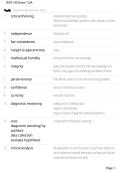
1. critical thinking intentional higher level reasoning;
influenced by knowledge, experience, skills, attitudes, and inter-
personal skills
2. independence thinking for self
3. fair-mindedness assess all viewpoints
4. insight to egocentricity biases
5. intellectual humility knowing limit of one's own knowledge
6. integrity apply same standards of proof to their own knowledge and
beliefs as they apply to the knowledge and beliefs of others
7. perserverance find effective solutions to the client and nursing problems
8. confidence leads to trustworthy conclusions
9. curiosity mind full of questions
10. diagnostic reasoning making sense of collected data;
requires critical thinking;
requires creation of diagnostic (working) hypothesis
11. cues 4 components of diagnostic reasoning
diagnostic (working) hy-
pothesis
data collection
evaluate hypothesis
12. critical analysis the application of a set of questions to a particular situation or
idea to determine essential information and ideas and discard
unimportant information and ideas
Page 1
, NUR 155 Exam 1 QA
NUR 155 Exam 1
Study online at https://quizlet.com/_9pm207
13. socratic questioning technique to look beneath the surface, recognize and examine
assumptions, search for inconsistencies, examine multiple POVs,
and differentiate what one knows vs what one believes
14. inductive reasoning generalizations formed from a set of facts/observations
15. deductive reasoning reasoning from general premise to the specific conclusion
16. trial and error least effective problem solving technique;
number of approaches are tried until a solution is found
17. intuition problem-solving approach that relies on a nurse's inner sense
(6th sense)
18. research process formalized, logical, systematic approach to problem solving
19. nursing process systematic, rational method of planning and providing individu-
alized nursing care
identify health status and potential health care problems or
needs and deliver intervention to meet needs
20. subjective data symptoms patient says
(type of data?)
21. objective data signs nurse observes and measures
(type of data?)
22. primary source information that comes from the patient
(what type of source?)
23. secondary source information from the patient's family about the patient
(what type of source?)
24. nursing process- diagnosis
Page 2
, NUR 155 Exam 1 QA
NUR 155 Exam 1
Study online at https://quizlet.com/_9pm207
clinical judgement about actual or potential health problems;
describe human response to a problem that requires nursing
intervention;
standardized statement about health of patient
25. actual diagnosis patient problem that is present at the time of the nursing assess-
ment
(what type of diagnosis?)
26. risk diagnosis conditions that exist for problem to develop
(what type of diagnosis?)
27. health promotion diagnosis relates to clients' preparedness to implement behaviors to im-
prove their health condition
(what type of diagnosis?)
28. syndrome diagnosis clinical judgement to describe a cluster of nursing diagnoses with
similar interventions
(what type of diagnosis?)
29. medical diagnoses clinical judgement by physician to identify specific disease, con-
dition, or pathological state
30. nursing diagnoses clinical judgement identifying a client's response to a health state,
problem, or condition
31. nursing diagnosis activity intolerance
(nursing or medical diagnosis?)
32. medical diagnosis myocardial infarction
(nursing or medical diagnosis?)
33. actual
Page 3
NUR 155 Exam 1
Study online at https://quizlet.com/_9pm207
1. critical thinking intentional higher level reasoning;
influenced by knowledge, experience, skills, attitudes, and inter-
personal skills
2. independence thinking for self
3. fair-mindedness assess all viewpoints
4. insight to egocentricity biases
5. intellectual humility knowing limit of one's own knowledge
6. integrity apply same standards of proof to their own knowledge and
beliefs as they apply to the knowledge and beliefs of others
7. perserverance find effective solutions to the client and nursing problems
8. confidence leads to trustworthy conclusions
9. curiosity mind full of questions
10. diagnostic reasoning making sense of collected data;
requires critical thinking;
requires creation of diagnostic (working) hypothesis
11. cues 4 components of diagnostic reasoning
diagnostic (working) hy-
pothesis
data collection
evaluate hypothesis
12. critical analysis the application of a set of questions to a particular situation or
idea to determine essential information and ideas and discard
unimportant information and ideas
Page 1
, NUR 155 Exam 1 QA
NUR 155 Exam 1
Study online at https://quizlet.com/_9pm207
13. socratic questioning technique to look beneath the surface, recognize and examine
assumptions, search for inconsistencies, examine multiple POVs,
and differentiate what one knows vs what one believes
14. inductive reasoning generalizations formed from a set of facts/observations
15. deductive reasoning reasoning from general premise to the specific conclusion
16. trial and error least effective problem solving technique;
number of approaches are tried until a solution is found
17. intuition problem-solving approach that relies on a nurse's inner sense
(6th sense)
18. research process formalized, logical, systematic approach to problem solving
19. nursing process systematic, rational method of planning and providing individu-
alized nursing care
identify health status and potential health care problems or
needs and deliver intervention to meet needs
20. subjective data symptoms patient says
(type of data?)
21. objective data signs nurse observes and measures
(type of data?)
22. primary source information that comes from the patient
(what type of source?)
23. secondary source information from the patient's family about the patient
(what type of source?)
24. nursing process- diagnosis
Page 2
, NUR 155 Exam 1 QA
NUR 155 Exam 1
Study online at https://quizlet.com/_9pm207
clinical judgement about actual or potential health problems;
describe human response to a problem that requires nursing
intervention;
standardized statement about health of patient
25. actual diagnosis patient problem that is present at the time of the nursing assess-
ment
(what type of diagnosis?)
26. risk diagnosis conditions that exist for problem to develop
(what type of diagnosis?)
27. health promotion diagnosis relates to clients' preparedness to implement behaviors to im-
prove their health condition
(what type of diagnosis?)
28. syndrome diagnosis clinical judgement to describe a cluster of nursing diagnoses with
similar interventions
(what type of diagnosis?)
29. medical diagnoses clinical judgement by physician to identify specific disease, con-
dition, or pathological state
30. nursing diagnoses clinical judgement identifying a client's response to a health state,
problem, or condition
31. nursing diagnosis activity intolerance
(nursing or medical diagnosis?)
32. medical diagnosis myocardial infarction
(nursing or medical diagnosis?)
33. actual
Page 3