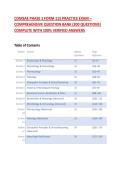
COMSAE PHASE 1 FORM 115 PRACTICE EXAM –
COMPREHENSIVE QUESTION BANK (200 QUESTIONS)
COMPLETE WITH 100% VERIFIED ANSWERS
Table of Contents
Section Domain Approx. Page
Questions Reference
Section 1 Biochemistry & Physiology 15 Q1–15
Section 2 Microbiology & Immunology 15 Q16–30
Section 3 Pharmacology 15 Q31–45
Section 4 Pathology 15 Q46–60
Section 5 Osteopathic Principles & Clinical Reasoning 10 Q61–70
Section 6 Anatomy, Embryology & Histology 15 Q71–85
Section 7 Behavioral Science, Biostatistics & Ethics 15 Q86–100
Section 8 Biochemistry & Physiology (Advanced) 15 Q101–115
Section 9 Microbiology & Immunology (Advanced) 15 Q116–130
Section Pharmacology (Advanced) 15 Q131–145
10
Section Pathology (Advanced) 15 Q146–160
11
Section Osteopathic Principles & Clinical Reasoning 10 Q161–170
12 (Advanced)
Section Mixed High-Yield Review 30 Q171–200
13
,Section 1: Biochemistry & Physiology
1. A 4-year-old boy is brought to the clinic due to progressive
muscle weakness and delayed motor development. Physical
exam reveals hypotonia and pseudohypertrophy of the calves.
Genetic testing confirms a mutation in the dystrophin gene.
Which of the following biochemical processes is most directly
impaired in this patient?
A) Glycolysis
B) Oxidative phosphorylation
C) Cytoskeletal anchoring
D) Protein glycosylation
Correct Answer: C) Cytoskeletal anchoring
Rationale: Duchenne muscular dystrophy is caused by a
mutation in the dystrophin gene, which encodes a protein
essential for linking the actin cytoskeleton to the extracellular
matrix. This impairment leads to muscle fiber instability and
degeneration.
2. A 45-year-old male presents with severe dehydration and
metabolic acidosis. Laboratory tests reveal hyperkalemia and a
urine pH of 5.5. Which of the following renal tubular defects is
most likely present?
A) Proximal convoluted tubule dysfunction
B) Thick ascending limb Na-K-2Cl cotransporter defect
,C) Distal convoluted tubule Na-Cl cotransporter defect
D) Collecting duct aldosterone resistance
Correct Answer: A) Proximal convoluted tubule dysfunction
Rationale: Proximal renal tubular acidosis (Type 2 RTA) is
characterized by impaired bicarbonate reabsorption in the
proximal tubule, leading to metabolic acidosis. The ability to
acidify urine in the distal tubule remains intact, resulting in a
urine pH < 5.5.
3. A 30-year-old female presents with palpitations and weight
loss. She is diagnosed with hyperthyroidism. Which of the
following mechanisms best explains the increased metabolic
rate in this patient?
A) Upregulation of Na-K ATPase pumps
B) Increased mitochondrial uncoupling protein activity
C) Enhanced glycolysis in the cytoplasm
D) Increased ketone body production
Correct Answer: A) Upregulation of Na-K ATPase pumps
Rationale: Thyroid hormone increases transcription of the Na-K
ATPase gene, leading to increased ATP consumption and heat
production. This is a primary driver of increased basal metabolic
rate.
4. During a biochemistry lab, a student isolates a newly
synthesized polypeptide. Analysis reveals that it contains a
high proportion of hydrophobic amino acids. Where is this
, protein most likely to be located within the cell?
A) Cytosol
B) Mitochondrial matrix
C) Nucleus
D) Plasma membrane
Correct Answer: D) Plasma membrane
Rationale: Proteins with a high proportion of hydrophobic
amino acids are typically integral membrane proteins, allowing
them to interact with the lipid bilayer.
5. A 52-year-old male with a history of alcohol abuse presents
with confusion and ataxia. MRI reveals symmetric lesions in
the mammillary bodies. Which of the following enzymes is
most likely deficient in this patient?
A) Pyruvate dehydrogenase
B) Thiamine pyrophosphate-dependent enzymes
C) Biotin-dependent carboxylases
D) Vitamin B12-dependent methylmalonyl-CoA mutase
Correct Answer: B) Thiamine pyrophosphate-dependent
enzymes
Rationale: Wernicke encephalopathy is caused by thiamine
(Vitamin B1) deficiency. Thiamine is a cofactor for pyruvate
dehydrogenase, alpha-ketoglutarate dehydrogenase, and
transketolase.
COMPREHENSIVE QUESTION BANK (200 QUESTIONS)
COMPLETE WITH 100% VERIFIED ANSWERS
Table of Contents
Section Domain Approx. Page
Questions Reference
Section 1 Biochemistry & Physiology 15 Q1–15
Section 2 Microbiology & Immunology 15 Q16–30
Section 3 Pharmacology 15 Q31–45
Section 4 Pathology 15 Q46–60
Section 5 Osteopathic Principles & Clinical Reasoning 10 Q61–70
Section 6 Anatomy, Embryology & Histology 15 Q71–85
Section 7 Behavioral Science, Biostatistics & Ethics 15 Q86–100
Section 8 Biochemistry & Physiology (Advanced) 15 Q101–115
Section 9 Microbiology & Immunology (Advanced) 15 Q116–130
Section Pharmacology (Advanced) 15 Q131–145
10
Section Pathology (Advanced) 15 Q146–160
11
Section Osteopathic Principles & Clinical Reasoning 10 Q161–170
12 (Advanced)
Section Mixed High-Yield Review 30 Q171–200
13
,Section 1: Biochemistry & Physiology
1. A 4-year-old boy is brought to the clinic due to progressive
muscle weakness and delayed motor development. Physical
exam reveals hypotonia and pseudohypertrophy of the calves.
Genetic testing confirms a mutation in the dystrophin gene.
Which of the following biochemical processes is most directly
impaired in this patient?
A) Glycolysis
B) Oxidative phosphorylation
C) Cytoskeletal anchoring
D) Protein glycosylation
Correct Answer: C) Cytoskeletal anchoring
Rationale: Duchenne muscular dystrophy is caused by a
mutation in the dystrophin gene, which encodes a protein
essential for linking the actin cytoskeleton to the extracellular
matrix. This impairment leads to muscle fiber instability and
degeneration.
2. A 45-year-old male presents with severe dehydration and
metabolic acidosis. Laboratory tests reveal hyperkalemia and a
urine pH of 5.5. Which of the following renal tubular defects is
most likely present?
A) Proximal convoluted tubule dysfunction
B) Thick ascending limb Na-K-2Cl cotransporter defect
,C) Distal convoluted tubule Na-Cl cotransporter defect
D) Collecting duct aldosterone resistance
Correct Answer: A) Proximal convoluted tubule dysfunction
Rationale: Proximal renal tubular acidosis (Type 2 RTA) is
characterized by impaired bicarbonate reabsorption in the
proximal tubule, leading to metabolic acidosis. The ability to
acidify urine in the distal tubule remains intact, resulting in a
urine pH < 5.5.
3. A 30-year-old female presents with palpitations and weight
loss. She is diagnosed with hyperthyroidism. Which of the
following mechanisms best explains the increased metabolic
rate in this patient?
A) Upregulation of Na-K ATPase pumps
B) Increased mitochondrial uncoupling protein activity
C) Enhanced glycolysis in the cytoplasm
D) Increased ketone body production
Correct Answer: A) Upregulation of Na-K ATPase pumps
Rationale: Thyroid hormone increases transcription of the Na-K
ATPase gene, leading to increased ATP consumption and heat
production. This is a primary driver of increased basal metabolic
rate.
4. During a biochemistry lab, a student isolates a newly
synthesized polypeptide. Analysis reveals that it contains a
high proportion of hydrophobic amino acids. Where is this
, protein most likely to be located within the cell?
A) Cytosol
B) Mitochondrial matrix
C) Nucleus
D) Plasma membrane
Correct Answer: D) Plasma membrane
Rationale: Proteins with a high proportion of hydrophobic
amino acids are typically integral membrane proteins, allowing
them to interact with the lipid bilayer.
5. A 52-year-old male with a history of alcohol abuse presents
with confusion and ataxia. MRI reveals symmetric lesions in
the mammillary bodies. Which of the following enzymes is
most likely deficient in this patient?
A) Pyruvate dehydrogenase
B) Thiamine pyrophosphate-dependent enzymes
C) Biotin-dependent carboxylases
D) Vitamin B12-dependent methylmalonyl-CoA mutase
Correct Answer: B) Thiamine pyrophosphate-dependent
enzymes
Rationale: Wernicke encephalopathy is caused by thiamine
(Vitamin B1) deficiency. Thiamine is a cofactor for pyruvate
dehydrogenase, alpha-ketoglutarate dehydrogenase, and
transketolase.