
CO Boiler Contractor Exam Practice
Questions And Correct Answers
(Verified Answers) Plus Rationale 2027
Q&A| Instant Download Pdf.
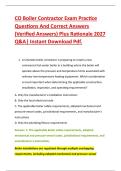
1. A Colorado boiler contractor is preparing to install a new
commercial hot-water boiler in a building where the boiler will
operate above the pressure and temperature limits associated with
ordinary low-temperature heating equipment. Which consideration
is most important when determining the applicable construction,
installation, inspection, and operating requirements?
A. Only the manufacturer's installation instructions
B. Only the local electrical code
C. The applicable boiler safety requirements, adopted mechanical and
pressure-vessel codes, jurisdictional requirements, and manufacturer's
instructions
D. Only the plumbing fixture requirements
Answer: C. The applicable boiler safety requirements, adopted
mechanical and pressure-vessel codes, jurisdictional requirements, and
manufacturer's instructions
Boiler installations are regulated through multiple overlapping
requirements, including adopted mechanical and pressure-vessel
,standards, safety rules, jurisdictional inspection requirements, and
manufacturer instructions.
2. A contractor is installing a hydronic boiler and must determine
whether the equipment is a steam boiler or a hot-water boiler.
Which characteristic correctly distinguishes the two?
A. A hot-water boiler always operates without pressure
B. A steam boiler produces steam for distribution, while a hot-water boiler
circulates heated water through the system
C. A steam boiler can never have a safety valve
D. A hot-water boiler always operates above the boiling point of water
Answer: B. A steam boiler produces steam for distribution, while a hot-
water boiler circulates heated water through the system
The fundamental distinction is the heating medium: steam boilers
produce and distribute steam, whereas hot-water boilers circulate
heated water through a closed hydronic system.
3. Before placing a newly installed boiler into service, the contractor
discovers that the pressure-relief valve has not yet been installed.
What should the contractor do?
A. Operate the boiler temporarily at half load
B. Install a manual drain valve instead
C. Complete the required safety-valve installation before operating the
boiler
D. Increase the operating pressure slowly until the system stabilizes
,Answer: C. Complete the required safety-valve installation before
operating the boiler
A properly selected and installed pressure-relief or safety valve is a
critical protection against excessive pressure and must be in place before
the boiler is placed into normal operation.
4. What is the primary function of a boiler pressure-relief valve?
A. To increase system circulation
B. To automatically release pressure when it reaches an unsafe level
C. To regulate the building thermostat
D. To remove dissolved oxygen from water
Answer: B. To automatically release pressure when it reaches an unsafe
level
The relief valve provides an automatic means of protecting the boiler
and connected equipment from dangerous overpressure conditions.
5. A boiler has a maximum allowable working pressure of 160 psi. The
contractor is selecting a safety valve for the vessel. Which principle
should govern the selection?
A. The valve should be selected without regard to the boiler rating
B. The valve set pressure and capacity must be appropriate for the boiler's
allowable pressure and required relieving capacity
C. The valve should always be set at twice the boiler's rated pressure
D. The valve should be selected solely according to pipe diameter
, Answer: B. The valve set pressure and capacity must be appropriate for
the boiler's allowable pressure and required relieving capacity
Safety-valve selection must correspond to the boiler's allowable working
pressure and provide sufficient relieving capacity to prevent unsafe
pressure accumulation.
6. During commissioning, a contractor notices that the boiler's low-
water cutoff does not respond when the water level falls below the
required operating level. What is the appropriate action?
A. Continue operating because the burner has a flame safeguard
B. Bypass the cutoff temporarily
C. Shut down the boiler and correct the low-water protection before
operation
D. Increase the system pressure
Answer: C. Shut down the boiler and correct the low-water protection
before operation
A low-water cutoff protects the boiler from dangerous operation
without adequate water, and a failed or bypassed cutoff creates a
serious safety hazard.
7. What is the primary purpose of a low-water cutoff on a steam
boiler?
A. To prevent excessive fuel pressure
B. To shut down the burner when the water level becomes dangerously
low
Questions And Correct Answers
(Verified Answers) Plus Rationale 2027
Q&A| Instant Download Pdf.
1. A Colorado boiler contractor is preparing to install a new
commercial hot-water boiler in a building where the boiler will
operate above the pressure and temperature limits associated with
ordinary low-temperature heating equipment. Which consideration
is most important when determining the applicable construction,
installation, inspection, and operating requirements?
A. Only the manufacturer's installation instructions
B. Only the local electrical code
C. The applicable boiler safety requirements, adopted mechanical and
pressure-vessel codes, jurisdictional requirements, and manufacturer's
instructions
D. Only the plumbing fixture requirements
Answer: C. The applicable boiler safety requirements, adopted
mechanical and pressure-vessel codes, jurisdictional requirements, and
manufacturer's instructions
Boiler installations are regulated through multiple overlapping
requirements, including adopted mechanical and pressure-vessel
,standards, safety rules, jurisdictional inspection requirements, and
manufacturer instructions.
2. A contractor is installing a hydronic boiler and must determine
whether the equipment is a steam boiler or a hot-water boiler.
Which characteristic correctly distinguishes the two?
A. A hot-water boiler always operates without pressure
B. A steam boiler produces steam for distribution, while a hot-water boiler
circulates heated water through the system
C. A steam boiler can never have a safety valve
D. A hot-water boiler always operates above the boiling point of water
Answer: B. A steam boiler produces steam for distribution, while a hot-
water boiler circulates heated water through the system
The fundamental distinction is the heating medium: steam boilers
produce and distribute steam, whereas hot-water boilers circulate
heated water through a closed hydronic system.
3. Before placing a newly installed boiler into service, the contractor
discovers that the pressure-relief valve has not yet been installed.
What should the contractor do?
A. Operate the boiler temporarily at half load
B. Install a manual drain valve instead
C. Complete the required safety-valve installation before operating the
boiler
D. Increase the operating pressure slowly until the system stabilizes
,Answer: C. Complete the required safety-valve installation before
operating the boiler
A properly selected and installed pressure-relief or safety valve is a
critical protection against excessive pressure and must be in place before
the boiler is placed into normal operation.
4. What is the primary function of a boiler pressure-relief valve?
A. To increase system circulation
B. To automatically release pressure when it reaches an unsafe level
C. To regulate the building thermostat
D. To remove dissolved oxygen from water
Answer: B. To automatically release pressure when it reaches an unsafe
level
The relief valve provides an automatic means of protecting the boiler
and connected equipment from dangerous overpressure conditions.
5. A boiler has a maximum allowable working pressure of 160 psi. The
contractor is selecting a safety valve for the vessel. Which principle
should govern the selection?
A. The valve should be selected without regard to the boiler rating
B. The valve set pressure and capacity must be appropriate for the boiler's
allowable pressure and required relieving capacity
C. The valve should always be set at twice the boiler's rated pressure
D. The valve should be selected solely according to pipe diameter
, Answer: B. The valve set pressure and capacity must be appropriate for
the boiler's allowable pressure and required relieving capacity
Safety-valve selection must correspond to the boiler's allowable working
pressure and provide sufficient relieving capacity to prevent unsafe
pressure accumulation.
6. During commissioning, a contractor notices that the boiler's low-
water cutoff does not respond when the water level falls below the
required operating level. What is the appropriate action?
A. Continue operating because the burner has a flame safeguard
B. Bypass the cutoff temporarily
C. Shut down the boiler and correct the low-water protection before
operation
D. Increase the system pressure
Answer: C. Shut down the boiler and correct the low-water protection
before operation
A low-water cutoff protects the boiler from dangerous operation
without adequate water, and a failed or bypassed cutoff creates a
serious safety hazard.
7. What is the primary purpose of a low-water cutoff on a steam
boiler?
A. To prevent excessive fuel pressure
B. To shut down the burner when the water level becomes dangerously
low


