
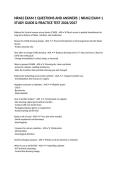
NR462 EXAM 1 QUESTIONS AND ANSWERS | NR462 EXAM 1
STUDY GUIDE & PRACTICE TEST 2026/2027
Rational for Central venous access device (CVAD) - ANS ✔✔Direct access to patient bloodstream for
long-term delivery of fluids, nutrition, and medication
Reason for CVAD dressing change - ANS ✔✔-Prevent introduction of microorganisms into the blood
stream
-Protect insertion site
How often to change CVAD dressing - ANS ✔✔-Replace dressings every 5-7 days and every 2 days for
CVAD sites with gauze
-Change immediately is soiled, damp, or loosened
Ways to prevent CLABSI - ANS ✔✔-Dressing dry, clean and intact
-Assess for redness, swelling tenderness
-Note the insertion date and date dressing was last changed
Rational for indwelling urinary foley catheter - ANS ✔✔- Hospice/comfort care
-Immobilization after trauma or surgery
Negative outcomes of catheters - ANS ✔✔-Bladder spasm
-CAUTI
-Bacteremia
-Phylenophritis
How is sterility broken? - ANS ✔✔-Turning back on supplies
-Not cleaning vagina/penis before insertion
-Contact with non sterile items
-Packaging (replace gloves or equipment)
-Avoid touching sterile field
Reduce risk of cauti - ANS ✔✔-Use only when needed
-Sterile equipment and technique
-Hand hygiene
3 reasons for urinary retention - ANS ✔✔-Obstruction
-Inflammation
-Neurological disorders
Sterile technique purpose - ANS ✔✔Reduce risk for bacteria or infection
When to use a sterile field - ANS ✔✔-Indwelling catheter
-N/T/tracheal suctioning
-Central line dressing change
, Prevent errors in sterile technique - ANS ✔✔-1 inch border is not sterile
-Do not reach over sterile field
-Do not turn your back on sterile field
-Keep items above waist level
total body water % - ANS ✔✔50-60 %
1 space shifting - ANS ✔✔normal ECF and ICF movement
2nd space shifting - ANS ✔✔Increased accumulation of interstitial fluid
EX: peripheral edema
3rd space shifting - ANS ✔✔Increased accumulation in areas with little to no fluid
EX: pleural effusion
Diagnostic tools for hydration - ANS ✔✔-Blood work
-Basic metabolic panel
-Urinalysis
-Stool sample
-ECG
Hypervolemia = - ANS ✔✔Decreased:
-Hematocrit
-Albumin
-Specific gravity level
Intakes/outakes - ANS ✔✔Intake:
Oral fluid
IV fluid
Outtake:
urine
emesis
feces
blood
ostomies
drains
wounds
Hypovolemia S/S - ANS ✔✔-LOC
-Decreased weight
-Tachycardia
-Hypotension
Hypovolemia solution - ANS ✔✔-replace H2O and electrolytes
-strict I/Os
-check weight, vs, loc
STUDY GUIDE & PRACTICE TEST 2026/2027
Rational for Central venous access device (CVAD) - ANS ✔✔Direct access to patient bloodstream for
long-term delivery of fluids, nutrition, and medication
Reason for CVAD dressing change - ANS ✔✔-Prevent introduction of microorganisms into the blood
stream
-Protect insertion site
How often to change CVAD dressing - ANS ✔✔-Replace dressings every 5-7 days and every 2 days for
CVAD sites with gauze
-Change immediately is soiled, damp, or loosened
Ways to prevent CLABSI - ANS ✔✔-Dressing dry, clean and intact
-Assess for redness, swelling tenderness
-Note the insertion date and date dressing was last changed
Rational for indwelling urinary foley catheter - ANS ✔✔- Hospice/comfort care
-Immobilization after trauma or surgery
Negative outcomes of catheters - ANS ✔✔-Bladder spasm
-CAUTI
-Bacteremia
-Phylenophritis
How is sterility broken? - ANS ✔✔-Turning back on supplies
-Not cleaning vagina/penis before insertion
-Contact with non sterile items
-Packaging (replace gloves or equipment)
-Avoid touching sterile field
Reduce risk of cauti - ANS ✔✔-Use only when needed
-Sterile equipment and technique
-Hand hygiene
3 reasons for urinary retention - ANS ✔✔-Obstruction
-Inflammation
-Neurological disorders
Sterile technique purpose - ANS ✔✔Reduce risk for bacteria or infection
When to use a sterile field - ANS ✔✔-Indwelling catheter
-N/T/tracheal suctioning
-Central line dressing change
, Prevent errors in sterile technique - ANS ✔✔-1 inch border is not sterile
-Do not reach over sterile field
-Do not turn your back on sterile field
-Keep items above waist level
total body water % - ANS ✔✔50-60 %
1 space shifting - ANS ✔✔normal ECF and ICF movement
2nd space shifting - ANS ✔✔Increased accumulation of interstitial fluid
EX: peripheral edema
3rd space shifting - ANS ✔✔Increased accumulation in areas with little to no fluid
EX: pleural effusion
Diagnostic tools for hydration - ANS ✔✔-Blood work
-Basic metabolic panel
-Urinalysis
-Stool sample
-ECG
Hypervolemia = - ANS ✔✔Decreased:
-Hematocrit
-Albumin
-Specific gravity level
Intakes/outakes - ANS ✔✔Intake:
Oral fluid
IV fluid
Outtake:
urine
emesis
feces
blood
ostomies
drains
wounds
Hypovolemia S/S - ANS ✔✔-LOC
-Decreased weight
-Tachycardia
-Hypotension
Hypovolemia solution - ANS ✔✔-replace H2O and electrolytes
-strict I/Os
-check weight, vs, loc


